Finding a wasp nest in loft space is unsettling, especially if you only went up for a suitcase or stored decorations. In Cardiff, lofts are a common place for nests in summer, because warm, dry, undisturbed roof spaces suit wasps perfectly. There is a safe way to deal with it: do not rush, do not disturb the nest, and do not try the first idea you find online.
This guide explains what to do, what to avoid, and how treatment works. If you would rather not tackle it yourself, our wasp nest removal and extermination service covers lofts and roof spaces, with a free inspection and a fixed, clear quote before any work begins.
Quick answer: If you find a wasp nest in your loft, keep your distance, close the hatch, keep children and pets away, and do not block the entrance or try DIY spray. Watch the outside entrance point instead. Cardiff Pest Control can inspect Cardiff lofts and quote a fixed price before treatment.
How to Tell If You Have a Wasp Nest in Your Roof Space
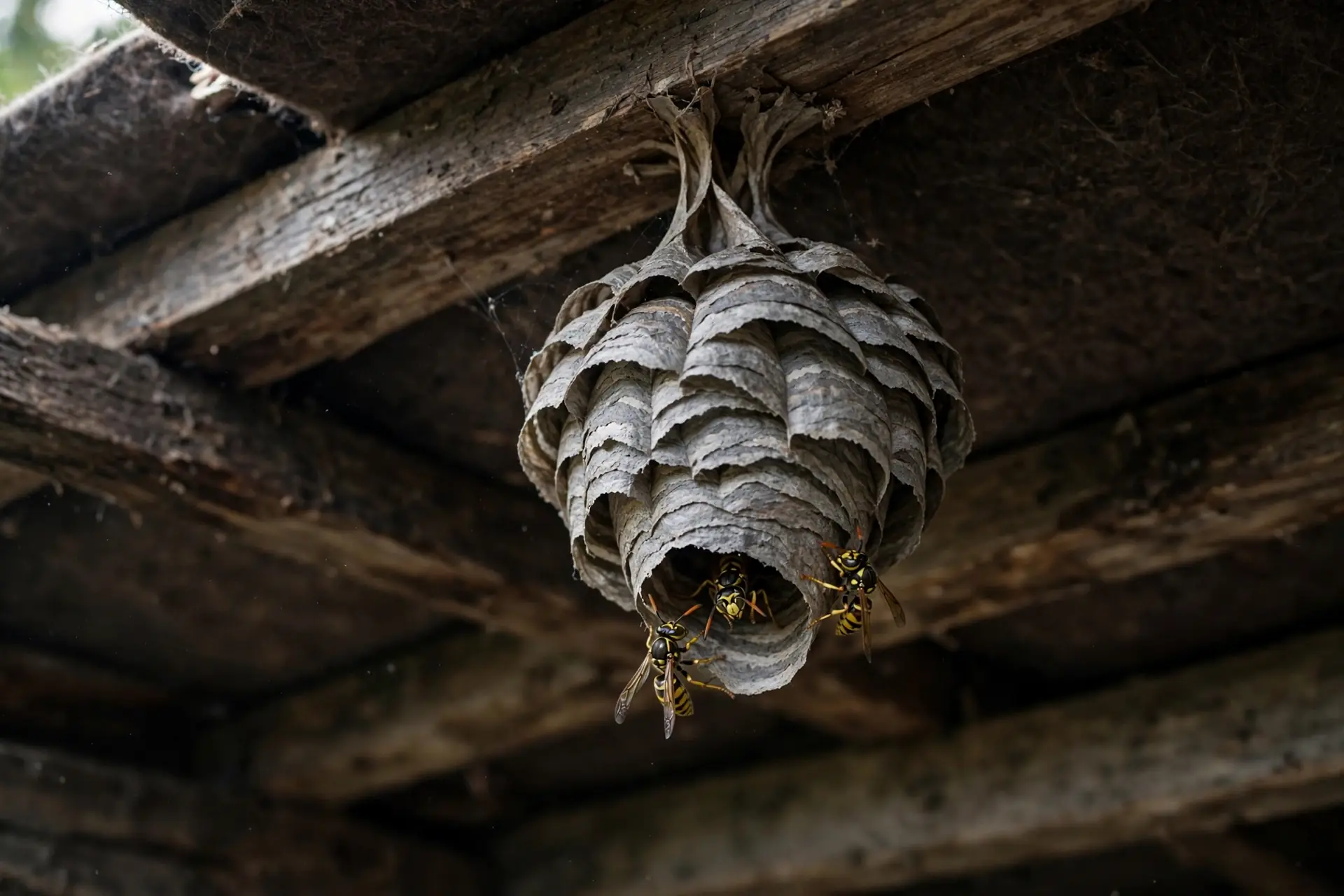
A busy entrance point in summer is the strongest sign of an active loft nest. Sometimes the nest is obvious: a grey, papery structure hanging from a rafter or tucked where the roof meets the wall. Often, though, you notice the signs first. A wasp nest in roof space often starts in spring at about the size of a golf ball, and can grow to football size or larger by late summer.
Look and listen for these signs from the loft hatch, rather than walking across the loft:
- A steady stream of wasps coming and going from the same point under the eaves, tiles or soffits outside.
- A faint scratching, ticking or rustling sound in the loft, ceiling or wall cavity, especially on warm days.
- Wasps appearing regularly in upstairs rooms, or around loft hatches and light fittings.
Activity is the key clue. A few stray wasps in autumn may be queens looking for somewhere to hibernate, but a busy entrance point in summer almost always means an active nest.
Wasp Nest or Beehive? How to Tell the Difference
Before you do anything, check whether you are looking at a wasp nest or beehive. They are often confused but need very different responses: honey bees should not be treated, and beekeepers will often collect them, while wasps are usually treated when a nest threatens people in the home. If you are unsure, our guide to hornet vs wasp identification can help you check size, colour and behaviour.
| Feature | Wasp nest | Beehive / honey bee colony |
|---|---|---|
| Appearance | Grey or beige papery ball or cone made from chewed wood pulp, often hanging from rafters or eaves | Waxy honeycomb, usually hidden in a cavity or chimney; visible comb is yellow and hexagonal |
| Insects | Bright yellow and black, slim waist, smooth and relatively hairless | Golden brown and fuzzier, rounder body, less vivid striping |
| Behaviour | Busy and defensive near the nest; attracted to sweet food and drinks in late summer | Generally calm away from the colony; focused on flowers rather than your food |
| Best response | Keep away and arrange treatment if it is in or near living space | Do not treat; contact a local beekeeper about collection or relocation |
If they are honey bees, do not book wasp treatment, ask a beekeeper about removing the colony alive. If they are wasps, follow the steps below.
What to Do Straight Away
Your first job is to make the situation safe and gather information. You do not need to solve it within the hour, unless wasps are entering living areas in large numbers.
- Keep your distance. Note where the nest is from the hatch, then close it. Do not walk across the joists towards it.
- Keep children and pets away from the hatch and any room where wasps appear.
- Watch from outside. Note where wasps enter under the roof; a technician will want to know this entrance point.
- Take a photo from a safe distance if you can. A clear photo helps with identification.
What Not to Do
Most serious problems happen after a well-meant DIY attempt. Avoid the following:
- Never block the nest entrance. Sealing the hole will not starve them. Trapped wasps look for another way out and may chew through plasterboard, ceilings or walls into the house.
- Never enter a loft with an active nest without proper protection. A loft is confined, with limited escape routes and uneven footing, so disturbing a nest risks multiple stings and a fall through the ceiling.
- Do not poke, knock or try to pull the nest down. A mature nest can contain thousands of wasps, and they will defend it.
- Do not rely on shop-bought spray at the entrance. It rarely reaches the whole colony, often agitates the wasps, and can scatter them deeper into roof or wall voids. Our advice on why instant wasp nest fixes usually backfire explains the risks.
- Do not use smoke, fire or water. Flooding or burning a nest in a timber-filled loft creates a far bigger hazard than the wasps.
How Professional Treatment Works: Treatment vs Removal
People often assume the nest must be physically taken away. In most loft cases in Cardiff, the first step is treatment in place: a technician applies professional insecticide into the nest or at its entrance, and returning wasps carry it through the colony. Activity normally falls over the following hours and days.
Physical removal is a separate, optional step. Once a nest is confirmed dead, it can be removed if accessible, for example to clear space or allow other loft work. Removal comes after treatment, not instead of it, because removing a live nest is dangerous. A dead nest in an awkward part of the roof can often be left in place; your technician can advise after inspection.
Need help with a nest in your loft? Call Cardiff Pest Control on 029 2236 0531 for a free inspection and a fixed, clear quote before any work begins, or send the details through our contact page. We have been trading since 2017, offer a satisfaction guarantee, and aim to attend within 24 to 48 hours.
What About an Old Wasp Nest in Your Loft?
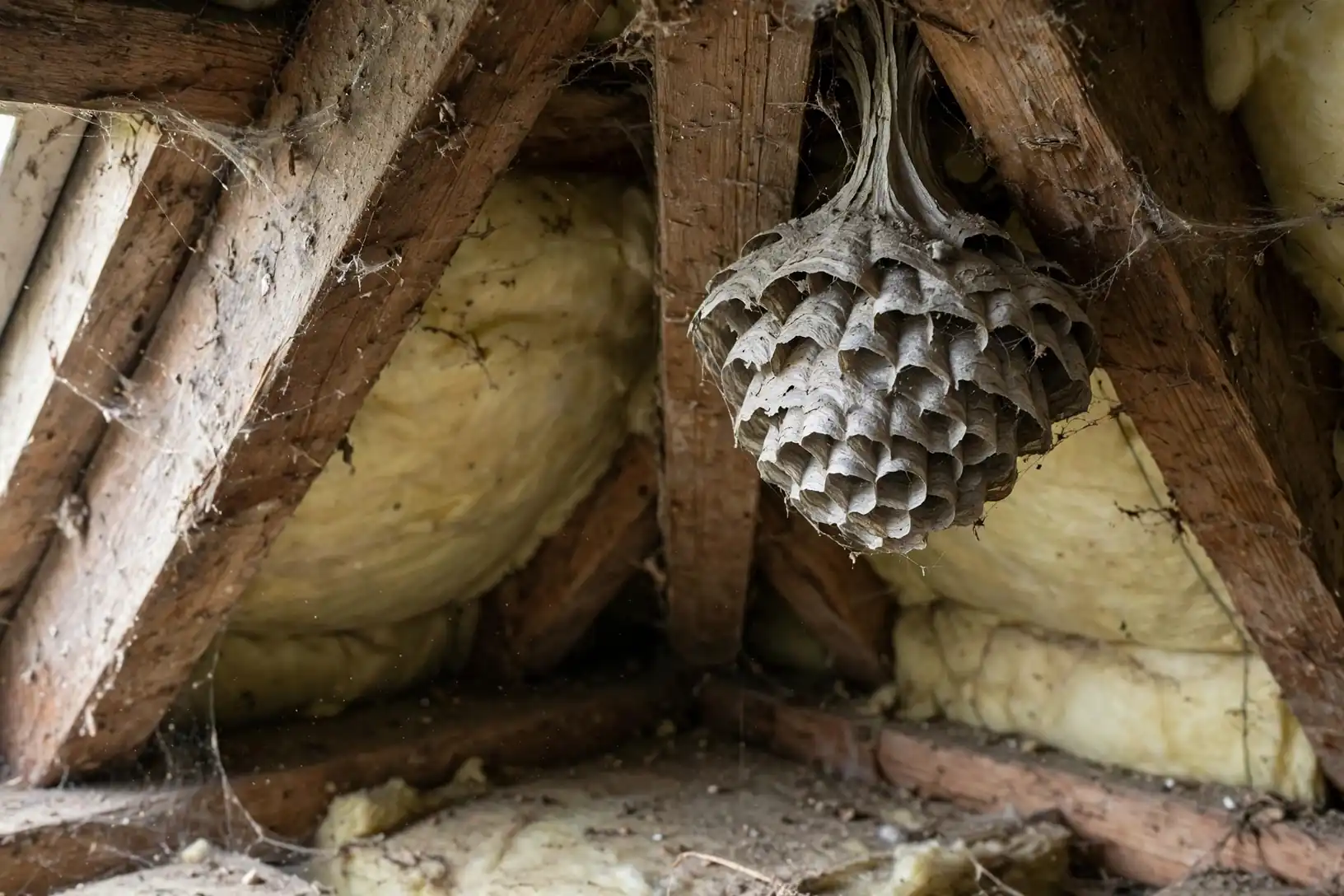
An old nest will not come back to life, because wasps do not reuse old nests. Finding an old wasp nest in loft spaces months or years later is very common in Cardiff homes, often during a clear-out or before insulation work. It looks similar to an active nest, but drier and more fragile.
Wasps do not reuse old nests. Workers, drones and the old queen die off in winter; only new queens survive, hibernating elsewhere before starting fresh nests in new locations each spring. An old nest will not come back to life.
Still, check an old nest before handling it. A nest found in winter is almost certainly inactive, but in spring and summer a new nest could be nearby. No flight activity, fresh wasps or sound suggests it is dead. If unsure, have it checked rather than pulling it apart with bare hands, as old nests can harbour dust, debris and other pests.
How Much Does Wasp Nest Removal Cost?
The wasp nest removal cost depends on location, access and whether the dead nest is removed afterwards. As UK guide figures only, professional treatment typically costs between £80 and £200 nationally, general UK guide figures, not Cardiff Pest Control prices. Your quote may differ depending on the inspection.
Loft nests can sit towards the higher end where access is awkward or the nest is large. We give a fixed, clear quote after a free inspection, so you know the price before work starts. For a wider picture, see our guide to how much pest control costs in Cardiff. A failed DIY attempt followed by an urgent call-out is rarely the cheapest route.
When to Call a Professional
Some distant garden nests can be left alone until winter, but a loft nest sits close to bedrooms, so the threshold for help should be lower. Call a professional if:
- The nest is inside the loft, roof void, eaves or a wall cavity, rather than out in the open.
- Wasps are entering bedrooms, bathrooms or other living areas.
- Anyone in the household has a known allergy to wasp stings, or there are young children, older people or pets in the home.
- The nest is large, growing quickly, or audible through the ceiling.
- You cannot reach the nest safely, which in a loft is very often the case.
- A DIY product has already increased or spread the activity.
Professional help brings more than stronger products:
- Protective equipment
- Safe access
- Correct identification
Read more about our professional wasp control service in Cardiff, or call for advice if you are unsure whether treatment is needed at all. An inspection will sometimes conclude that a winter nest is inactive and needs no treatment, we would rather tell you that than sell you work you do not need.
Key takeaways
- Check from the loft hatch only; a busy summer entrance point almost always means an active nest.
- Never block the entrance, enter without protection, or use smoke, fire or water in the loft.
- Treatment in place comes first; physical removal is optional and only after the nest is dead.
- Old nests are not reused, but check for activity nearby before handling one.
- Call a professional if wasps enter living areas, anyone has a sting allergy, or access is unsafe.
Frequently Asked Questions
Can I leave a wasp nest in my loft alone?
Sometimes, but a loft nest is riskier to ignore because it is close to bedrooms and wasps may enter rooms. If it is large or anyone has a sting allergy, arrange an inspection.
Will wasps come back to the same nest next year?
No. Wasps do not reuse old nests, and workers and the old queen die off in winter. New queens start new nests in spring, though a sheltered loft may attract another nest nearby.
Should an old wasp nest in my loft be removed?
Removal is optional once a nest is confirmed dead, as it will not be reused. Consider removal if it blocks insulation, roofing or loft work, or is easy to reach safely after checking.
How much does wasp nest removal cost?
As UK guide figures, professional treatment typically costs £80 to £200, depending on access, nest size and location. These are national guides, not fixed prices. Get a fixed quote before work begins.
Is it safe to go into the loft if there is a wasp nest there?
Not if the nest is active. A loft is confined with limited escape routes, so disturbing a nest risks multiple stings and a fall. Check from the hatch and let a technician go further.