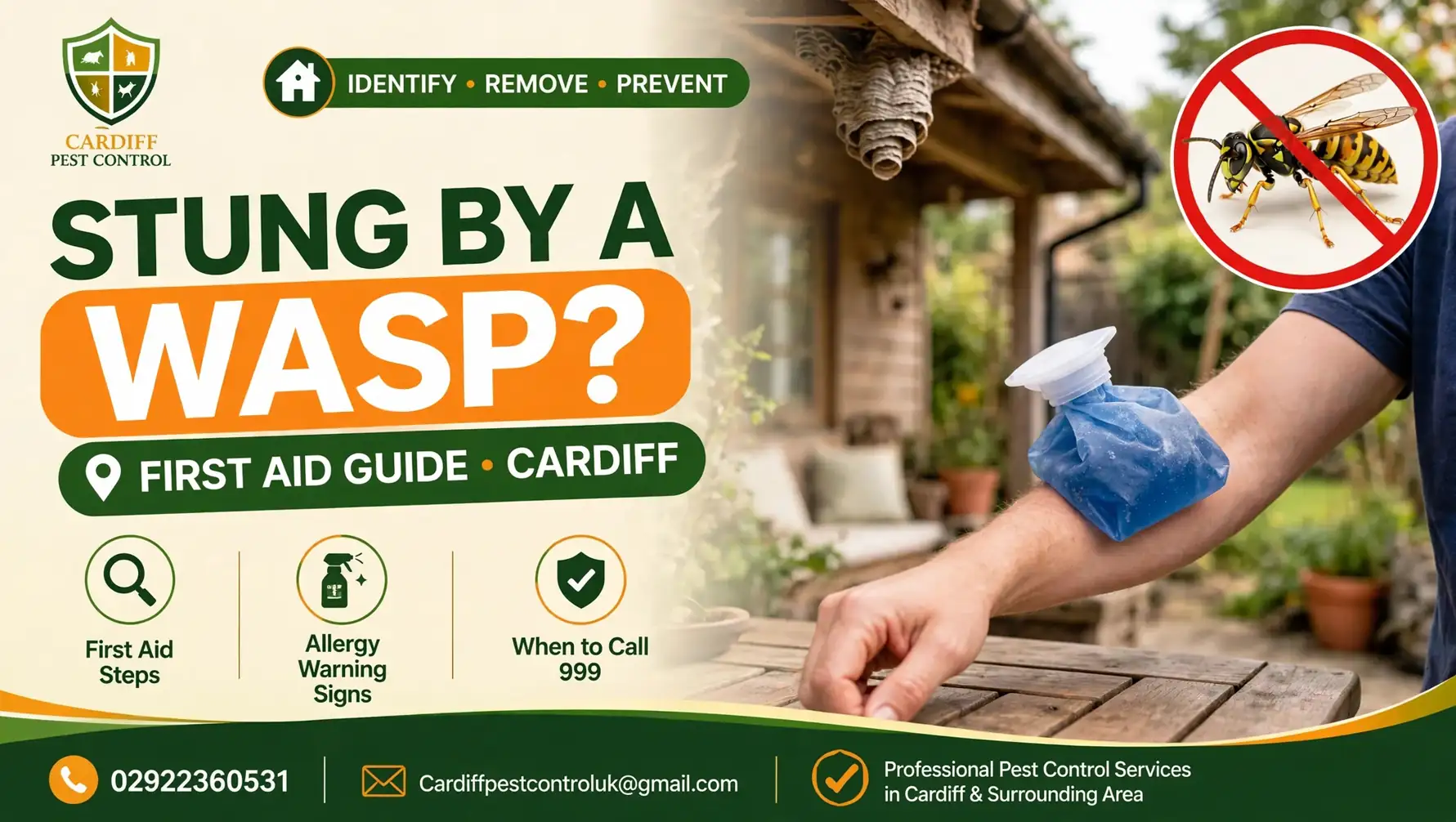
A wasp sting is painful, sudden and, for a small number of people, dangerous. Most stings in Cardiff happen in summer and early autumn, when wasp nests are at their largest and wasps gather around food, drinks and bins. Knowing the correct first aid, and the warning signs that mean you need urgent help, makes a real difference in the first few minutes.
This guide covers what to do straight after a sting, what actually helps the pain and swelling, how to spot an allergic reaction, and what to do for children and dogs. If stings keep happening around your home, there is usually a nest nearby. Our wasp nest removal service treats nests safely so the problem stops at its source.
Quick answer: For a wasp sting, move away calmly, wash the area with soap and water, apply a cold pack for up to 20 minutes, and take a painkiller or antihistamine if needed. Call 999 at once for breathing difficulty, swelling of the face or mouth, dizziness or collapse. Cardiff Pest Control can treat the nest that caused it.
Wasp Sting First Aid, Step by Step
- Move away calmly. A stung wasp releases a scent that can attract other wasps, so walk away from the area, especially near a nest. Do not swat at wasps around you.
- Wash the sting with soap and water as soon as you can. This cleans the puncture and lowers the risk of infection.
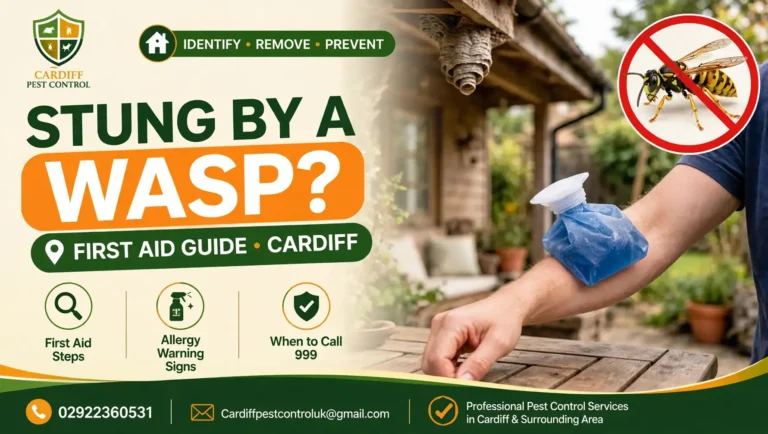
- Apply a cold pack, or ice wrapped in a cloth, for up to 20 minutes at a time. This is the single most effective step for pain and swelling. Repeat through the day as needed.
- Take a painkiller such as paracetamol or ibuprofen if the sting hurts, following the packet dose.
- Use an antihistamine tablet or cream if there is itching or swelling. Your pharmacist can advise on the right one, including for children.
- Remove tight jewellery near the sting, such as rings on a stung hand, before swelling makes it difficult.
- Do not scratch. Scratching breaks the skin and is the most common route to infection. Keep the area clean and watch it for the next two days.
What Helps a Wasp Sting, and What Does Not
| Remedy | Does it help? | Notes |
|---|---|---|
| Cold pack or ice in a cloth | Yes | Best first step for pain and swelling; up to 20 minutes at a time |
| Paracetamol or ibuprofen | Yes | For pain; always follow the packet dose |
| Antihistamine | Yes | Helps itching and swelling; ask a pharmacist about children |
| Vinegar or bicarbonate paste | No good evidence | Popular home remedies, but neither is proven to neutralise the venom |
| Squeezing or sucking the sting | No | Does not remove venom and can damage skin or spread infection |
For most people, pain eases within a few hours. Swelling and redness often peak at 24 to 48 hours and then settle over the next few days. A large local reaction, such as a whole forearm swelling after a sting on the hand, looks alarming but usually follows this same pattern.
Allergic Reaction Warning Signs: When to Call 999
A small number of people have a serious allergic reaction to wasp venom called anaphylaxis. It usually starts within minutes of the sting and is a medical emergency. Call 999 immediately if the person has:
- Difficulty breathing, wheezing or a tight chest
- Swelling of the lips, tongue, face or throat
- Dizziness, feeling faint or collapse
- A widespread rash, hives or flushing away from the sting site
- Stomach pain, nausea or vomiting soon after the sting
- A fast heartbeat or a feeling of panic and doom
If the person carries an adrenaline auto-injector, such as an EpiPen, use it straight away following its instructions, then call 999. Do not wait to see if symptoms pass.
You should also get medical advice the same day, from a GP, pharmacist or NHS 111, if:
- The sting is inside the mouth or throat, where swelling can block the airway
- The person has had many stings at once, for example after disturbing a nest
- Swelling is still spreading after 48 hours, or there are signs of infection such as increasing pain, red streaks, pus or fever
- A young child has been stung several times or seems unwell
Wasp Sting or Bee Sting? Why It Matters
The first aid is similar, but there is one important difference. A honey bee leaves its barbed stinger in the skin, and the venom sac keeps pumping for a short time. If you can see a stinger, scrape it off sideways with a bank card or fingernail as soon as possible. Do not squeeze it with tweezers, as that can push more venom in.
A wasp does not leave a stinger. Its sting is smooth, it pulls it out, and it can sting more than once, which is why a disturbed nest is so risky. If there is no stinger to remove, go straight to washing and the cold pack. Not sure which insect stung you? Our guide to hornet vs wasp identification may help, and bees are covered in our guide to bees in your home or garden.
Children and Dogs: Extra Care
Children react to the pain more than the venom in most cases. Stay calm, follow the same first aid steps, and use child doses of painkillers and antihistamines as advised by a pharmacist. Watch young children closely for the first 30 minutes for any allergic signs listed above.
Dogs are most often stung on the paw, nose or in the mouth after snapping at a wasp. Move the dog away, apply a cold compress if they tolerate it, and watch for facial swelling, drooling, pawing at the mouth, vomiting or collapse. Stings in the mouth or any allergic signs mean a vet visit straight away.
How to Avoid Being Stung Again
- Do not wave your arms or swat. Stay still or move away slowly; flapping makes wasps defensive.
- Keep sweet food and drinks covered outdoors, and check open cans before drinking. Wasps climb inside and sting mouths.
- Take care around bins and fallen fruit, both are wasp magnets in late summer.
- Wear shoes on grass in late summer, when wasps feed low and nests in the ground are common.
- Find the nest. If wasps are constantly around one part of your home or garden, there is almost certainly a nest in a roof, wall, shed or the ground nearby.
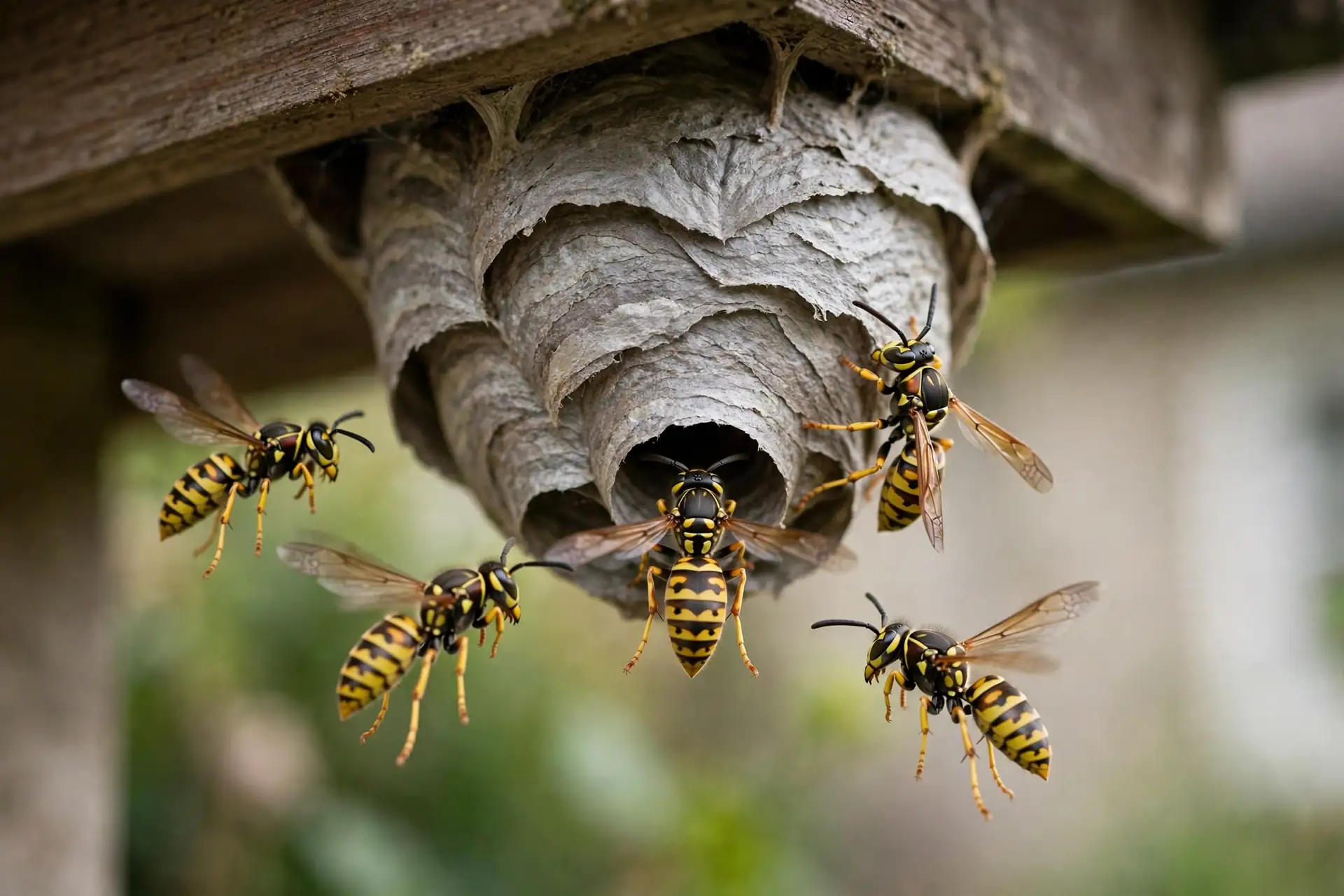
Repeated stings around your home are a nest problem, not bad luck. Our guide to wasp nest removal costs explains what treatment involves and what affects the price.
Need the nest dealt with? Call Cardiff Pest Control on 029 2236 0531 for a free inspection and a fixed, clear quote before any work begins, or use our contact page. We have been trading since 2017, offer a satisfaction guarantee, and aim to attend within 24 to 48 hours.
Key takeaways
- Wash the sting, apply a cold pack for up to 20 minutes, and use a painkiller or antihistamine if needed.
- Call 999 for breathing difficulty, swelling of the face or mouth, dizziness or collapse; use an adrenaline auto-injector first if the person carries one.
- Wasps do not leave a stinger and can sting more than once; only bee stings leave a stinger to scrape off.
- If stings keep happening at home, there is usually a nest nearby that needs treating.
Frequently Asked Questions
How long does a wasp sting last?
For most people the sharp pain eases within a few hours. Redness and swelling usually peak at 24 to 48 hours, then settle over the next few days. If swelling keeps spreading after 48 hours, get medical advice.
Do wasps leave a stinger in your skin?
No. A wasp sting is smooth and the wasp pulls it out, which is why a wasp can sting more than once. Only honey bees leave a barbed stinger behind, and that should be scraped off quickly with a card.
What helps a wasp sting stop hurting?
A cold pack or ice in a cloth for up to 20 minutes is the most effective step. Paracetamol or ibuprofen helps the pain, and an antihistamine helps itching and swelling. Vinegar and bicarbonate pastes have no good evidence behind them.
When is a wasp sting an emergency?
Call 999 at once for difficulty breathing, swelling of the lips, tongue or face, dizziness or collapse, or a widespread rash. Use an adrenaline auto-injector first if the person carries one. These are signs of anaphylaxis.
Can a wasp sting get infected?
Yes, usually from scratching or dirt in the puncture. Watch for increasing pain after two days, red streaks spreading from the sting, pus or fever. See a GP or pharmacist if you notice any of these signs.
What should I do if my dog is stung by a wasp?
Move your dog away and apply a cold compress if they tolerate it. Watch for facial swelling, drooling, pawing at the mouth, vomiting or collapse. Stings in the mouth or any allergic signs need a vet straight away.
How do I stop wasps stinging my family?
Keep sweet food and drinks covered outdoors, check cans before drinking, and take care around bins and fallen fruit. If wasps are always around one spot, there is usually a nest nearby that should be treated professionally.