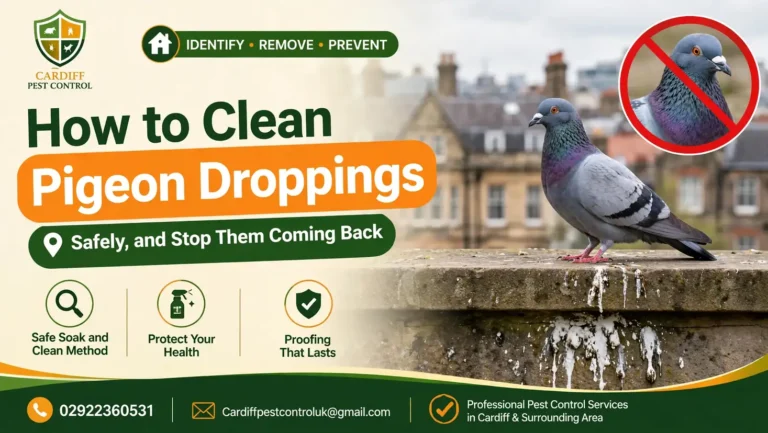
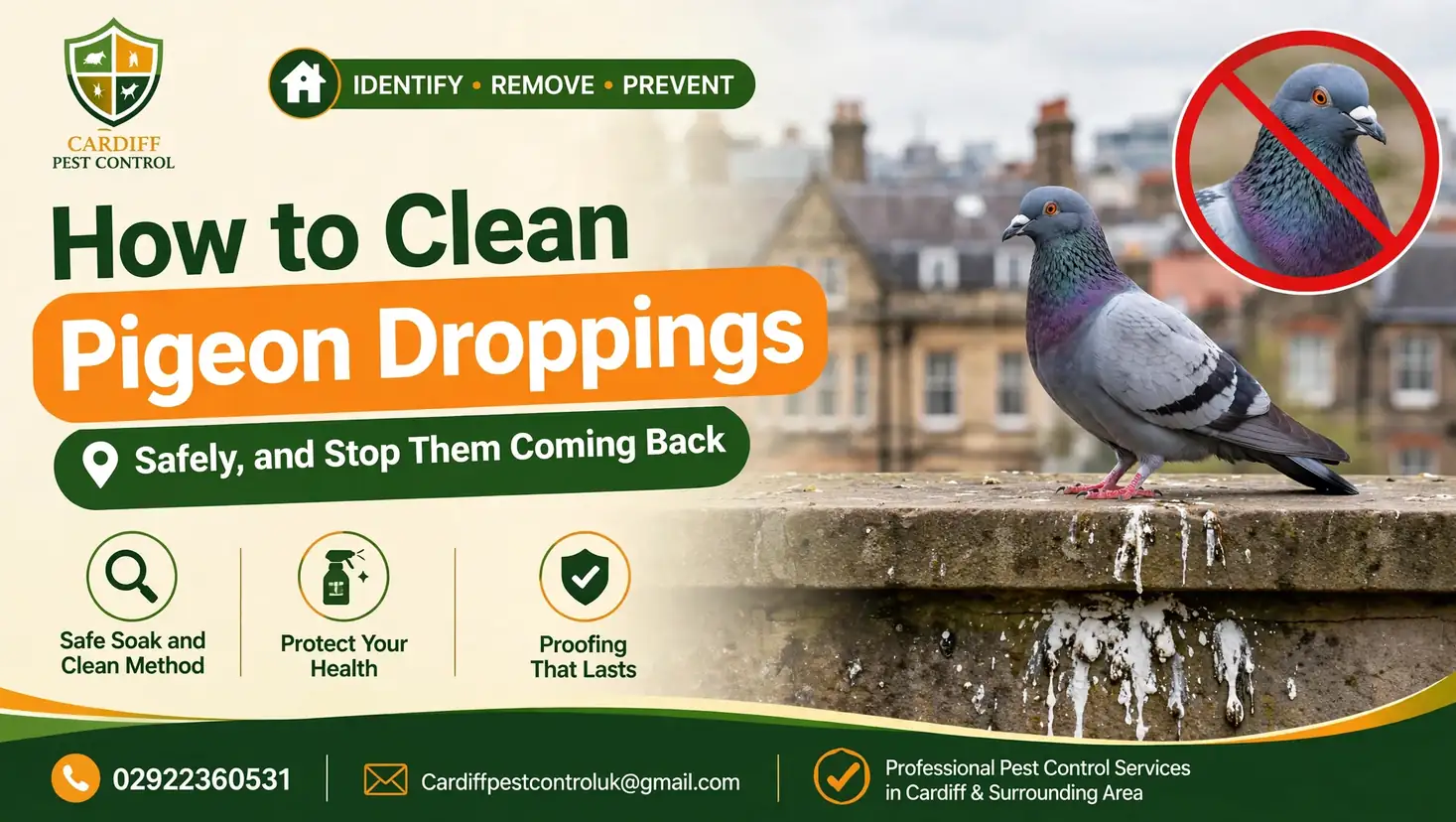
Pigeon droppings on a balcony, ledge or roof look unsightly, smell in warm weather, and make surfaces slippery. The bigger issue is the dust from dry droppings, which is why this is one cleaning job where the method really matters. This guide covers the safe way to clean up, and how to stop pigeons coming back to the same spot in your Cardiff home.
For heavy build-ups, or droppings under solar panels and in lofts, professional cleaning and proofing is the safer route. Our bird control service in Cardiff can clean, disinfect and proof the area in one visit.
Quick answer: Never scrape or pressure wash dry pigeon droppings. Soak them well with water and disinfectant, wear gloves and a mask, scrape the soft mess into strong bags, then wash and disinfect the surface. Fit spikes or netting afterwards so pigeons cannot return. Cardiff Pest Control can help with big build-ups.
Why pigeon droppings need care
Fresh, wet droppings are unpleasant but low risk. The risk grows as droppings dry out:
- Dry droppings crumble into dust that can carry germs and fungi linked to breathing illnesses.
- Scraping or sweeping dry mess puts that dust into the air, right where you breathe it.
- Droppings are acidic, so thick build-ups damage paint, stone and metal over time.
- Wet droppings are slippery, which is a real hazard on balconies, steps and fire escapes.
Small, fresh patches can be cleaned safely at home with the method below. Thick, old build-ups, especially in lofts or under roof panels, are a job for professionals with the right protective kit.
What you need before you start
- Gloves, ideally disposable ones under work gloves for scraping.
- A well fitting dust mask, and eye protection if there is any splash risk.
- Old clothes or overalls that you can wash hot or throw away.
- A spray bottle or bucket with water and a household disinfectant.
- A scraper, a stiff brush and strong rubbish bags.
- Soap and hot water for washing yourself down afterwards.
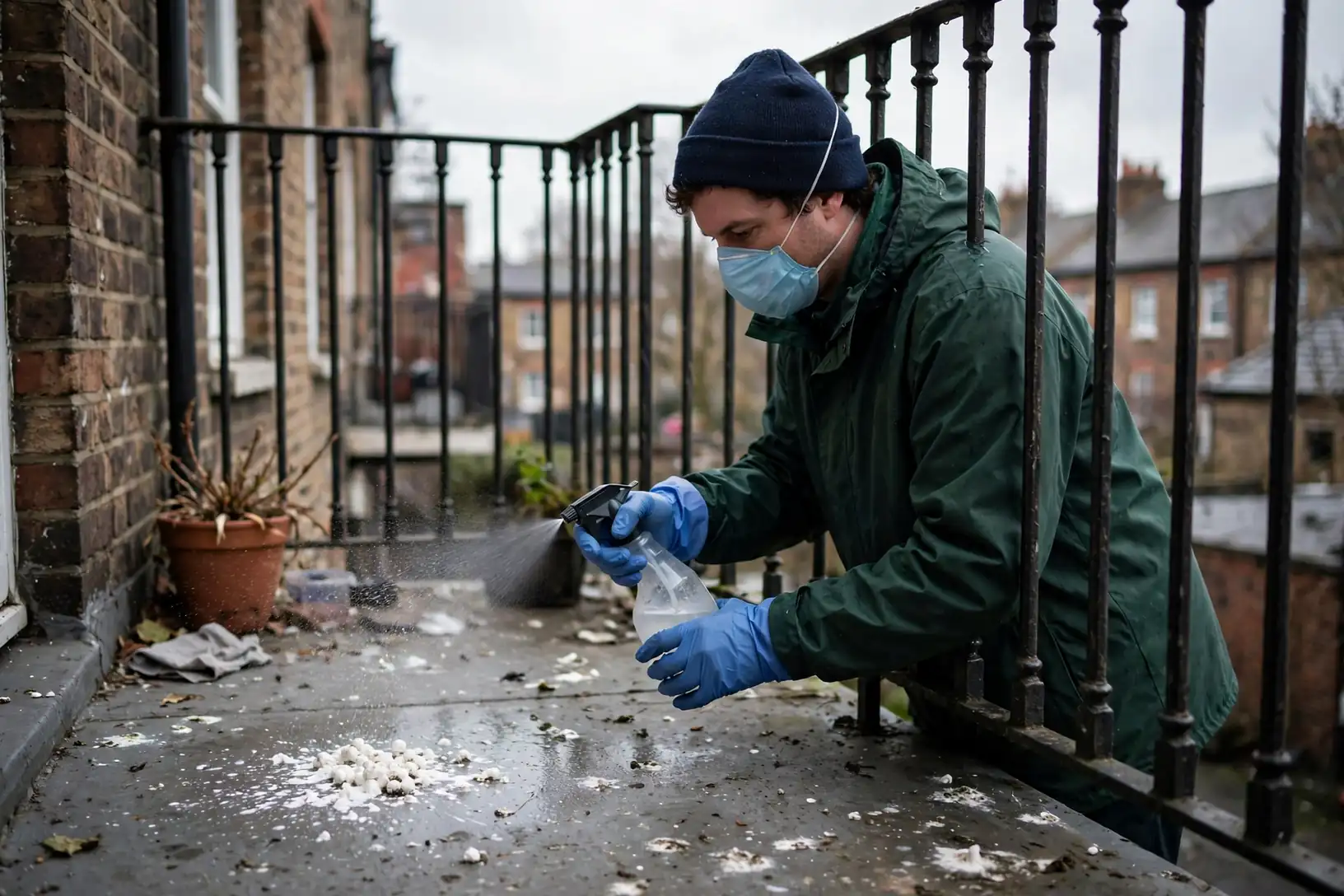
The safe method, step by step
- Put your protective kit on first, before you touch anything, and keep children and pets away from the area.
- Soak the droppings well. Spray or pour on water with disinfectant until the mess is fully wet and soft. This is the step that keeps dust down.
- Scrape the softened mess into a strong bag. Work gently so nothing flicks up.
- Wash the surface down with hot water and disinfectant, and scrub any staining.
- Bag everything, including gloves and any cloths you used, and put the sealed bag in your household waste.
- Wash your hands, arms and face, change your clothes, and wash the clothes you wore.
Never dry sweep, dry scrape or pressure wash a dry build-up. Each one fills the air with exactly the dust you are trying to avoid.
Small mess or big problem?
| Situation | DIY or professional? |
|---|---|
| A few fresh droppings on a balcony or sill | DIY with care, using the soak method above. |
| A thick, old build-up on a ledge or flat roof | Professional. The volume of dust and waste needs proper kit and disposal. |
| Droppings in a loft | Professional. Lofts are confined, dusty and often hold nesting material too. |
| Droppings under solar panels | Professional. Access is awkward and wiring must be protected. See our guide to solar panel bird proofing. |
| Blocked gutters full of droppings and nesting | Usually professional, because of the height and the waste involved. |
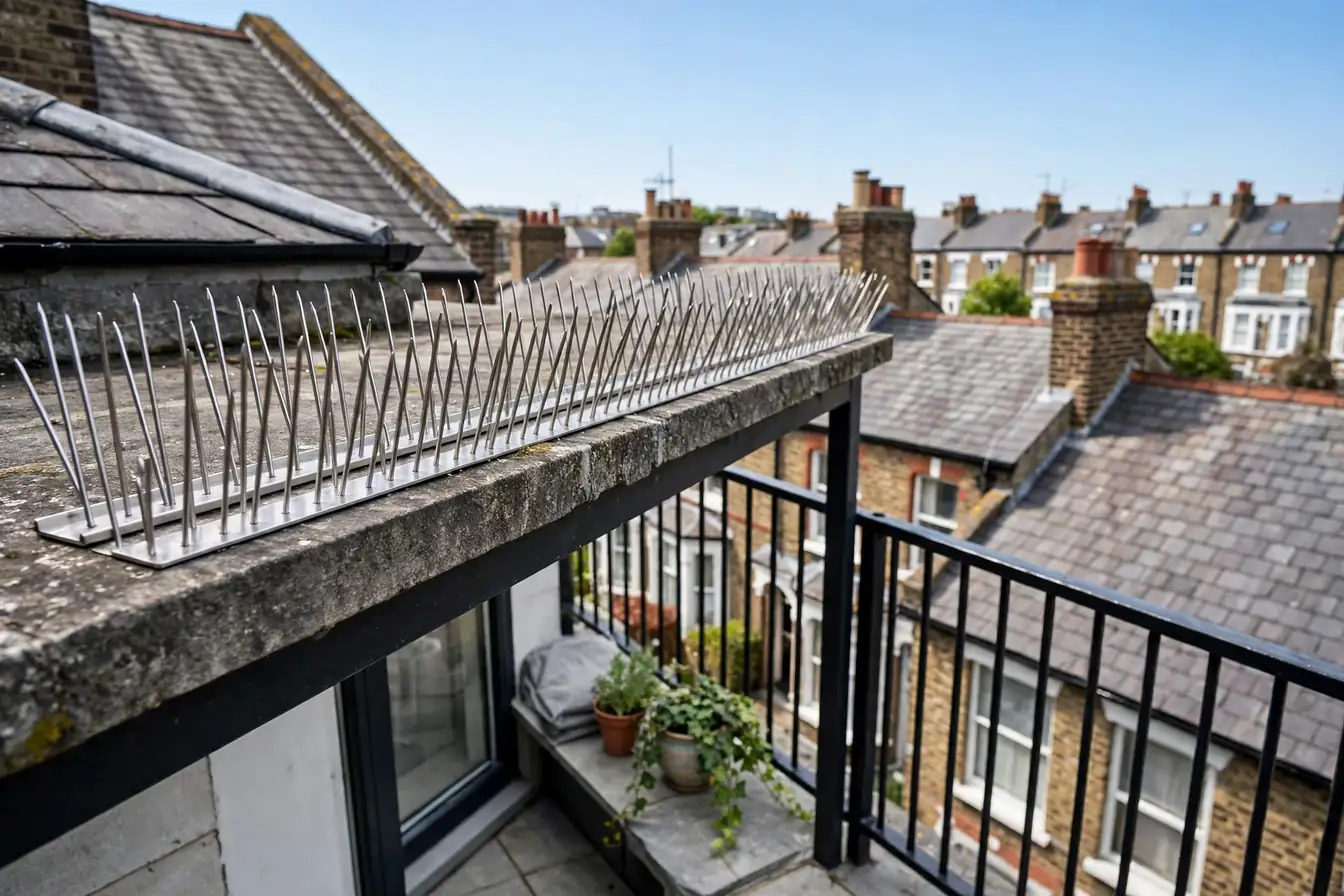
Stop them coming back: proofing
Cleaning alone does not solve the problem, because pigeons return to a favourite roost out of habit. Once the area is clean, proofing breaks the habit:
- Spikes on ledges, sills and beams, so birds cannot land comfortably.
- Netting over balconies, courtyards and roof spaces, to block access completely.
- Mesh skirts around solar panels, so birds cannot nest underneath.
- Removing food sources, such as spilled seed and open bins, which draw flocks in the first place.
Our guide to stopping birds nesting in your roof covers roof proofing in detail. In Cardiff, the most common jobs we see are balconies on city centre flats and ledges on older terraced homes, and both respond well to simple spike and net systems fitted once the mess is cleared.
Pigeons and the law
All wild birds in the UK are protected by law, and that includes pigeons. An active nest, one with eggs or young birds in it, must not be disturbed or removed. The safe pattern is simple: wait until the young have left, remove the empty nest and droppings, then fit proofing straight away so the birds cannot rebuild in the same place. Proofing fitted at the right time is legal, humane and permanent, which is why it is always our first recommendation.
If the roost is on a rented or shared building, tell the landlord or management company early. Landlords and businesses have duties to keep premises safe and clean for the people who use them, and proofing a whole ledge or roofline in one go works far better than flat by flat fixes that leave gaps for the birds to move into.
When to call a professional
Call for help if the build-up is thick or old, if it is in a loft or under solar panels, if you cannot reach it safely, or if pigeons keep returning after cleaning. Working at height and handling large volumes of waste are the two things that most often turn this into a professional job.
Cardiff Pest Control has helped Cardiff homes since 2017. We offer a free inspection, a fixed quote agreed before any work starts, and a satisfaction guarantee. We aim to attend within 24-48 hours. Call 029 2236 0531 to book.
Key takeaways
- The risk is in the dust from dry droppings, so soak the mess well before you touch it.
- Wear gloves and a mask, bag the waste, and wash yourself and your clothes afterwards.
- Never dry scrape, dry sweep or pressure wash dry pigeon droppings.
- Clean first, then fit spikes or netting, or the pigeons will simply come back.
Frequently Asked Questions
Are pigeon droppings dangerous to health?
They can be. Dry droppings crumble into dust that can carry germs and fungi, and breathing it is the main risk. Soak the mess first, wear a mask and gloves, and wash well afterwards to keep the risk low.
Can I pressure wash pigeon droppings away?
Not while they are dry. A pressure washer blasts dry droppings into the air as dust and spreads the mess widely. Soak the droppings well first, scrape and bag the bulk, and only then wash the surface down.
What should I wear to clean up pigeon droppings?
Wear gloves, a well fitting dust mask, and clothes or overalls you can wash or throw away. Cover any cuts. Afterwards, bag the waste, wash your hands and arms well, and change and wash your clothes before eating or drinking.
How do I stop pigeons roosting on my balcony or ledge?
Remove the roost and the reason for it. Fit spikes or netting to ledges, clear food sources, and block sheltered corners. Proofing works best once the area is clean, and a professional can fit systems that last for years.
Is it legal to remove a pigeon nest?
All birds and their active nests are protected by law, so a nest with eggs or young must not be disturbed. Once the young have left and the nest is empty, it can be removed and proofing fitted.
A clean ledge and a simple line of spikes will usually end a pigeon problem for good. Small patches are a safe weekend job with the soak method, and big build-ups are exactly what we are here for. If you would like the cleaning and proofing done in one visit, Cardiff Pest Control covers Cardiff and the surrounding area.