When you spot a buzzing insect near your eaves or garden, the immediate reaction is often concern. We frequently hear from homeowners who aren’t quite sure what they’re looking at: is it a common wasp, or something more aggressive like a hornet? Understanding the difference between hornets vs wasps is the first step in managing the situation safely.
Both belong to the same insect family (Vespidae), but they have distinct behaviours, nesting habits, and physical traits. Whether you’ve found a nest in your loft, noticed unusual activity in your garden, or simply want to know what you’re dealing with, this guide has you covered.
What Kind of Bug Is a Hornet?
To put it simply: all hornets are wasps, but not all wasps are hornets.
A hornet is a specific type of large social wasp. In the UK, the most common species is the European Hornet (Vespa crabro). It’s significantly bigger than the wasps you typically see at a summer barbecue, and its behaviour is quite different too.
Hornets are less likely to bother you while you’re eating outdoors, but they become intensely defensive when their nest is threatened. That’s when the real danger begins.
What Does a Hornet Look Like?
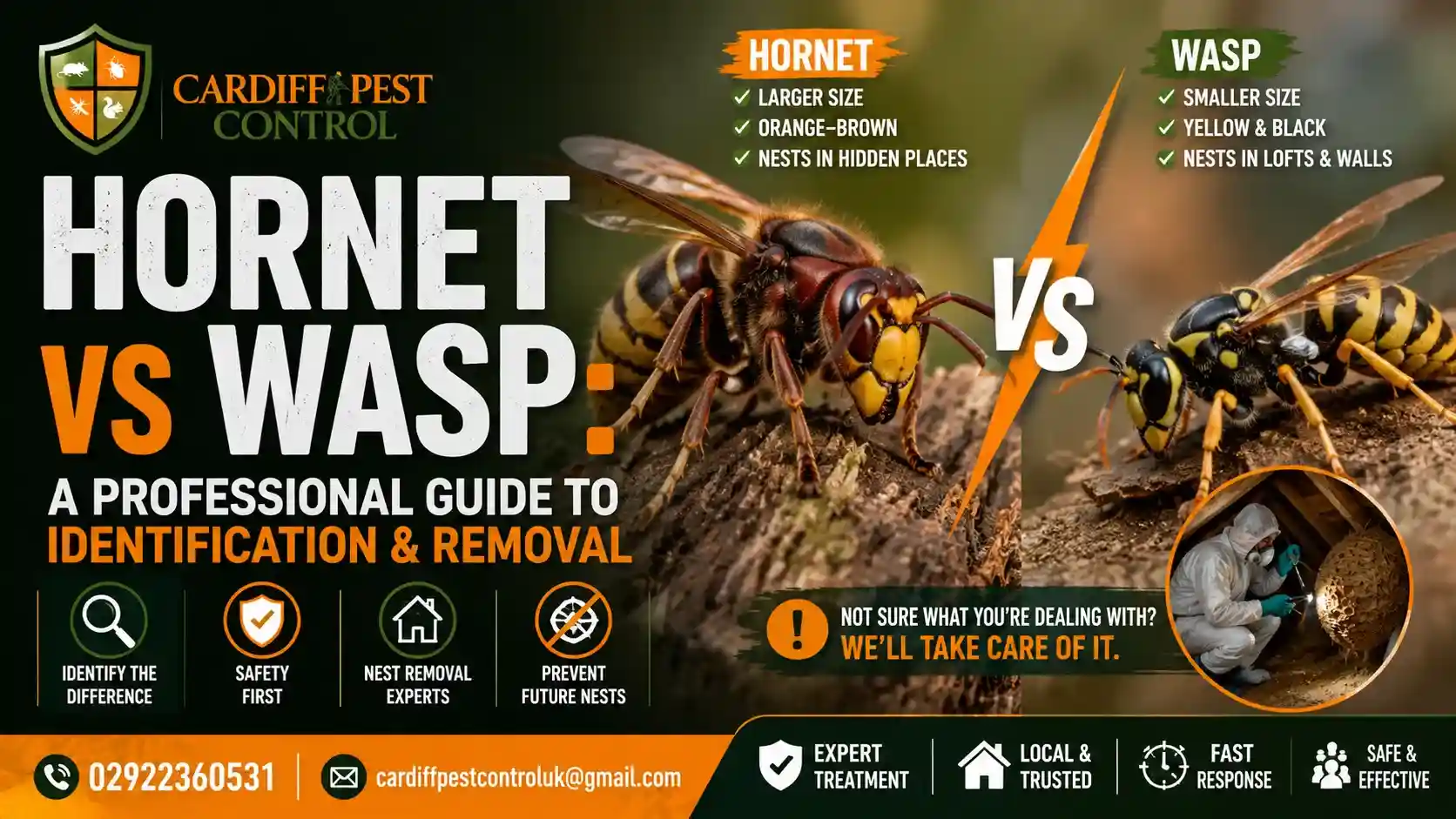
If you’re trying to figure out what a hornet looks like, size is your biggest clue.
- Size: Hornets are significantly larger than standard wasps, reaching up to 3.5cm in length roughly twice the size of a common wasp
- Colour: While common wasps are bright yellow and black, hornets have a more rusty orange-brown hue mixed with yellow
- Body Shape: They have a thicker, more rounded abdomen compared to the slender, “wasp-waisted” appearance of their smaller cousins
- Wings: Hornets have proportionally wider wings and make a louder buzzing sound in flight
Once you know what to look for, the difference between a hornet and a wasp becomes easy to spot.
Hornet vs Wasp: Side-by-Side Comparison
When comparing hornet vs wasp, looks are only part of the picture. Their temperaments and diets differ significantly, too.
|
Feature |
Common Wasp |
Hornet |
|
Size |
1cm – 1.5cm |
2.5cm – 3.5cm |
|
Colour |
High-contrast yellow and black |
Orange-brown and yellow |
|
Aggression |
High (especially near food and drinks) |
Lower generally, but very defensive of nests |
|
Diet |
Sugars, fallen fruit, garden insects |
Large insects (flies, bees, dragonflies), tree sap |
|
Nest Location |
Lofts, wall cavities, garden shrubs |
Hollow trees, chimneys, dark secluded spots |
|
Nest Material |
Grey chewed wood pulp |
Brownish-orange decayed wood pulp |
|
Sting Risk |
Multiple stings release alarm pheromones |
Multiple stings, larger venom volume per sting |
|
Activity |
Daytime |
Daytime and active at night |
Understanding this table can help you make a faster, safer decision when you encounter a nest on your property.
What Do Wasps Eat?
Early in the season, wasps are actually beneficial. What wasps eat includes garden pests like caterpillars, flies, and other soft-bodied insects, making them a natural form of pest control during spring and early summer.
However, by late summer, their diet shifts. Worker wasps are no longer needed to feed larvae, so they seek out fermented fruit and sugary drinks. This is why wasps become such an aggressive nuisance at outdoor gatherings from July onwards. They’re not angry they’re just hungry and desperate.
Practical tip: If wasps are bothering you outdoors, keep food and drinks covered and remove fallen fruit from your garden promptly.
What Do Hornets Eat?
What hornets eat is quite different. They are apex predators in the insect world, hunting:
- Large flies and moths
- Dragonflies
- Other wasps and bees
- Tree sap (they “strip” bark from branches to access it)
Hornets rarely bother humans over food. If you see hornets near your home, they’re almost certainly nesting nearby rather than foraging. That’s when professional assessment becomes important.
Hornet Nest vs Wasp Nest: How to Tell Them Apart
Spotting the nest early can prevent a major infestation. There are clear differences when comparing a hornet nest vs a wasp nest.
Wasp Nests
- Found in loft spaces, wall cavities, under roof tiles, or hanging from garden structures
- Made of chewed wood pulp creates a distinctive grey, papery, swirled appearance
- Can grow to the size of a football by late summer if left untreated
- The entry point is usually a small hole at the base or side of the nest
If you’ve spotted unusual insect activity around your roof or eaves, it’s worth also checking for other pests gaining entry at the same points. Our guide on how to stop birds nesting in your roof covers entry point identification that applies equally to wasp problems.
Hornet Nests
- Typically found in darker, more secluded spots hollow trees, deep within chimneys, inside outbuildings
- Larger than most wasp nests and have a brownish-orange tint from the decayed wood used to build them
- Far less visible hornets deliberately choose hidden locations
- Can contain up to 700 workers at peak season
If you find what you think is a hornet nest, do not attempt to inspect it closely. Contact a professional immediately.
How to Get Rid of Wasps and Hornets Safely
We strongly advise against DIY removal for both wasps and hornets. Unlike bees, wasps and hornets can sting multiple times, and when threatened, they release alarm pheromones that signal the entire colony to attack. What starts as a single sting can quickly become a dangerous situation.
This is especially true for:
- Anyone with a known allergy to insect stings
- Nests located in enclosed spaces (lofts, wall cavities, chimneys)
- Large colonies in late summer when worker numbers peak
- Hornets nesting near children’s play areas or pet spaces
Need fast help with a wasp or hornet nest in your home? Contact Cardiff Pest Control for professional nest removal and same-day treatment across Cardiff and South Wales.
How to Get Rid of a Hornet’s Nest
If you’re wondering how to get rid of a hornet’s nest, the answer is: carefully and with professional equipment.
Because hornets are active at night and attracted to light, DIY attempts with a torch routinely end in multiple stings. Even during the day, approaching a hornet nest without the right protective gear is genuinely dangerous.
At Cardiff Pest Control, we use professional-grade insecticidal dusts that neutralise the colony quickly without putting you at risk. The treatment is applied to the nest entrance, carried inside by returning workers, and reaches the queen. The colony collapses within 24–48 hours in most cases.
Our wasp extermination service covers hornets, too. Get in touch if you’ve spotted a nest anywhere on your property.
How to Get Rid of a Wasp Nest
The process for wasp nest removal follows a similar path to hornet treatment, but is often more straightforward due to nest location.
- Locate the primary entrance, usually a single point where wasps are seen entering and exiting
- Apply professional insecticidal treatment the wasps carry this into the heart of the nest
- Allow 24–48 hours for the colony to be neutralised, as treated wasps spread the product through the nest
- Remove or leave the nest empty nests can be removed if accessible; otherwise, they naturally degrade over winter
For more details on this process, see our full guide on how to get rid of a wasp nest instantly.
It’s also worth reading about signs of rodent infestation. If you’re having a general pest assessment wasp entry points through roof spaces are often shared with other pests.
Wasp Sting Treatment and Safety
If you’re unlucky enough to be stung, knowing how to treat a wasp sting quickly is important.
Immediate steps:
- Move away from the area remaining near the nest risks further stings
- Remove any stinger wasps don’t usually leave a stinger, but check anyway (bees do)
- Wash the area using soap and water to remove any venom on the skin
- Applying a cold pack reduces swelling and numbs the pain
- Taking antihistamines helps manage itching, redness, and minor swelling
- Elevate if possible if stung on a limb; keeping it raised reduces swelling
Seek emergency medical help immediately if you experience:
- Difficulty breathing or swallowing
- Significant swelling away from the sting site (face, throat, tongue)
- Rapid heartbeat, dizziness, or nausea
- Symptoms of anaphylaxis
Multiple stings, even without an allergy can cause a toxic reaction. Hornet stings in particular deliver a larger volume of venom and should always be taken seriously.
For a broader look at insect-related health risks, read our article on the health and hygiene risks associated with common UK pests.
Are Hornets More Dangerous Than Wasps in the UK?
This is one of the most common questions we receive. The honest answer is: it depends on the situation.
Hornet venom is not significantly more toxic than wasp venom in terms of chemical composition. However:
- Hornets are much larger and deliver a bigger volume of venom per sting
- The sting itself is physically more painful due to the size of the stinger
- Hornets are harder to spot and avoid due to their nocturnal activity
- A disturbed hornet colony can pursue a threat over a longer distance than wasps
So while a single wasp sting is typically less severe than a single hornet sting, the real danger from both comes from multiple stings and allergic reactions.
If you have children or pets in your garden and suspect either type of nest is present, professional removal should be your first call, not your last resort.
Preventing Wasps and Hornets From Nesting on Your Property
The best pest control is prevention. Here’s how to make your property less attractive to both wasps and hornets:
- Seal gaps and entry points in roof soffits, eaves, and wall cavities before spring
- Clear fallen fruit from gardens promptly, fermenting fruit is a major wasp attractant from July onwards
- Keep bin lids sealed especially food waste bins
- Check for early nests in March–April a nest the size of a golf ball is far easier (and cheaper) to treat than one the size of a basketball
- Keep outbuildings tidy, dark, and undisturbed corners are prime hornet nesting sites
- Avoid leaving sweet drinks unattended outdoors in summer
Scheduling a regular pest inspection each spring is the most reliable way to catch nests early. Our team checks all the common spots where wasps and hornets build lofts, soffits, garden structures, and outbuildings.
You might also find our guide on how to control common household pests useful for a broader prevention strategy.
When to Call Cardiff Pest Control for Wasp or Hornet Problems
Some situations are simply not safe to handle yourself. Call us if:
- The nest is inside your loft, wall cavity, or chimney
- The nest is larger than a tennis ball (colony numbers make DIY dangerous)
- Anyone in your household has a known sting allergy
- You’ve been stung once already, trying to address the problem
- You can’t locate the nest, but are seeing high insect activity
- It’s late summer, and the colony is at peak numbers
Cardiff Pest Control provides fast, professional wasp extermination across Cardiff, the Vale of Glamorgan, and surrounding areas. We use treatments approved under UK pest control regulations and follow official BPCA guidelines for safe and effective nest removal.
We also handle a full range of pest problems from cockroach control to bed bug extermination so if you’ve spotted other pests alongside your wasp problem, we can assess and treat everything in a single visit.
Cardiff Pest Control provides safe, professional wasp and hornet nest removal throughout Cardiff and nearby areas. Get in touch today for fast, expert help.
Frequently Asked Questions
1. Are Hornets More Dangerous Than Wasps?
Hornet venom is not significantly more toxic, but hornets are much larger and deliver a bigger volume of venom per sting. The sting is more painful, and the physical reaction is usually more severe. Both are dangerous when a nest is disturbed.
2. Can I Use a Shop-Bought Spray for Wasp Nest Removal?
We generally discourage this. High-street sprays require you to get very close to the nest, which increases the risk of a swarm attack. Professional treatments work at a distance and ensure the entire colony, including the queen is eliminated.
3. Do Hornets Return to the Same Nest Every Year?
No. Neither hornets nor wasps reuse an old nest. However, if your property offers a suitable nesting spot, a new queen may build a new nest close to the old location the following spring. Sealing entry points after removal prevents this.
4. What Is the Best Way to Get Rid of Hornets in the Garden?
Remove food sources, keep fallen fruit cleared and bins sealed. If they are nesting on your property, professional removal is the only permanent solution. Do not attempt to treat a garden hornet nest without full protective equipment.
5. How Can I Tell the Difference Between Types of Wasps in the UK?
The two most common species are the Common Wasp and the German Wasp. They look nearly identical, but the German Wasp has three small black dots on its face. For help identifying UK species, see our guide on 6 common insects found in UK homes.
6. When Is the Best Time of Day to Treat a Wasp or Hornet Nest?
Late evening or very early morning is most effective. The majority of the colony is inside the nest, temperatures are cooler, and the insects are far less active. Never approach a nest at midday in summer.
7. How Long Does It Take for a Wasp Nest Treatment to Work?
In most cases, the colony is neutralised within 24 to 48 hours of professional treatment. You may notice increased wasp activity for a few hours immediately after treatment as returning foragers come back to the nest. This is normal.
8. What Happens If You Leave a Wasp Nest Untreated?
An untreated nest can grow to contain 5,000–10,000 wasps by late summer. Aggression levels increase significantly as numbers grow. The nest will eventually die off in winter, but the same location may be chosen again the following year. Early treatment is always cheaper and safer.
9. Is It Illegal to Destroy a Wasp or Hornet Nest in the UK?
No. Unlike bees, wasps and hornets are not protected species in the UK. You are legally permitted to remove their nests. However, using certain pesticides without proper licensing is restricted, which is another reason professional treatment is recommended.
10. Can Wasps or Hornets Damage My Property?
Directly, not significantly, they don’t eat wood or structural materials. However, large nests inside wall cavities or loft spaces can cause moisture damage over time, and the entry points they use can allow water ingress. A nest inside a chimney can also partially block ventilation. If you’ve had a nest in your loft, a loft clearance service can help restore the space properly after removal.
11. How Much Does Professional Wasp Nest Removal Cost in Cardiff?
Costs vary depending on nest size and location. Most standard treatments range from £50–£120 in the Cardiff area. Nests in difficult locations (inside walls, chimneys) may cost more. Cardiff Pest Control offers transparent pricing contact us for a fast quote.
12. Are There Any Wasps or Hornets That Are Protected in the UK?
The Asian Hornet (Vespa velutina) is an invasive species that must be reported to the UK Government’s Non-Native Species Secretariat if spotted. It should not be treated without contacting the relevant authority first. It’s smaller than the European Hornet and has a distinctive dark, almost black body with a yellow-orange face.