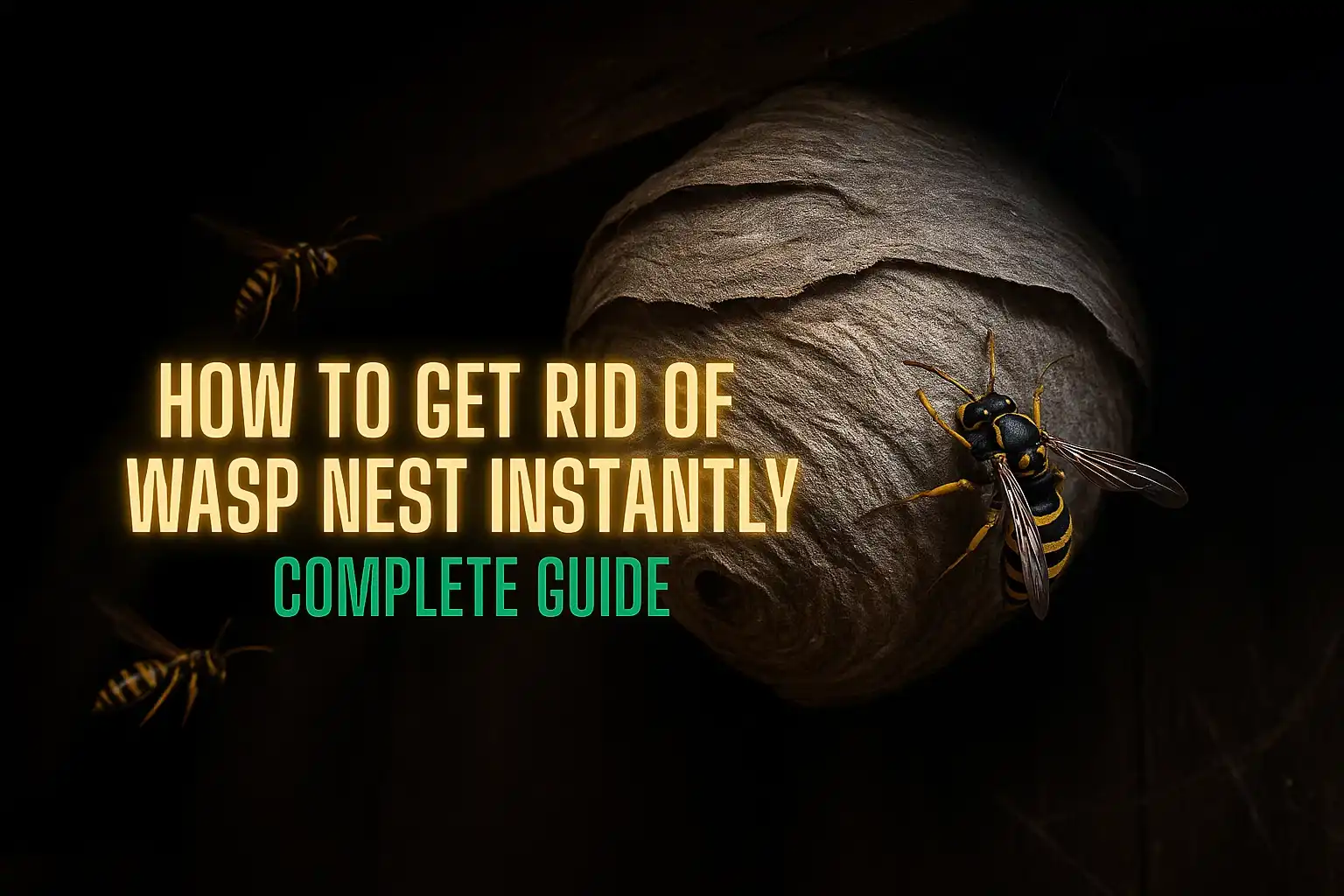
A wasp nest near your Cardiff home can spoil your summer. Wasps guard their nest and will sting if they feel it is at risk. There is no need to rush. A nest cannot be removed in an instant, and rushing is how people get stung.
This guide puts safety first. It shows where wasps nest, which small nests you may be able to treat, and which nests you must leave to a professional. If you want help now, our wasp nest removal service in Cardiff can treat nests with the right kit and training.
Quick answer: Safety comes first with a wasp nest. Never block the entrance, never use fire, and never treat a nest if you have a sting allergy. Small, easy to reach nests may be treated at dusk with care. Large or hidden nests need a professional. Cardiff Pest Control can help.
Safety warning: read this before you do anything
Wasps can sting many times, and a disturbed nest can send out dozens of wasps at once. A sting is painful. For people with a sting allergy, it can be life-threatening. Please read these points before you go near any nest:
- Do not treat a nest if you have a sting allergy, or if anyone in your home does. Call a professional instead.
- Never block the nest entrance. Wasps trapped inside a wall or loft will chew new exits, often into your home.
- Never use fire, petrol or boiling water. These cause real harm and do not work.
- Keep children and pets well away until the nest is dead and quiet.
- Plan an escape route and never work from a ladder against a nest. A fall plus stings is a bad mix.
- If you are stung many times, or feel unwell, dizzy or short of breath, call 999 or go to A&E at once.
Where wasps build nests
Wasps like warm, dry, quiet places that are safe from the weather. These are the spots we find most often:
| Place | What you may notice |
|---|---|
| Loft or roof space | A steady line of wasps flying to one gap at the eaves |
| Wall cavity | Buzzing in the wall, wasps at an air brick or a small hole |
| Garden shed or garage | A grey, papery nest hanging in a corner |
| In the ground | Wasps flying in and out of a small hole in the lawn or a bank |
| Bushes and trees | A hanging nest, often hard to spot until late summer |
Nests start small in spring, about the size of a golf ball. By late summer a nest can hold thousands of wasps. The same nest is not used again next year, but new nests are often built close by.
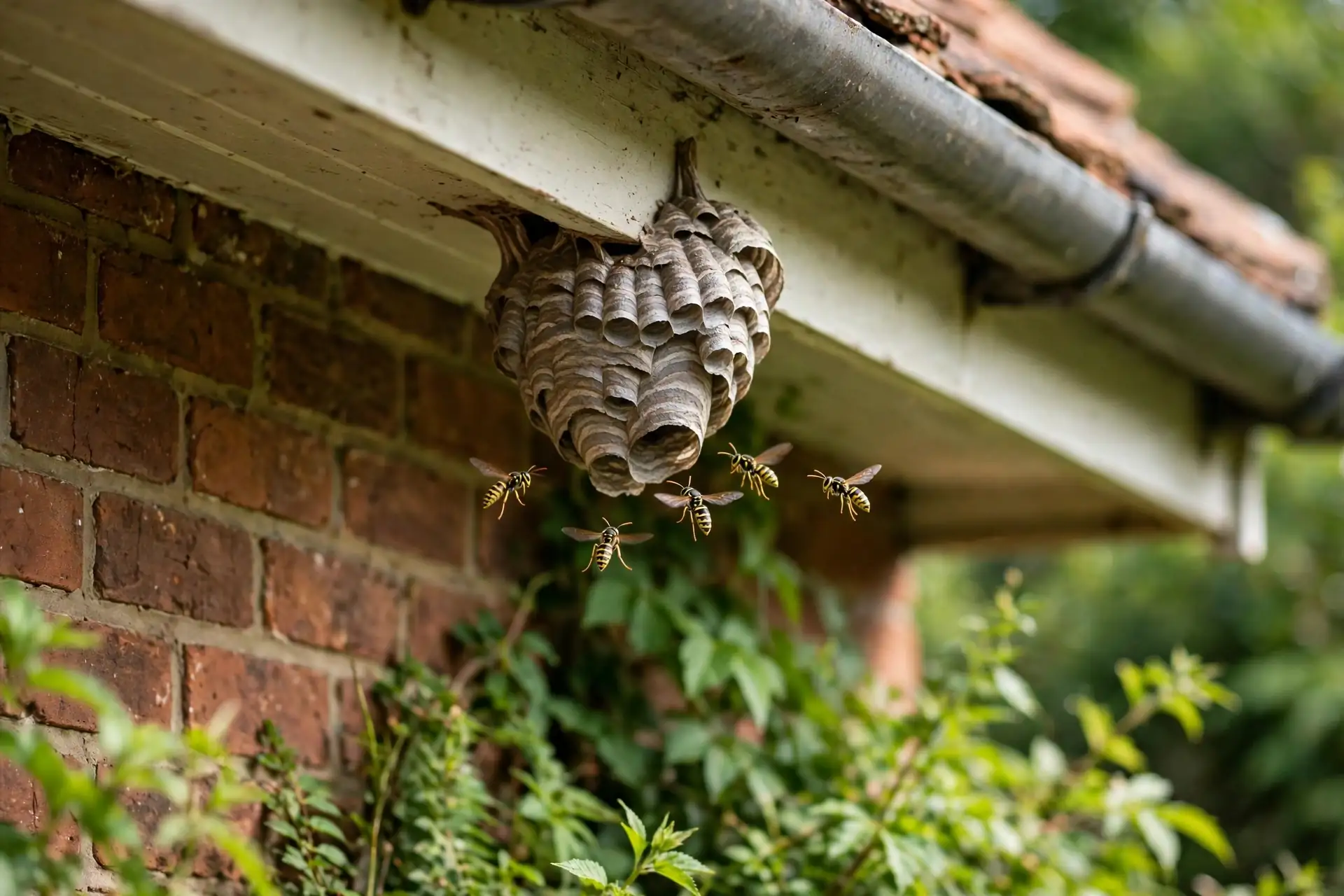
First, check the size and place of the nest
Watch from a safe distance for a few minutes. Note where the wasps fly in and out. A small nest in the open, low down, with a clear path away from it, is the only kind you should even think about treating yourself. In Cardiff, most call-outs are for nests in lofts and wall cavities, where you cannot see the nest at all. If you cannot see your nest, do not treat it yourself.
Treating a small nest yourself, with care
If the nest is small, in the open and easy to reach, and no one in your home has a sting allergy, you may choose to treat it with a shop-bought wasp nest foam or spray. Follow these steps:
- Wait until dusk, when most wasps are back in the nest and calm.
- Cover up well: long sleeves, gloves, trousers tucked into socks, and a veil or hat if you have one. Keep your skin covered.
- Read the label and follow it exactly. Stand as far back as the product allows.
- Apply the product to the nest entrance, then walk away calmly. Do not run, and do not swat at wasps.
- Check the next day from a distance. If wasps are still flying in and out after the time on the label, do not keep spraying. Call a professional.
Foam and spray from a shop can work on a small nest, but they have limits. They do not reach deep into wall cavities or long loft nests. Using more and more spray raises the risk to you, and to pets and wildlife nearby.
Nests you should never treat yourself
- Nests inside walls, lofts or chimneys that you cannot see.
- Large nests, or any nest bigger than a football.
- Nests high up, where you would need a ladder.
- Ground nests near paths, doors or play areas.
- Any nest if you, or someone nearby, has a sting allergy.
These nests need professional kit, such as long lances and strong dusts that reach the heart of the nest. Our guide to wasp nests in the loft explains why loft nests are best left to the pros.
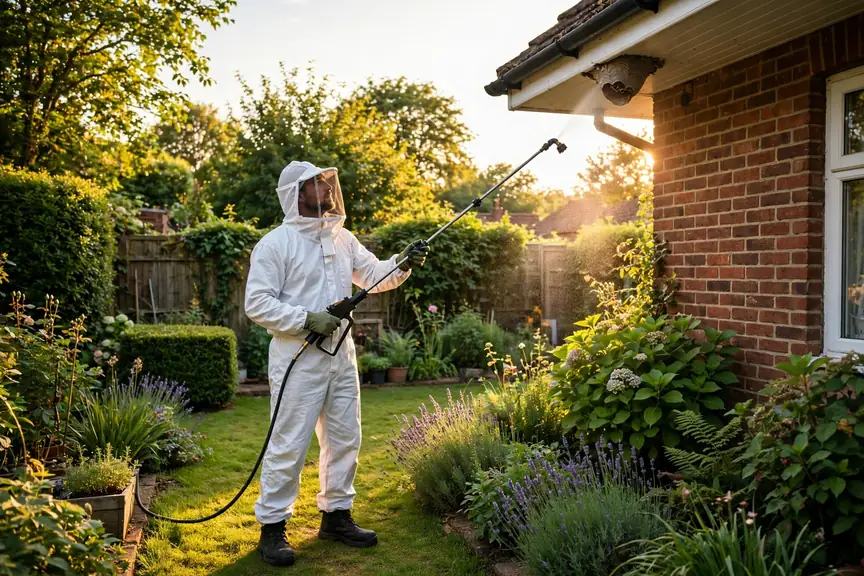
How professional wasp nest removal works
A technician finds the nest entrance and treats it with a professional insecticide, often a dust, that the wasps carry deep inside. The nest normally goes quiet within a day or so. The old nest can then be removed if it is easy to reach, or left to dry out where it is. You can read about how much wasp nest removal costs in our cost guide.
Not sure if your nest is safe to treat? Ask Cardiff Pest Control. We offer a free inspection, a fixed quote before work, and we aim to attend within 24-48 hours. Call 029 2236 0531 or use our contact page.
How to stop wasps nesting again
- Seal gaps around eaves, vents and pipes before spring.
- Keep bins shut and clear fallen fruit from the garden.
- Check sheds, lofts and eaves in spring for small starter nests.
- Cover sweet drinks and food when you eat outside in late summer.
Homes across Cardiff, in areas like Penylan and Whitchurch with big gardens and old trees, often see nests each year. A spring check of the eaves and shed can catch a nest while it is still tiny and easy to deal with.
Key takeaways
- Never block a nest entrance, never use fire, and never treat a nest if you have a sting allergy.
- Only small, open, easy to reach nests are worth treating yourself, and only at dusk with skin covered.
- Nests in walls, lofts and chimneys, and any large nest, need professional kit and training.
- Seal gaps and check eaves and sheds each spring to catch new nests while they are tiny.
Frequently Asked Questions
Can I remove a wasp nest myself?
Only if it is small, in the open and easy to reach, and no one nearby has a sting allergy. Treat at dusk, cover your skin and follow the label. Leave all other nests to a professional.
What is the best time of day to treat a wasp nest?
Dusk is best. Most wasps are back inside the nest and are calm and slow. Never treat a nest in the heat of the day, when wasps are active and quick to defend it.
Why should I never block a wasp nest entrance?
Blocked wasps do not die quietly. They chew new ways out, and in a wall or loft that often means chewing into your rooms. A blocked nest can turn a small problem into wasps all over the house.
What should I do if I am stung by a wasp?
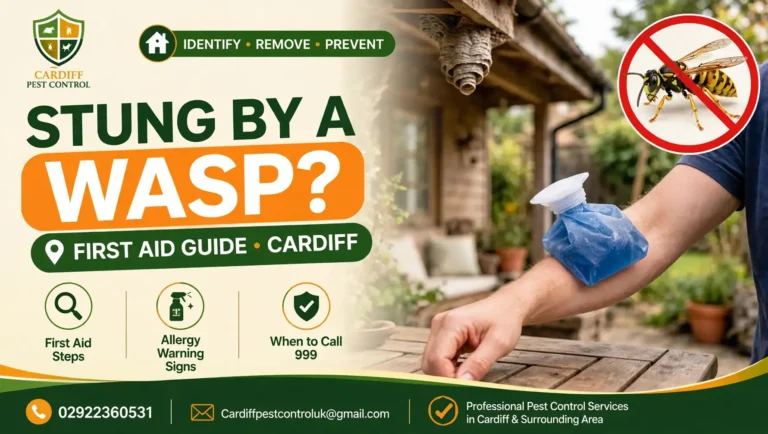
Move away from the nest at once. Wash the sting, use a cold pack, and take an antihistamine if you have one. If you feel dizzy, sick or short of breath, call 999 straight away.
Do wasps come back to the same nest next year?
No. A nest is used for one season only, and the colony dies off in autumn. But new queens often build new nests near old spots, so seal gaps and check eaves and sheds each spring.
A wasp nest is not an emergency in most cases, but it does need respect. Treat only small, open nests, and only with care. For anything big or hidden, Cardiff Pest Control can remove the nest safely, and our work is backed by a satisfaction guarantee.