Finding bees in your home or garden can be worrying, especially if there are hundreds of them. In Cardiff, most calls about bees turn out to be one of three situations: a honey bee swarm resting in a tree or on a fence, a bumblebee nest under decking or in a bird box, or small masonry bees using holes in a wall. Each one needs a different response, and in most cases the right answer is to leave them alone or call a beekeeper, not a pest treatment.
This guide explains how to identify which bees you have, what to do about swarms and nests, and the mistakes that make bee problems worse. If you are not sure whether your insects are bees or wasps, that matters, because wasps are treated very differently. Our wasp nest removal service covers wasp nests, and we are always happy to help you identify what you are looking at first.
Quick answer: Most bees in Cardiff homes and gardens should be left alone or moved by a beekeeper, not treated. Honey bee swarms are usually collected free by local beekeepers, bumblebee nests die out by autumn on their own, and masonry bees rarely cause damage. Cardiff Pest Control can help you identify whether you have bees or wasps.
The Three Bees You Are Most Likely to Find
Correct identification is the whole job with bees. Treating a bee colony as if it were a wasp nest is the most common and most avoidable mistake we see.
| Bee | What it looks like | Where it nests | Best response |
|---|---|---|---|
| Honey bees | Golden brown, slim and fuzzy, about 12-15mm long | Swarms on branches and fences; colonies in chimneys, wall cavities and roofs | Ask a beekeeper to collect a swarm; an established colony needs specialist live removal |
| Bumblebees | Large, round and very furry, with a loud buzz | Compost heaps, bird boxes, under decking, in loft insulation | Leave alone where possible; the nest dies out by autumn |
| Masonry bees | Small, reddish brown, solitary bees seen around walls in spring | Existing holes in soft mortar, air bricks and sunny walls | Leave alone; they rarely cause damage and are gone by early summer |
Bees are also often confused with wasps and hornets. Wasps are bright yellow and black, smooth and almost hairless, with a narrow pinched waist. Bees look softer and duller in colour. Our guide to hornet vs wasp identification shows the differences side by side.
What to Do If a Honey Bee Swarm Lands in Your Garden
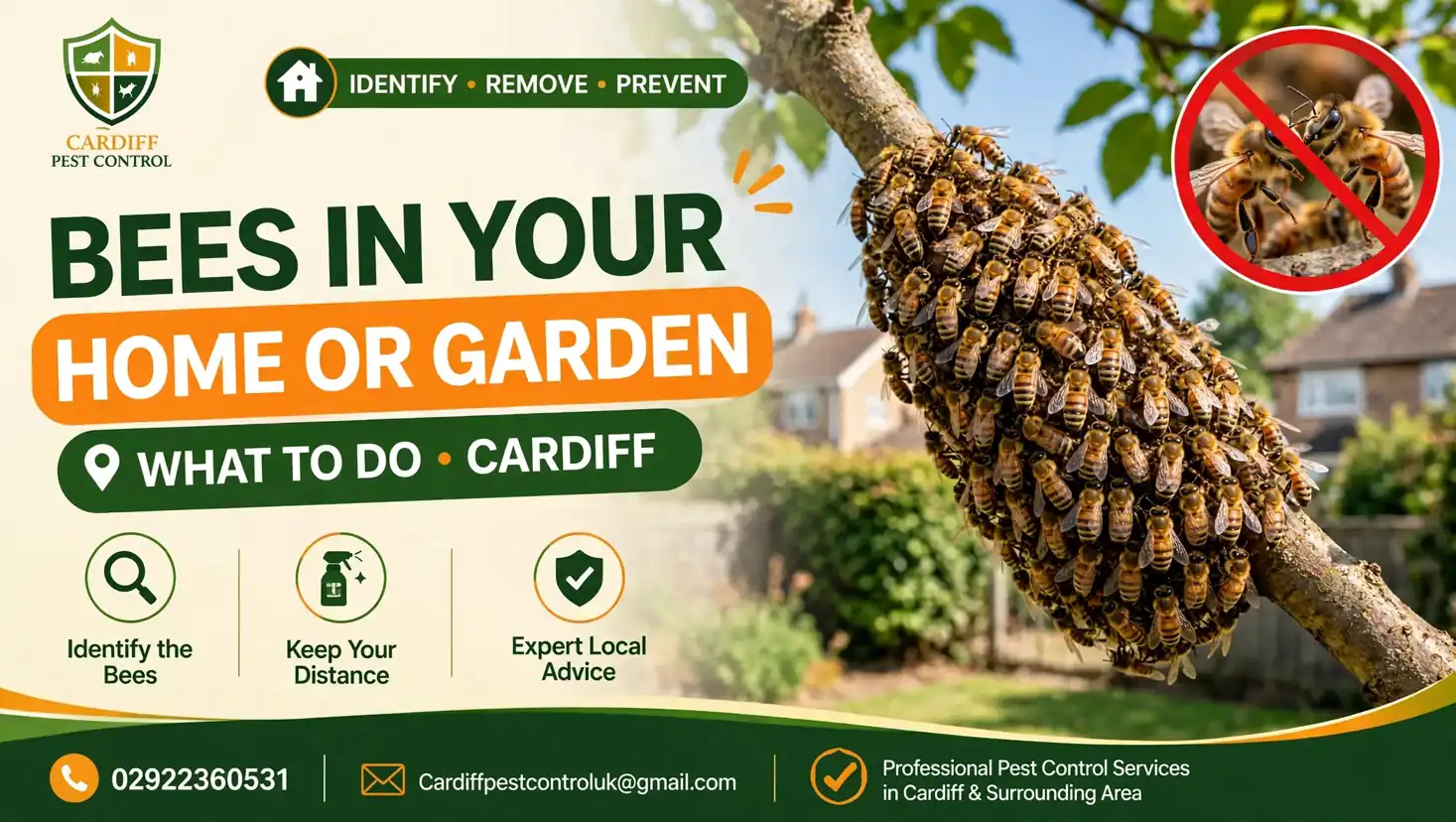
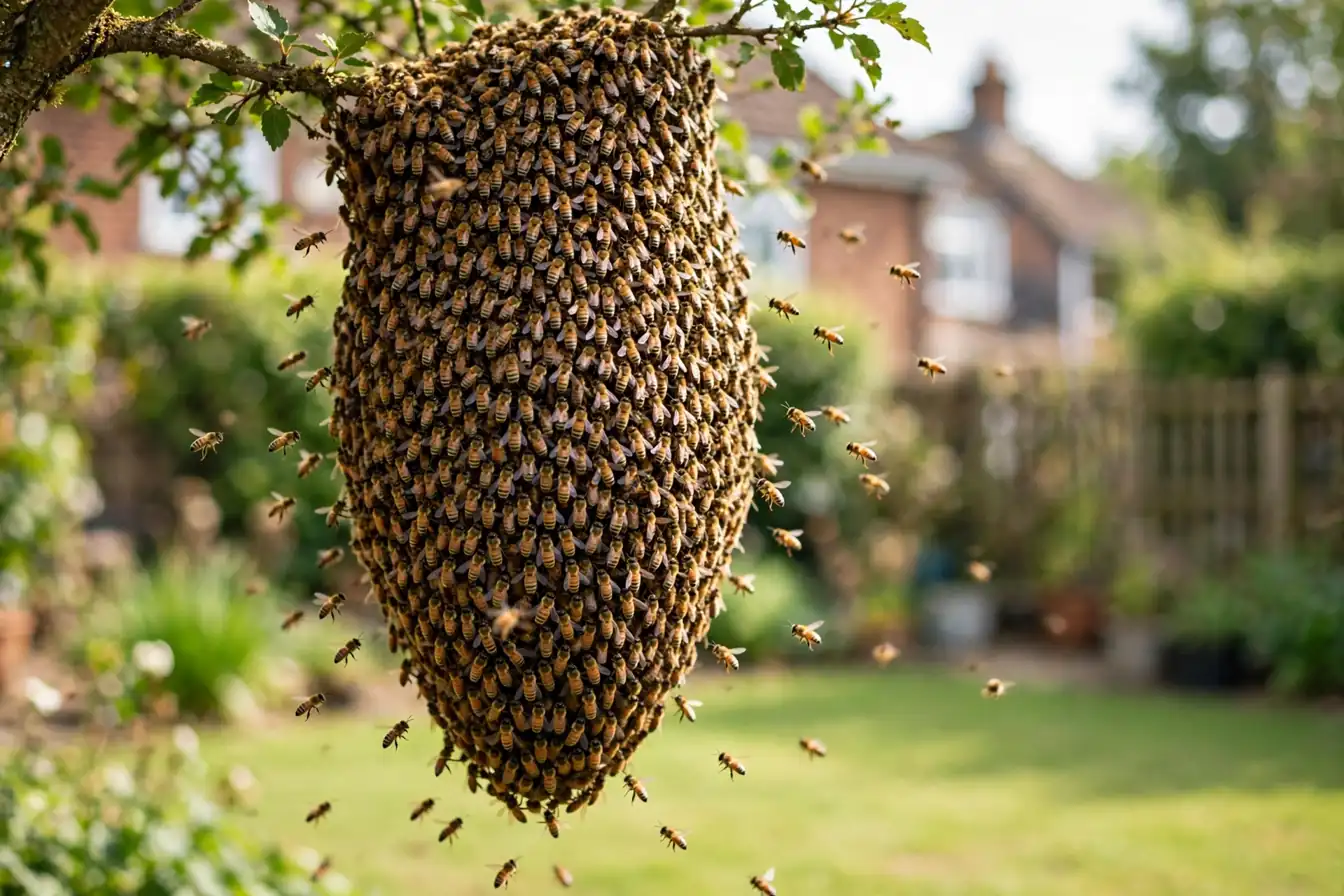
A honey bee swarm is a cluster of thousands of bees, often about the size of a football, hanging from a branch, fence or wall. Swarms are most common in Cardiff between May and July, when a colony splits and half the bees leave with a queen to find a new home.
A swarm looks dramatic but is usually calm and temporary. The bees have full stomachs and no nest to defend, so they are unlikely to sting unless handled. Do this:
- Keep people and pets indoors and give the swarm space. Do not spray it, shake the branch or try to move it yourself.
- Contact a local beekeeper. Beekeepers collect swarms to stock their hives and will usually take one away free of charge. Local beekeeping associations keep lists of volunteer swarm collectors.
- Act the same day. A swarm resting in the open will often move on within 24 to 48 hours. If it moves into a chimney or wall cavity before a beekeeper arrives, the problem becomes much bigger.
- Take a photo from a safe distance if you can. It helps the beekeeper confirm they are honey bees and bring the right equipment.
Bees in a Chimney, Loft or Wall Cavity
An established honey bee colony inside the structure of a house is a different problem from a passing swarm. Colonies in chimneys, wall cavities and roof spaces can grow to tens of thousands of bees, with heavy wax comb and stored honey inside the building.
These colonies need specialist live removal: the bees and comb are taken out alive by an experienced beekeeper or a pest professional with the right access equipment, and the cavity is then cleaned and sealed. This matters because:
- Dead bees and old comb left inside a wall attract other pests, including rodents, flies and wax moths.
- Stored honey can melt and seep through plaster in warm weather, staining walls and ceilings.
- Blocking the entrance does not work. Trapped bees find new routes, often into the rooms of the house.
- Never light a fire under a chimney colony or try to smoke bees out. It rarely works and creates a serious fire and sting risk.
If bees have moved into your chimney or wall, get advice quickly. The longer a colony is established, the bigger the comb and the harder the removal.
Bumblebee Nests: Usually Best Left Alone
Bumblebee nests are small compared with honey bee colonies, usually 50 to 400 bees. In Cardiff gardens they turn up in compost heaps, under decking and sheds, in old bird boxes and occasionally in loft insulation.
Bumblebees are not aggressive and only sting if handled or trapped against skin. A nest in a quiet corner can normally be left where it is:
- The colony dies out naturally by autumn. Only new queens survive winter, and they hibernate elsewhere.
- The nest is never reused the following year.
- If the nest is somewhere genuinely risky, such as right beside a door used by someone with a sting allergy, ask a beekeeper about moving it. Relocation is not always possible, but it is worth asking before anything else.
Masonry Bees in Your Walls
Masonry bees, often red mason bees, appear around sunny walls in spring. They are solitary bees: each female uses an existing small hole in soft mortar, an air brick or a bee hotel, lays eggs in it and seals it with mud.
They are one of the most misunderstood garden insects:
- They do not dig into sound mortar. They use holes and weak joints that are already there.
- They are very unlikely to sting and are excellent pollinators for fruit trees and gardens.
- Activity lasts only a few weeks in spring. If mortar needs repair, repoint after the bees have finished, in summer, rather than while they are active.
What Not to Do With Bees
- Do not ask for bees to be treated like wasps. Bees are vital pollinators, numbers are under pressure, and a good pest controller will always look at relocation or leaving them alone first.
- Do not block entrances to a chimney, wall or roof colony. It drives bees inside the house and makes removal harder.
- Do not spray a swarm or nest yourself. Shop bought sprays scatter bees, rarely solve a colony inside a structure, and leave contaminated comb behind.
- Do not assume every striped insect is a wasp. A wrong identification leads to the wrong response. Check the table above or send us a photo.
Not sure what you have? Send a photo or call Cardiff Pest Control on 029 2236 0531. If they are wasps, we can treat the nest safely. If they are bees, we will point you to the right beekeeper route instead. You can also reach us through our contact page.
Key takeaways
- Most bees in Cardiff homes and gardens should be left alone or relocated by a beekeeper, not treated.
- Honey bee swarms are usually collected free by beekeepers, so act the same day before they move into a chimney or wall.
- Bumblebee nests die out by autumn and are never reused, so a quiet corner nest rarely needs any action.
- Never block a bee colony entrance or spray it yourself; correct identification between bees and wasps is the first step.
Frequently Asked Questions
Are bees protected in the UK?
Bees are not a legally protected species in the UK, but they are vital pollinators and under real pressure. Good practice, and what any responsible pest controller follows, is relocation or leaving them alone wherever possible.
What should I do if a bee swarm lands in my garden?
Keep people and pets away and contact a local beekeeper the same day, as swarms are usually collected free. Do not spray or disturb the cluster. If it is not collected, it will often move on within 24 to 48 hours.
How can I tell bees from wasps?
Bees are fuzzy and golden brown or dull in colour, while wasps are smooth, almost hairless and bright yellow and black with a narrow waist. Bees focus on flowers; wasps hunt insects and gather around sweet food in late summer.
Do masonry bees damage walls?
Rarely. Masonry bees are solitary and use holes that already exist in soft mortar rather than digging into sound walls. They are active for a few weeks in spring. If joints need repair, repoint in summer after they finish.
Can bees in a chimney be removed?
Yes, but an established chimney colony needs specialist live removal of the bees and comb, followed by cleaning and sealing. Never light fires under it or block the entrance, as both make the problem worse and can push bees indoors.
Will a bumblebee nest go away on its own?
Yes. Bumblebee colonies die out by autumn and only new queens survive, hibernating elsewhere. The nest is never reused, so a nest in a quiet spot can simply be left alone until the season ends.
Who should I call about bees in Cardiff?
For a swarm, contact a local beekeeper first, as collection is usually free. If you cannot tell whether your insects are bees or wasps, call Cardiff Pest Control for identification advice, and we will tell you honestly which route you need.