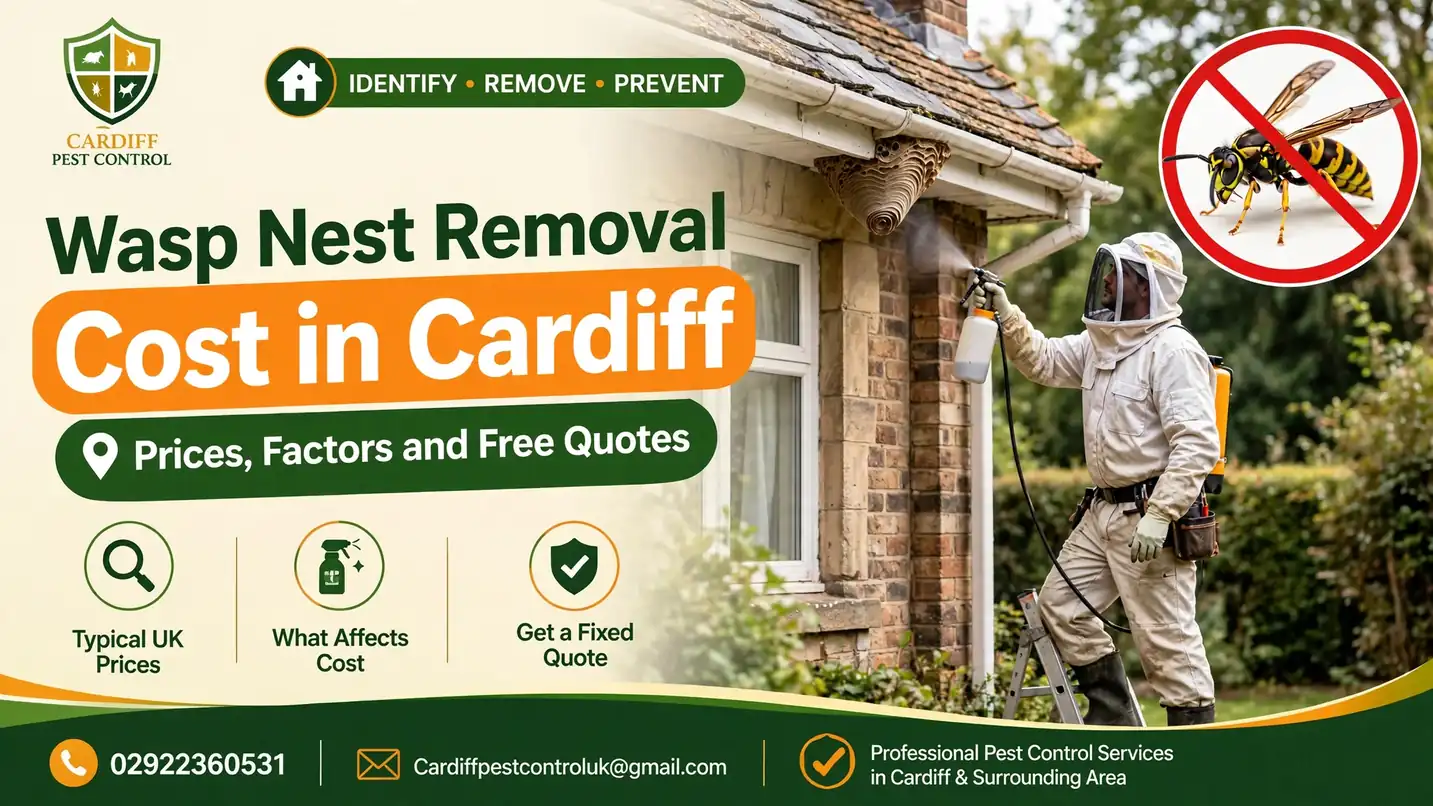
It is usually the first question we are asked: how much does wasp nest removal cost? In Cardiff, as across the UK, the honest answer is that a standard nest treatment is one of the most affordable pest control jobs there is, national cost guides put a typical wasp nest treatment at £80-£200, with Checkatrade’s average around £137. Where your job falls in that range depends on the size of the nest, where it is and how easy it is to reach.
This guide breaks down what affects the price, what you should get for your money, and why the cheapest option, a DIY kit, often ends up costing more. If you would like an exact figure for your nest rather than a guide range, our wasp nest removal service in Cardiff works to a free, fixed quote agreed before any treatment starts.
Quick answer: UK guide prices put wasp nest removal at £80-£200 for a typical treatment, with an average around £137. The exact cost depends on nest size, location and access. Cardiff Pest Control gives Cardiff homeowners a free inspection and a fixed quote before any work starts.
The short answer: typical UK prices
The figures below are national guide prices drawn from UK cost guides such as Checkatrade, they are what homeowners typically pay across the country, not a Cardiff Pest Control price list. They are a reliable yardstick for spotting quotes that are far too high or suspiciously cheap.
| Type of job | Typical UK guide price |
|---|---|
| Standard nest, easy access (shed, bush, low eaves, air brick) | £80-£130 |
| Average nest treatment (Checkatrade average) | Around £137 |
| Large nest, or nest in a loft | £120-£200 |
| Difficult access (high roofline, wall cavity, chimney) | £150-£250+ |
| Each additional nest at the same visit | Usually charged at a reduced rate per extra nest |
Two warnings about price. First, a quote far below £80 for a full treatment usually means corners are being cut, no protective equipment, weak products, no follow-up. Second, wasps are seasonal: at the peak of summer, when nests are largest and companies busiest, prices at the top of the range are more common.
What affects the cost of wasp nest removal?
Five things drive the price most: nest size, location and access, how many nests there are, whether removal is needed, and urgency.
- Nest size. A golf-ball-sized nest in June takes minutes to treat. A football-sized nest in August holds thousands of wasps and needs more product and more care.
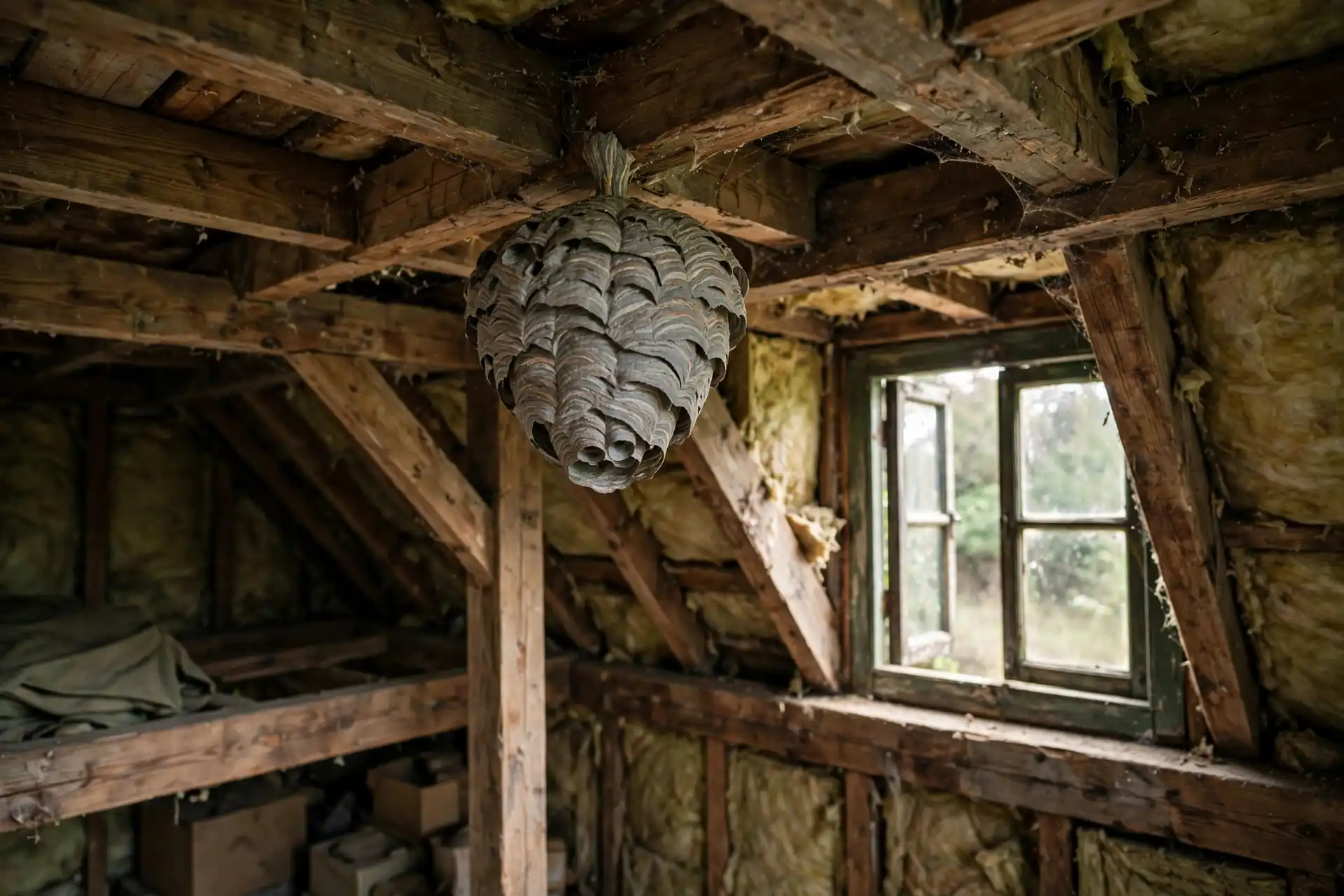
- Location and access. A nest at ground level costs less than one at a third-floor roofline or inside a wall cavity, where ladders, access equipment or a more involved treatment are needed.
- Number of nests. Properties often have more than one active nest. Extra nests found at the same visit are normally treated at a discount rather than full price each.
- Treatment vs physical removal. Most nests are treated in place and do not need to be physically removed (see the FAQs). Removing a large nest from a loft after treatment adds time and cost.
- Urgency. A nest blocking a doorway or threatening someone with an allergy may need a priority visit, which some companies charge extra for.
What should be included in the price?
Whoever you use, a proper wasp nest treatment should include:
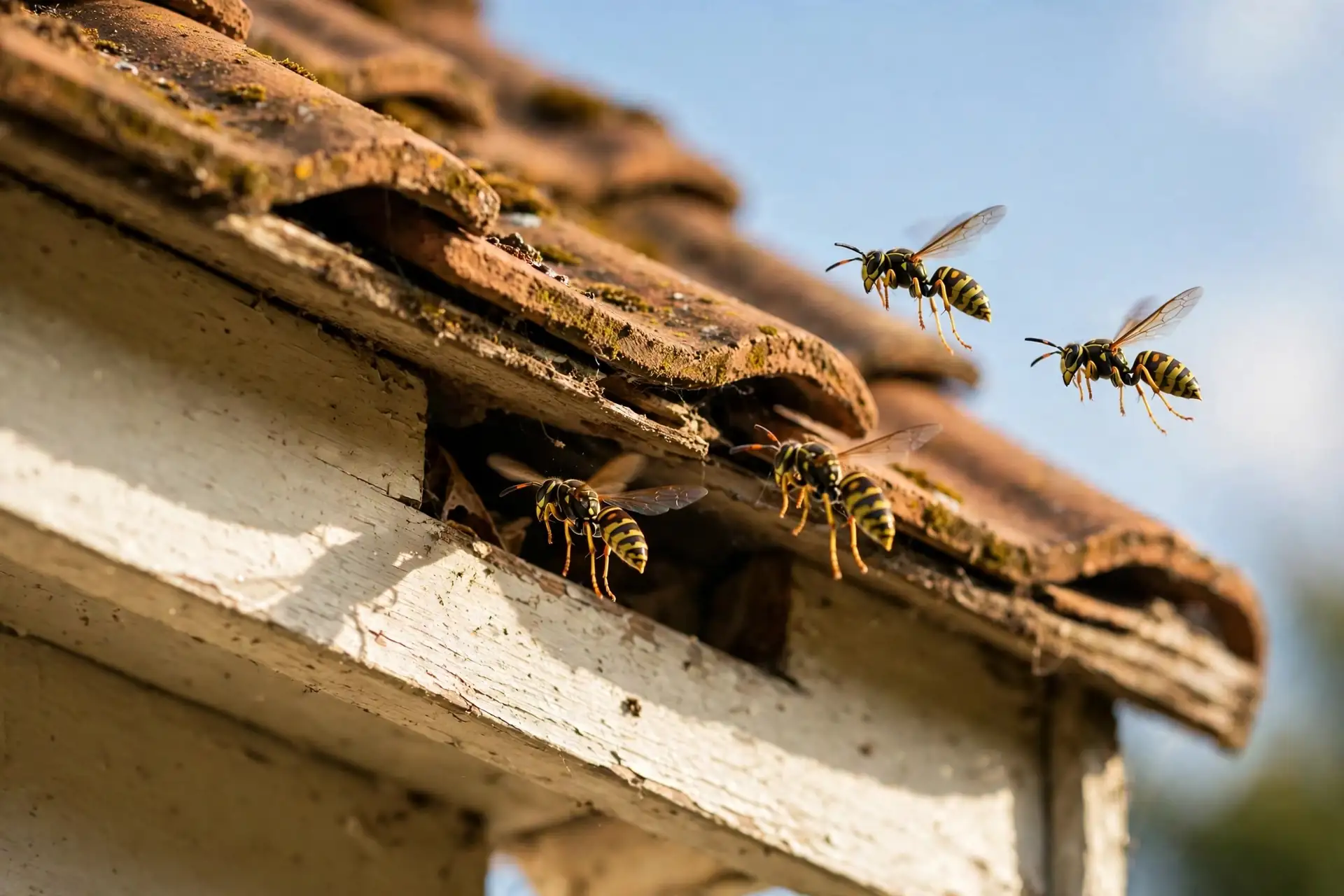
- Identification, confirming it is wasps, not bees. Honey bees and bumblebees need very different handling, and a good technician will check first. Our guide on hornets vs wasps helps with the basics of identification.
- A professional-grade insecticide treatment applied to the nest entrance or the nest itself, by a technician in full protective equipment.
- Safety advice for your household, keeping people and pets indoors during treatment and until activity has stopped.
- A clear position on follow-up: what happens if wasps are still active after the treatment has had time to work.
- The price agreed before work starts, with no additions on the day.
Can I save money by doing it myself?
DIY wasp products cost £10-£20, so the temptation is understandable. In practice, home treatments are the jobs we most often get called to rescue. Shop-bought sprays have a short range, which means getting close to an angry nest; foam and powder rarely reach the heart of a nest inside a wall or roof void; and a partly-treated colony becomes defensive and unpredictable. Our post on getting rid of a wasp nest explains honestly what DIY can and cannot do. If anyone in the household has a wasp sting allergy, do not attempt it at any price, the saving is not worth the risk.
Want an exact price for your nest? Cardiff Pest Control gives a free inspection and a fixed quote before any work starts, the price agreed is the price you pay. Call 029 2236 0531 or contact us online. We aim to attend within 24-48 hours.
How to keep the cost down
A few simple things keep a wasp job at the lower end of the range:
- Act early: a nest treated in June, when it may hold only a few dozen wasps, is quicker work than one left until August.
- Do not disturb the nest before the visit, a colony that has been sprayed, poked or partly blocked is defensive and harder to treat safely.
- Clear access to the nest area, and tell the company about any second entrance or additional nests you have noticed, so everything can be dealt with in one visit rather than two.
- Get the identification right before you pay anyone: if it turns out to be bees, the job, and the price, is completely different.
So what will it cost in Cardiff?
Cardiff Pest Control does not publish a one-size-fits-all price, because nests genuinely vary, and because a fixed quote after a free inspection protects you from the open-ended hourly charging that makes some pest control bills a surprise. In most cases a standard nest falls comfortably within the national £80-£200 guide range. For context on other treatments, our guide to how much pest control costs in Cardiff covers rats, mice, bed bugs and more.
We have treated wasp nests across Cardiff since 2017, and every job is backed by our satisfaction guarantee. The quote is free and there is no obligation, if the nest turns out to be bees, or it is inactive and needs nothing, we will tell you.
When to call a professional
Some nests should never be a DIY project:
- The nest is in a loft, wall cavity, chimney or high on the roofline.
- It is large, or wasps are entering the house itself.
- Anyone nearby has a known wasp or bee sting allergy.
- The nest is by a door, path, school route or anywhere people must pass close by.
- You are not certain whether they are wasps, hornets or bees.
Call 029 2236 0531 and we will identify the problem, quote a fixed price, and treat it safely, usually in a single visit.
Key takeaways
- UK guide prices are £80-£200, with an average around £137; these are not Cardiff Pest Control prices.
- Size, location, access, number of nests and urgency affect the cost most.
- A proper price includes identification, professional treatment, safety advice and a fixed quote agreed before work starts.
- DIY kits cost £10-£20 but often fail and can make a nest defensive.
- Act early and clear access to keep a job at the lower end of the range.
Frequently Asked Questions
How much does wasp nest removal cost in the UK?
National cost guides put typical wasp nest treatment at £80 to £200, with Checkatrade giving an average of around £137. Accessible nests cost less, while large or awkward nests cost more.
Does Cardiff Pest Control charge for a wasp nest quote?
No. Cardiff Pest Control offers a free inspection and quote, with a fixed price agreed before treatment starts. You only pay for the treatment itself if you decide to go ahead.
Will the council remove a wasp nest for free?
Generally not for free. A wasp nest on your property is usually the owner’s responsibility, and Cardiff Council services are usually charged with possible waits in peak season. Many homeowners choose a private company.
Is wasp nest removal cheaper earlier in the summer?
Usually, yes. Nests are small in late spring and early summer, so they are quicker and simpler to treat at the lower end of the range. By August, colonies are much larger.
Does the nest have to be physically removed after treatment?
Usually not. Once treated and inactive, a nest can normally be left in place, as wasps do not reuse old nests. Removal is mainly needed if it blocks access or loft work.