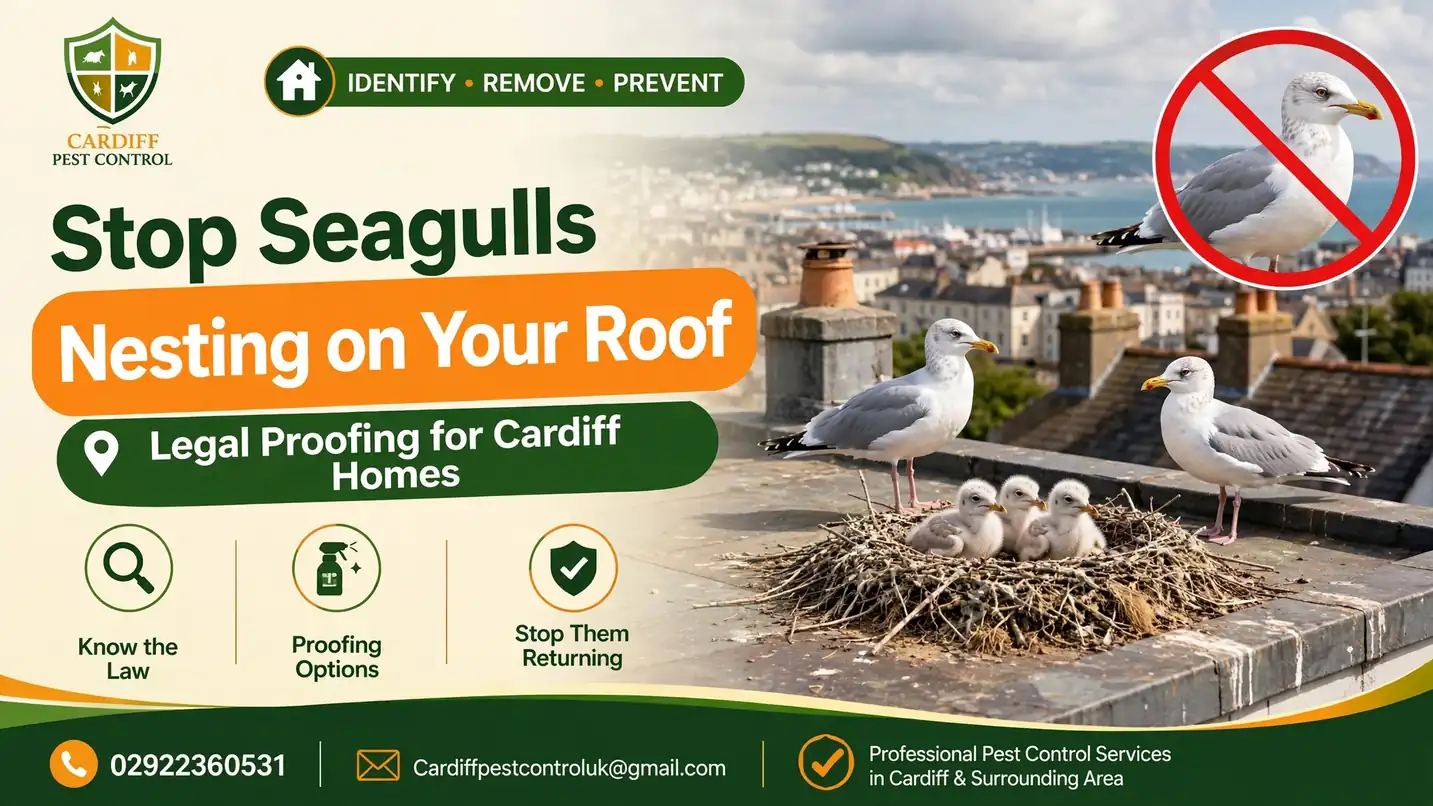
If you have seagulls nesting on roof ridges, flat roofs or chimney stacks, you will know how quickly the noise, mess and early-morning calls take over. In Cardiff, herring gulls are a familiar sight around the coast and city centre, and a quiet rooftop can look like a safe cliff top to a breeding pair. The good news is that you can stop them coming back, legally and for the long term, with the right proofing at the right time of year.
This guide explains how to stop seagulls nesting, which seagull deterrents actually work, and when the law says you must leave a nest alone. If the birds are already settled, our bird control and gull proofing service can inspect the roof and recommend the safest next step.
Quick answer: To stop seagulls nesting on your roof in Cardiff, install physical proofing such as spikes, netting or post-and-wire outside the breeding season, in autumn and winter. Active nests are protected under the Wildlife and Countryside Act 1981 and must not be disturbed. Cardiff Pest Control offers a free inspection and fixed quote.
Why Seagulls Choose Roofs
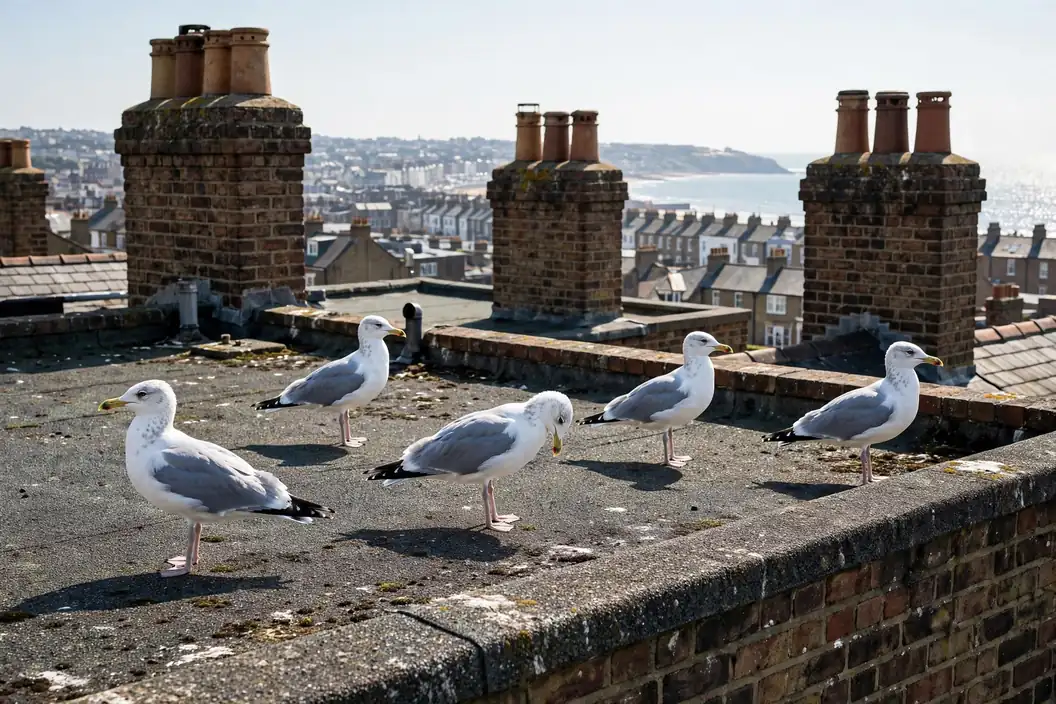
Herring gulls originally nested on cliffs, so a roof offers the same advantages: height, safety from ground predators, warmth and a clear view of feeding grounds. Flat roofs, roof valleys, parapets and the sheltered area behind chimney stacks are favourite sites because they are flat, protected from wind and rarely disturbed.
Location matters too. Homes and businesses near Cardiff Bay, the city centre and Penarth seafront are close to water, takeaways, markets and bins, so food is never far away. A pair that raises chicks successfully on your roof will usually return to the same spot the following spring, and their young may return too. That loyalty to a nest site is why a single season often becomes a problem that repeats every year, with droppings blocking gutters, nesting material in valleys and aggressive behaviour when chicks are nearby. Our guide to how to stop birds nesting in your roof covers the wider signs to look for in lofts and eaves.
Are Seagulls Protected? What the Law Says
Yes. All wild birds, including herring gulls, are protected under the Wildlife and Countryside Act 1981. It is an offence to intentionally kill, injure or take a wild bird, or to take, damage or destroy its nest while the nest is in use or being built, or to take or destroy its eggs.
In practice, that means an active nest with eggs or chicks must not be removed or disturbed. You cannot use poison, and you should never try to harm the birds. Control beyond deterrence and proofing is only possible as a licensed exception in limited circumstances, dealt with by the licensing authority, and it is not a routine option for most homes.
Proofing and deterrents are legal, but the work should be planned so it prevents nesting rather than trapping birds or blocking an active nest. If you are unsure whether a nest is active, get advice before anyone goes onto the roof.
When Is the Best Time to Act?
The best time to stop nesting is outside the breeding season. Gulls typically start building nests in spring, lay eggs in late spring, and chicks may remain around the nest well into summer. Exact dates vary with the weather and the individual pair, so treat spring and summer as a period to observe, not to intervene.
Autumn and winter are the ideal months to install proofing in Cardiff, once young birds have fully fledged and left and before pairs return to claim the site. Acting then gives you a clean roof to work on, avoids disturbing protected birds, and means the deterrents are already in place when the birds come back.
If gulls are swooping, calling through the night or leaving heavy fouling during the breeding season, keep a note of what is happening, secure food waste, and book an inspection for as soon as work can legally be done.
Gull Proofing Options Compared
Effective gull proofing makes the exact nesting and loafing spots unusable, without harming the birds. The right choice depends on the shape of the roof, where the gulls sit, and how visible you want the fix to be.
| Option | Best for | Key point |
| Spikes | Ledges, ridges and parapets | Blunt spikes stop landing on narrow surfaces without injuring birds |
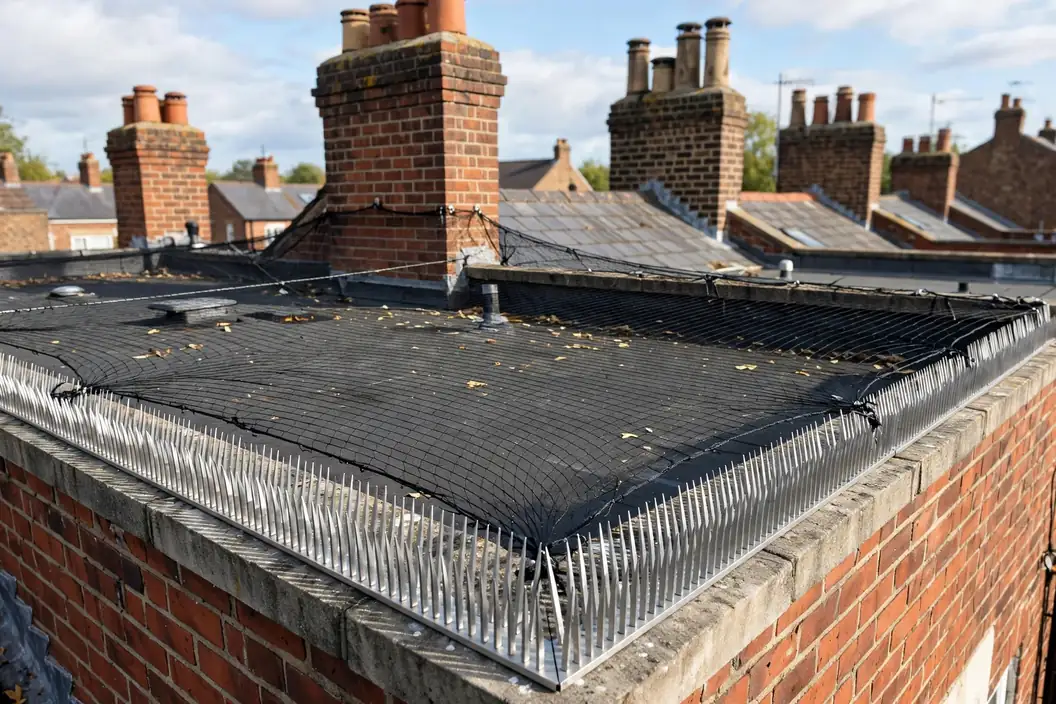
| Netting | Flat roofs and roof wells | Denies access to a whole area when correctly tensioned and fitted |
| Post-and-wire | Visible ledges and ridges | Discreet wires make landing unstable where appearance matters |
| Chimney cowls and caps | Chimney stacks | Stops nesting on the stack and material falling into the flue |
| Solar panel mesh | Around solar panels | Blocks the sheltered gap under panels while maintaining airflow |
Spikes work best on narrow surfaces, not on a wide flat area where a nest can be built behind them. Netting is one of the strongest options for larger roofs, but it must be fitted with the right mesh size and fixings so birds cannot get trapped behind it. Post-and-wire systems suit perching spots rather than open nesting areas.
A suitable chimney cowl or cap, fitted by a competent person, must be appropriate for the appliance and flue in use. If you have solar panels, a mesh skirt around the edges blocks access underneath, and you can read more in our guide to how solar panel bird proofing protects your investment.
Choosing and combining systems
For many properties, a combination works best: netting over the flat section, spikes on the ridge, and a cap on the chimney. A survey should identify exactly where birds land, nest and leave droppings, rather than proofing the whole roof without a plan.
Need help before the next breeding season? Call Cardiff Pest Control on 029 2236 0531 for a free inspection and a fixed, clear quote before any work begins, or contact us online to arrange a visit. We aim to attend within 24-48 hours.
What Does Not Work
Scare devices and nest clearing on their own do not reliably stop seagulls nesting, and an active nest must not be removed. Plastic owls and other fake predators may move gulls on for a day or two, but intelligent birds quickly learn they are not a threat, especially if the model never moves. Scare tape, balloons and ultrasonic devices have similarly short-lived results on their own and do not stop a determined pair returning to a proven nest site in Cardiff.
Removing a nest during the breeding season is not an option if it is active, and simply clearing nesting material outside the season, without proofing, rarely solves anything. The birds return and rebuild, sometimes within days. Gels and slippery coatings can create a mess, may affect plumage if misused, and are not a substitute for physical proofing. Avoid any product or advice that suggests poison or harming the birds.
How to Keep Seagulls Away Long-Term
Proofing does most of the work, but removing the reasons gulls visit will make it last:
- Never feed gulls, and talk to neighbours and tenants about doing the same.
- Keep food waste in secure bins with lids that close properly.
- Clean up spills around bin stores and takeaways quickly.
- Avoid leaving pet food or bird food where gulls can reach it.
Check the roof each autumn for lifted tiles, blocked gutters and early nesting material, and deal with small issues before spring. If nearby buildings are proofed and yours is not, your roof may become more attractive, so a complete job on all the usual landing spots matters. Keep proofing maintained: check net tension, fixings and spikes after storms, and repair any gaps promptly.
For terraces, flats and commercial buildings across Cardiff, a shared approach often works better than one flat acting alone, because gulls simply move to the next unprotected section of the same roof.
When to Call a Professional
Call a professional in any of these situations:
- The nest is on a high, steep or fragile roof, or access needs specialist equipment.
- You are not sure whether a nest is active.
- Droppings are blocking gutters or solar panels.
- Birds are behaving aggressively around entrances.
- Previous deterrents have failed and the pair returns each year.
A professional survey will confirm the species, check for active nests, and specify proofing that is legal, humane and suited to the building. Our birds control service includes a free inspection, a fixed and clear quote before work, and a satisfaction guarantee. Cardiff Pest Control has been trading since 2017. If you are comparing options more generally, our guide to how much pest control costs explains what affects a quote, as proofing costs depend on access, roof size and the system needed, so we do not quote a standard price without seeing the roof.
Key takeaways
- Active nests are protected under the Wildlife and Countryside Act 1981 and must not be disturbed.
- Install proofing in autumn and winter, before pairs return in spring.
- Spikes, netting and post-and-wire work best combined and fitted to the exact landing spots.
- Scare devices alone rarely work, and secure food waste helps proofing last.
Frequently Asked Questions
Can I remove a seagull nest from my roof?
You must not remove or disturb an active nest with eggs or chicks, as wild birds and nests in use are protected by the Wildlife and Countryside Act 1981. Clear old material outside breeding season.
When is the best time to install gull proofing?
Autumn and winter are best, outside the breeding season and after young birds have left. Installing spikes, netting or other proofing then means deterrents are ready when gulls return in spring.
Do seagull spikes harm birds?
No, correctly installed spikes do not harm birds. The blunt spikes make a ledge or ridge uncomfortable and unstable to land on, so gulls choose a different perch instead.
Why do seagulls keep coming back to the same roof?
Gulls are loyal to a successful nest site and often return to the same roof each spring, and their young may return too. Proofing is needed to break that cycle.
How much does gull proofing cost?
Cost depends on roof size, access and whether spikes, netting, wire systems or a combination is needed. Cardiff Pest Control provides a free inspection and a fixed quote before any work begins.