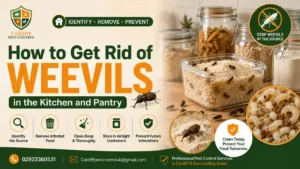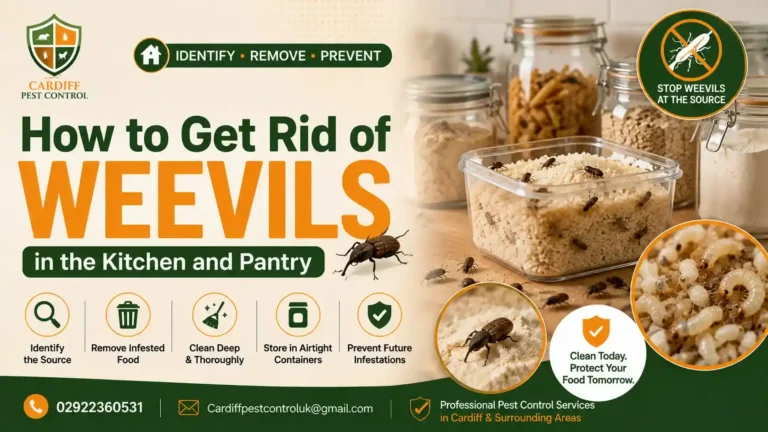
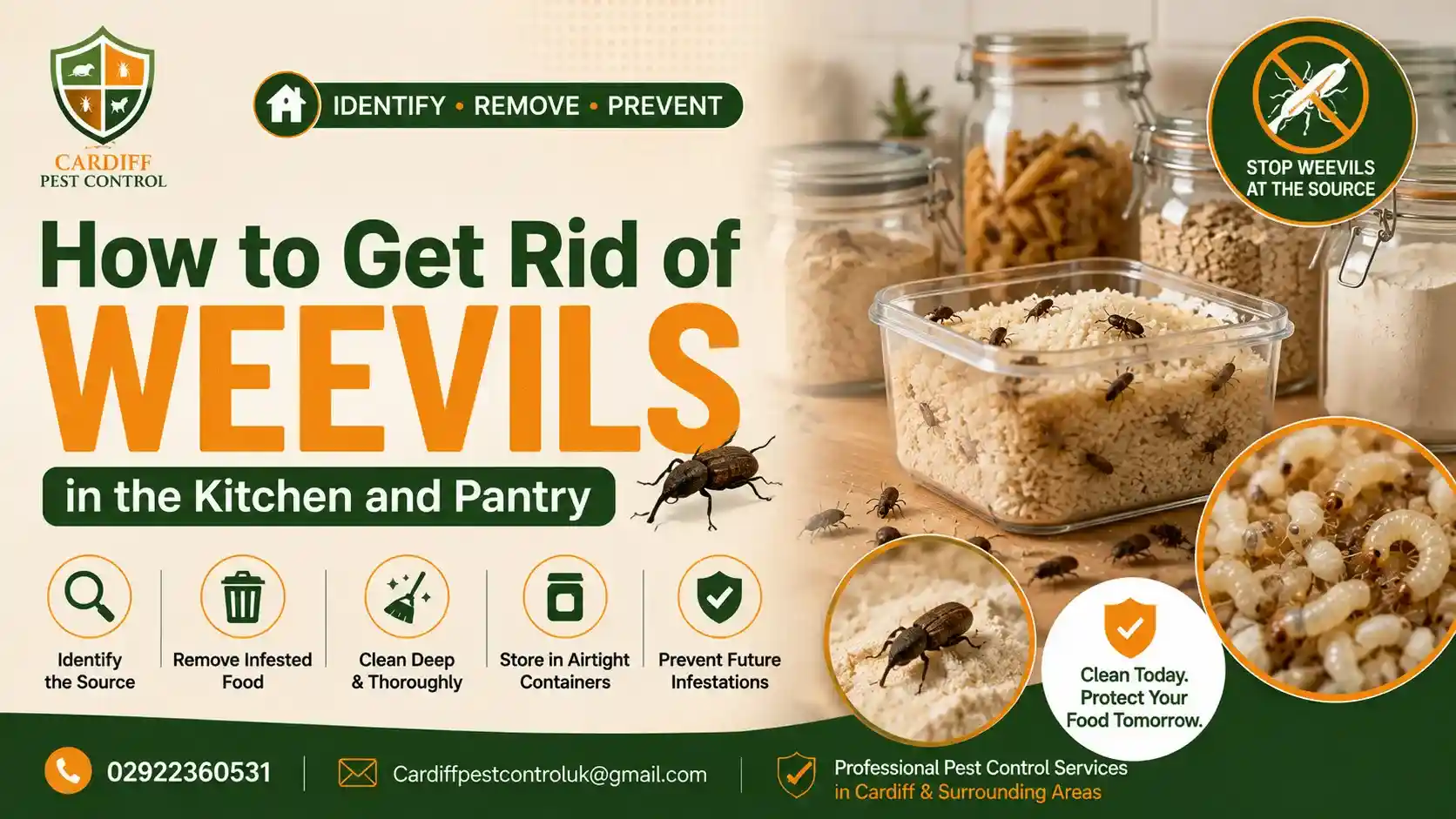
To get rid of weevils, throw away any infested food, deep clean your cupboards and shelves, store dry goods in airtight containers, and check nearby packets for signs of activity. Because weevils breed inside the food they infest, removing the source is far more effective than simply killing the adult insects you see crawling around.
Finding small brown beetles in your rice, flour, or pasta is more common than most people realise, and while it’s an unpleasant discovery, weevil infestations are usually straightforward to resolve once you understand where they came from and how to stop them spreading. This guide covers what weevils are, why they turn up in your kitchen, how to get rid of them, and how to keep them from coming back.
What Are Weevils?
Weevils are small beetles, typically brown, reddish, or black, that infest dry food products such as rice, flour, pasta, cereals, and grains. They’re part of a group of pests often referred to as pantry pests or pantry beetles, and their presence almost always traces back to contaminated food rather than general household dirt.
What Do Weevils Look Like?
Adult weevils are small, usually around 2–5mm long, with a distinctive elongated snout and hard, oval-shaped bodies. They’re often mistaken for small brown or black specks until you look closely enough to see them moving.
What Do Weevils Eat?
Weevils feed on and lay their eggs inside dry, starchy food, including rice, flour, pasta, oats, cereals, beans, and grains. Larvae develop inside the food itself, which is why you can have an active infestation without ever seeing an adult insect.
Common Types of Weevils Found in Kitchens
The two most common household species are the rice weevil and the grain weevil, both of which target similar dry food products. You may also come across the flour weevil or bean weevil, depending on what’s been affected in your kitchen.
What Causes Weevils in the Kitchen?
Contaminated Food Brought Into the Home
The most common cause of a weevil infestation is food that was already contaminated with eggs or larvae before it entered your kitchen, often from a shop or storage facility. The eggs are too small to notice, so the problem only becomes visible once larvae mature into adults.
Open or Poorly Sealed Packaging
Cardboard boxes, thin plastic bags, and paper packaging offer very little protection. Weevils can chew through these materials easily, and unsealed packets make it simple for them to spread from one food item to another.
Long-Term Food Storage
Dry goods stored for extended periods, especially in warm conditions, give weevils more time to breed and multiply undetected.
Warm, Humid Kitchen Conditions
Like many pantry pests, weevils are more active in warm, humid environments, which is part of why infestations are more commonly noticed during summer months.
Where Do Weevils Hide in the Kitchen and Pantry?
Weevils in Rice, Flour and Pasta
These are the most common infestation sites, since these dry, starchy foods provide exactly what weevil larvae need to develop.
Weevils in Cereal and Grains
Boxed cereals, oats, and loose grains are also frequently affected, particularly if they’ve been stored for a long time.
Weevils in Cupboards and Shelving
Even after infested food is removed, weevils and their eggs can linger in cracks, corners, and shelf edges within cupboards.
Weevils in Sealed Containers
If eggs were already present in the food before it was transferred into a container, sealing it afterwards won’t stop the infestation from developing inside.
How to Identify a Weevil Infestation
Signs of Weevils in Your Pantry
- Small brown or black beetles crawling in or near food
- Fine webbing or clumping inside packets of flour or grains
- Tiny holes in rice grains or pasta
- Live larvae or dead insects at the bottom of containers
- A musty smell coming from affected packaging
Weevils in Unopened Packets
It’s entirely possible to find weevils in a packet that looks sealed, since the eggs are often already present in the food before it’s packaged. This is one of the most common questions people have when they first spot activity in their kitchen.
How to Get Rid of Weevils in the Kitchen
The most effective way to get rid of weevils is to remove all infested food, clean the surrounding area thoroughly, and store remaining dry goods in sealed, airtight containers.
Step 1: Identify and Remove Infested Food
Check every dry food item in the affected cupboard, not just the packet where you first spotted activity. Weevils spread quickly between nearby packets, so it’s worth being thorough here rather than assuming the problem is isolated.
Step 2: Throw Away Contaminated Items
Dispose of any food showing signs of weevil activity, including live insects, larvae, webbing, or damaged grains. Seal contaminated items in a bag before binning them to stop insects escaping back into the kitchen.
Step 3: Deep Clean Cupboards and Shelves
Empty the cupboard completely and vacuum out corners, cracks, and shelf edges where eggs or larvae could be hiding. Wipe down all surfaces afterwards to remove any food residue.
Step 4: Check Nearby Food Items
Inspect packets stored near the original infestation, even if they look untouched, since weevils can move between packages that are close together.
Step 5: Wash and Dry Storage Containers
If you use reusable containers for dry goods, wash them thoroughly and let them dry completely before refilling; this removes any lingering eggs or residue.
Step 6: Store Food in Airtight Containers
Moving forward, store rice, flour, pasta, and grains in airtight containers rather than their original packaging. This is one of the most effective long-term defences against weevils returning.
Step 7: Monitor for Further Activity
Keep an eye on cupboards for the next few weeks, particularly if the infestation was widespread, to make sure the problem has been fully resolved.
How to Get Rid of Weevils Naturally
Freezing Infested Food
Freezing suspect dry goods for several days can kill weevil eggs and larvae, useful if you want to salvage food rather than throwing it away immediately.
Using Bay Leaves as a Deterrent
Bay leaves are commonly placed in cupboards as a natural deterrent, though they work best as prevention rather than as a treatment for an active infestation.
Deep Cleaning Without Chemicals
Thorough vacuuming and cleaning of cupboards removes eggs and larvae without needing chemical sprays, and is often the most practical natural approach for a kitchen environment.
Important: natural deterrents can help prevent weevils returning, but they won’t resolve an infestation that’s already established inside food packaging. Removing the contaminated source is still the essential first step.
Do Weevils Bite or Cause Harm?
Are Weevils Harmful to Humans?
Weevils don’t bite people and aren’t known to spread disease. Accidentally consuming a small amount of contaminated food isn’t considered dangerous, though it’s understandably unappetising and the food should still be discarded.
Can You Eat Food With Weevils in It?
Once weevils are present, it’s best to throw the affected food away rather than trying to sort through it, since eggs and larvae can be present throughout the packet even if you can’t see them.
How to Prevent Weevils From Coming Back
- Store all dry food in airtight containers, not original packaging
- Check new food packets for signs of activity before storing them
- Avoid buying more dry goods than you’ll use within a reasonable time
- Rotate stock so older items are used before they sit for too long
- Clean cupboards and shelves regularly
- Wipe up spills and crumbs promptly
- Inspect cupboards periodically for early signs of activity
- Keep kitchen storage areas cool and dry where possible
How Long Does It Take to Get Rid of Weevils?
This depends on how widespread the infestation is and how thoroughly the source is removed. A single infested packet caught early can usually be resolved within a day or two of cleaning and disposal, while an infestation that’s spread across multiple food items may take longer, particularly if you need to monitor for recurring activity over several weeks.
When Should You Call Professional Pest Control for Weevils?
Professional help is worth considering if:
- Weevils keep appearing despite removing infested food and cleaning thoroughly
- The infestation has spread across multiple cupboards or storage areas
- You can’t identify where the original contamination came from
- Activity continues even after switching to airtight storage
- You’re dealing with a business or food-related property where hygiene standards are critical
If any of this sounds familiar, a proper inspection is usually more effective than repeating cleaning steps that aren’t resolving the issue. Take a look at our professional pest control service for more on how a full assessment and treatment plan works.
Professional Weevil Control in Cardiff
How Cardiff Pest Control Can Help
If weevils keep returning to your kitchen or pantry despite your best efforts, Cardiff Pest Control can inspect your property, identify the source of the infestation, and recommend the right treatment approach for your home or business. Call 02922360531 today for professional advice, or get in touch through our contact page.
For kitchens and food businesses that deal with recurring pest issues, our regular pest control plans can help catch problems early before they spread. If you’re dealing with several pest issues at once, our guide on how to control common household pests is also worth a read, and our other insect control services cover a wide range of kitchen and pantry pests beyond weevils.
Weevils vs Other Pantry and Household Pests
Weevils are often confused with other small kitchen pests, so it’s worth knowing the difference before you start treatment.
| Pest | Common Location | Related Guide |
| Weevils | Rice, flour, grains | This article |
| Pantry moths | Cupboards, dry food | How to get rid of moths |
| Fruit flies | Ripening/rotting fruit | How to get rid of fruit flies |
| House flies | Food waste, bins | How to get rid of house flies |
| Booklice | Damp cupboards, paper | How to get rid of booklice |
Weevils vs Pantry Moths
Pantry moths tend to leave webbing and are often spotted flying rather than crawling. If you’re seeing small moths rather than beetles around your food storage, our moth guide covers pantry moth identification and treatment in more detail.
Weevils vs Booklice
Booklice are tiny, pale insects linked to damp and humidity rather than dry food. If the activity you’re seeing is closer to books, paper, or damp cupboards than dry goods, see our booklice guide instead.
Weevil Prevention Checklist
- Store dry food in airtight containers
- Check new packets before storing them
- Avoid over-buying dry goods
- Rotate older stock to the front
- Clean cupboards and shelves regularly
- Wipe up spills and crumbs promptly
- Inspect storage areas periodically
- Keep kitchen storage cool and dry
Conclusion
Weevils are a common but manageable pantry pest, almost always linked to contaminated dry food rather than general kitchen hygiene. The most effective approach is to identify and remove all infested items, clean the surrounding cupboard thoroughly, switch to airtight storage, and monitor for further activity. If weevils keep returning despite doing this, it’s a sign the source hasn’t been fully removed, and professional pest control is the more reliable next step.
If weevils keep turning up in your kitchen no matter how much you clean, the source may still be active somewhere in your storage. Contact Cardiff Pest Control today or call 02922360531 for a professional inspection and treatment plan.
Frequently Asked Questions
How do you get rid of weevils in the kitchen?
Remove and dispose of all infested food, clean cupboards and shelves thoroughly, and store remaining dry goods in airtight containers to stop the infestation spreading.
What causes weevils in a kitchen or pantry?
Contaminated food brought into the home, poorly sealed packaging, and long-term storage of dry goods are the most common causes.
How do I know if I have weevils?
Look for small brown or black beetles in dry food, fine webbing or clumping in flour or grains, tiny holes in rice or pasta, and a musty smell from affected packets.
Can weevils be in unopened packets of food?
Yes, eggs are often already present in the food before it’s packaged, so it’s entirely possible for weevils to appear in a packet that was never opened.
Are weevils harmful to humans?
No, weevils don’t bite and aren’t known to spread disease, though affected food should still be thrown away rather than eaten.
Can you eat food with weevils in it?
It’s best not to. Once weevils are visible, eggs and larvae are likely present throughout the packet, so the safest option is to discard the food.
How do I get rid of weevils naturally?
Freezing suspect food for several days can kill eggs and larvae, while thorough vacuuming and cleaning removes weevils from cupboards without needing chemical sprays.
Do bay leaves keep weevils away?
Bay leaves are commonly used as a natural deterrent for prevention, but they won’t resolve an infestation that’s already established inside food packaging.
How do I stop weevils coming back?
Store dry food in airtight containers, check new packets before storing them, rotate stock regularly, and clean cupboards periodically.
How long does it take to get rid of weevils?
A single infested packet can often be resolved within a day or two, while a wider infestation spread across multiple items may take longer to fully clear.
Can weevils spread to other food in the cupboard?
Yes, weevils can move between packets stored close together, which is why it’s important to check nearby food items, not just the one where you first spotted activity.
What is the difference between weevils and pantry moths?
Weevils are small crawling beetles found in dry food, while pantry moths are flying insects that often leave webbing, see our pantry moth guide for more detail.
Should I throw away all the food in my cupboard?
Not necessarily; only food showing signs of activity needs to be discarded, but everything nearby should be checked carefully before being kept.
Can weevils infest sealed containers?
If eggs were already present in the food before it was transferred, sealing the container afterwards won’t stop the infestation developing inside.
When should I call professional pest control for weevils?
If weevils keep returning despite cleaning and airtight storage, or the infestation has spread across multiple areas, it’s time to bring in a professional.