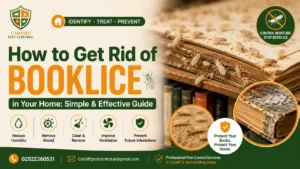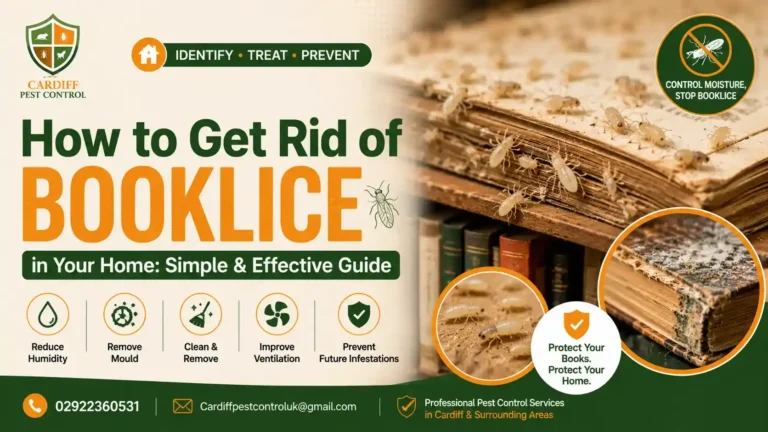
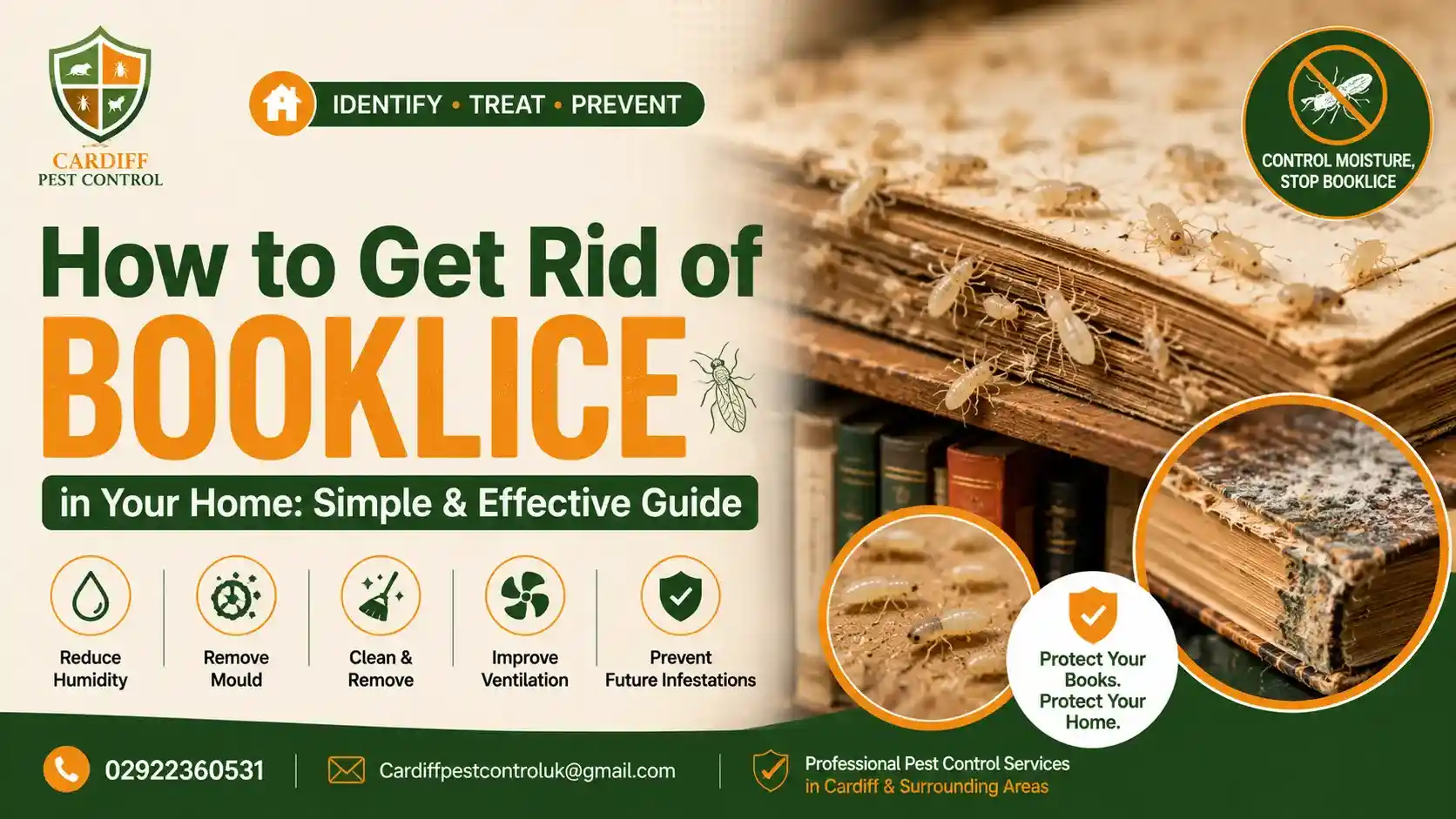
To get rid of booklice, reduce excess humidity and moisture, remove any mould or mildew, clean affected books and storage areas, improve ventilation, and monitor the area afterwards. Because booklice depend on damp conditions to survive, controlling moisture is more effective long-term than simply cleaning up the insects you can see.
Finding tiny pale insects crawling near your bookshelf or in a damp cupboard is unsettling, but booklice are one of the more manageable household pests once you understand what’s actually causing them. This guide covers what booklice are, why they appear, how to get rid of them, and how to stop them coming back.
What Are Booklice?
Booklice, also known as psocids or paper lice, are tiny insects commonly found in damp, humid areas of the home. Despite the name, they have nothing to do with human head or body lice.
Are Booklice Actually Lice?
No. Booklice are psocids, a completely different type of insect. They don’t bite, don’t live on humans or animals, and aren’t related to parasitic lice at all, the name simply comes from where they’re often found.
What Do Booklice Look Like?
Booklice are tiny, pale, and wingless, often appearing white or greyish in colour. They’re easy to overlook at first, but tend to become more noticeable when numbers increase in a damp area.
What Do Booklice Eat?
Booklice feed on mould, fungi, and organic material, which is why they’re so closely linked to damp conditions. They’re often found around books and paper not because they eat the paper itself, but because of mould growth on or around it.
What Causes Booklice in Your Home?
High Humidity and Excess Moisture
Booklice thrive in humid environments. Excess moisture in a room, whether from poor airflow, condensation, or general dampness, creates the exact conditions they need to survive.
Mould and Mildew
Moisture leads to mould and mildew, and mould is a primary food source for booklice. Wherever you find one, it’s worth checking for the other.
Poor Ventilation
Rooms with limited air circulation, bathrooms, kitchens, and storage areas in particular, are more prone to the humidity that supports booklice activity.
Water Leaks and Damp Areas
Leaking pipes, damp walls, and condensation around windows all contribute to the kind of moisture-rich environment booklice need.
Where Do Booklice Live in a House?
Booklice in Books and Bookshelves
Books and paper stored in humid conditions are a common site of booklice activity, largely due to mould developing on covers, pages, or nearby surfaces.
Booklice in Cupboards and Drawers
Dark, enclosed storage areas can trap moisture, particularly if ventilation is poor, making them another common hiding spot.
Booklice in Bedrooms
Wardrobes, drawers, and stored books in poorly ventilated bedrooms can all provide the damp conditions booklice look for.
Booklice in Bathrooms and Kitchens
These rooms naturally carry more moisture than the rest of the house, making them worth checking if you’ve spotted activity nearby.
Booklice on Walls and Around Windows
Condensation on windows and damp patches on walls are strong indicators of the kind of environment booklice favour.
How to Identify a Booklice Infestation
Tiny Pale or White Bugs
Small, pale, slow-moving insects in damp areas are the clearest sign, particularly if you’re noticing them repeatedly in the same spot.
Booklice Around Books and Paper
Check shelves, cardboard, and stored paper for activity, especially in areas that don’t get much airflow.
Booklice in Damp or Humid Areas
Activity concentrated around a specific damp area is a useful clue, it usually means that’s where the moisture problem is.
Signs of Mould or Mildew Nearby
Visible mould or a musty smell nearby often points to the same conditions supporting booklice.
Recurring Tiny Insects Despite Cleaning
If booklice keep reappearing after you’ve cleaned the area, the underlying moisture or mould problem likely hasn’t been resolved yet.
How to Get Rid of Booklice
The most effective way to get rid of booklice is to reduce humidity and moisture, remove mould or mildew, clean affected areas and books, and improve ventilation.
Reduce Humidity and Moisture
This is the most important step. Address the source of moisture, whether that’s condensation, a leak, or general dampness, and dry out the affected area as thoroughly as possible.
Remove Mould and Mildew
Clean any visible mould or mildew from surfaces, but remember this only helps long-term if the moisture that caused it is also dealt with.
Improve Ventilation and Air Circulation
Open windows where practical, and improve airflow in poorly ventilated rooms like bathrooms and storage cupboards.
Use a Dehumidifier
A dehumidifier can help bring humidity down in consistently damp rooms, making the environment far less suitable for booklice to survive in.
Clean Bookshelves and Storage Areas
Dust and clean shelves, cupboards, and drawers thoroughly, removing the organic material and mould that booklice rely on.
Clean and Inspect Affected Items
Check books, paper, and stored materials for activity, and clean or isolate anything affected before returning it to storage.
Monitor the Area After Treatment
Keep an eye on humidity levels and recurring activity for a few weeks after treatment to confirm the problem has actually been resolved.
How to Get Rid of Booklice in Books
Inspect Books Carefully
Check covers, pages, and bindings, along with the shelf or surface they’ve been stored on.
Isolate Affected Books
Where practical, separate affected books from unaffected ones while you deal with the moisture problem.
Keep Books in a Dry Environment
Books stored in damp conditions will keep attracting booklice no matter how often you clean them, dry storage is essential.
Clean Bookshelves and Bookcases
Treating the books alone won’t help much if the shelf or surrounding area is still humid, clean and dry the whole storage space.
Protect Books From Future Booklice
Regular inspection, good ventilation, and dry storage conditions are the best long-term protection.
How to Get Rid of Booklice Naturally
Reduce Humidity
Lowering humidity is the single most effective natural control method, since it removes the environment booklice depend on.
Improve Ventilation
Better airflow reduces the damp conditions that support both mould and booklice.
Remove Mould and Mildew
Cleaning away mould removes a key food source.
Keep Books and Storage Areas Dry
Dry conditions are simply inhospitable to booklice, regardless of what specific cleaning products are used.
Clean and Monitor Affected Areas
Regular cleaning combined with ongoing humidity control is the most reliable natural approach.
What Kills Booklice?
Does Cleaning Kill Booklice?
Cleaning removes mould, organic debris, and some insects directly, but it won’t resolve the problem if the humidity causing it remains unaddressed.
Can You Spray Booklice?
Insecticide can reduce visible numbers, but it doesn’t deal with the underlying moisture or mould, so activity is likely to return without further action.
Can Insecticide Kill Booklice?
Yes, to an extent, but it should be treated as a supporting measure rather than a full solution.
Why Moisture Control Is Important
Booklice can’t survive without humidity. Addressing moisture is what actually prevents the infestation from continuing, rather than just reducing visible numbers temporarily.
Are Booklice Harmful to Humans?
Can Booklice Bite Humans?
No, booklice don’t bite people. They’re a nuisance pest rather than a direct health threat.
Do Booklice Carry Diseases?
Booklice aren’t known to carry or transmit diseases to humans.
Can Booklice Damage Books or Paper?
They can affect the condition of books and paper over time, particularly where mould is also present, but the bigger concern is usually what their presence indicates about damp conditions in your home.
How to Prevent Booklice From Coming Back
- Control humidity levels throughout the home
- Improve ventilation, especially in bathrooms and storage areas
- Fix water leaks and damp problems promptly
- Prevent mould and mildew from developing
- Keep books and paper stored in dry conditions
- Clean cupboards and storage areas regularly
- Monitor moisture-prone areas such as windows and walls
- Inspect stored books and materials periodically
What Humidity Level Prevents Booklice?
Booklice need consistently humid conditions to survive, so the practical goal is to keep affected rooms as dry and well ventilated as possible rather than aiming for a specific number. If a room regularly feels damp, shows condensation, or has a musty smell, it’s likely humid enough to support booklice activity.
How Long Does It Take to Get Rid of Booklice?
This depends on the severity of the infestation, how much moisture and mould is present, and how quickly the underlying humidity problem is corrected. Once the moisture source is properly addressed, booklice numbers typically decline fairly quickly, but if the damp conditions persist, activity can continue to recur no matter how often you clean.
When Should You Call Professional Pest Control for Booklice?
Professional help is worth considering if:
- Booklice keep returning despite cleaning and drying affected areas
- The infestation is widespread across multiple rooms
- You can’t identify the source of the moisture
- Mould or damp problems persist despite your efforts
- DIY cleaning and ventilation haven’t resolved the issue
If any of this sounds familiar, it’s usually more effective to get a proper inspection than to keep repeating cleaning steps that aren’t fixing the root cause. Our professional pest control service can help identify what’s actually driving the infestation.
Professional Booklice Control in Cardiff
How Cardiff Pest Control Can Help
Still finding booklice despite cleaning and drying the area? Cardiff Pest Control can inspect your property, identify the moisture conditions behind the infestation, and recommend the right treatment approach. Call 02922360531 today for professional pest control advice, or get in touch through our contact page.
If damp and pest problems tend to recur in your home, our regular pest control plans can help catch issues early, and if you’d prefer a lower-chemical approach, our organic pest control service is also worth exploring.
Booklice Prevention Checklist
- Keep humidity under control
- Improve ventilation
- Fix leaks and damp areas
- Remove mould and mildew
- Keep books dry
- Clean bookshelves regularly
- Keep cupboards dry
- Monitor condensation
- Inspect stored paper and cardboard
- Check for recurring booklice activity
Key Takeaways
Booklice are closely linked to moisture, humidity, and mould rather than being a pest that simply needs killing on sight. The most effective approach is to identify where they’re active, reduce humidity, remove mould, clean books and storage areas, improve ventilation, and keep monitoring afterwards. If the problem keeps returning despite this, it usually means the underlying damp issue hasn’t been fully resolved, at which point professional help is the more reliable next step.
If booklice keep appearing no matter how much you clean, the moisture problem behind them needs proper attention. Contact Cardiff Pest Control today or call 02922360531 for a professional inspection.
Frequently Asked Questions
How do you get rid of booklice?
Reduce humidity, remove mould, clean affected books and storage areas, and improve ventilation. Addressing moisture is key to lasting results.
What causes booklice in a home?
High humidity, poor ventilation, mould, and damp conditions are the main causes. Booklice can’t survive without moisture.
Are booklice caused by damp?
Yes, damp conditions create the humidity and mould that booklice depend on to survive.
What do booklice look like?
Tiny, pale, wingless insects, often white or grey, usually found in damp or humid areas.
Are booklice actually lice?
No, booklice are psocids, a different type of insect entirely unrelated to human lice.
What are the tiny white bugs in my house?
They could be booklice, particularly if you’re seeing them in damp areas, though other small insects can look similar. Check the surrounding conditions for clues.
How do I get rid of booklice in books?
Inspect the books, isolate affected ones if needed, dry the storage area, and clean the shelf or surface they were kept on.
Do booklice damage books?
They can affect books over time, especially where mould is present, but their presence is more a sign of damp conditions than a direct threat to your book collection.
What kills booklice?
Cleaning and insecticide can reduce visible numbers, but controlling humidity is what actually prevents them from returning.
Does a dehumidifier get rid of booklice?
A dehumidifier helps by reducing the humidity booklice need to survive, making it a useful part of an overall treatment approach.
How do I get rid of booklice naturally?
Focus on reducing humidity, improving ventilation, removing mould, and keeping affected areas dry.
Can booklice live in walls?
They can be found near damp or moisture-affected walls, so it’s worth checking for condensation or leaks nearby.
Can booklice bite humans?
No, booklice don’t bite and aren’t a health risk to people.
How do I prevent booklice from coming back?
Control humidity, improve ventilation, fix leaks promptly, and keep books and storage areas dry.
When should I call professional pest control for booklice?
If they keep returning, the infestation is widespread, or you can’t identify the moisture source, it’s time to bring in a professional.