Moths in your home can damage clothes, carpets, and stored food before you even notice they’re there. The good news is that most moth infestations can be controlled once you understand where they’re hiding and how to break their life cycle.
To get rid of moths, you need to identify the type of moth, locate the infestation source, remove affected items, clean and vacuum thoroughly, treat clothing or food appropriately, monitor activity with traps, and seek professional help if the infestation persists. This guide walks through each step in detail, covering clothes moths, carpet moths, and pantry moths, plus how to stop them coming back.
Why Do You Have Moths in Your Home?
Moths don’t appear in your house by accident. They’re drawn in by food sources and ideal breeding conditions, and once inside, they seek out quiet, undisturbed spots to lay eggs.
What Attracts Moths to Houses?
Moths are attracted to natural fibres such as wool, silk, cashmere, and fur, along with carpets, upholstery, and stored food. Pet hair, dust, and organic debris in cupboards or under furniture can also provide a food source for larvae. Moths generally favour dark, undisturbed areas with little airflow, which is why they’re often found in wardrobes and cupboards long before anyone notices a problem.
Where Do Moths Hide in the House?
Common hiding spots include wardrobes, drawers, carpets, rugs, upholstery, kitchen cupboards, pantries, lofts, and cracks or crevices where they won’t be disturbed. Moths tend to avoid light and movement, so checking the back corners of these spaces is more useful than just looking at what’s in plain sight.
Why Do I Keep Getting Moths in My House?
If moths keep returning, it’s usually because the underlying source, eggs, larvae, or a contaminated item, was never fully removed. Killing the adult moths you see flying around does very little, since a female moth can lay dozens of eggs before you spot her. Recurring infestations almost always point to a hidden breeding site somewhere in the home.
How to Identify a Moth Infestation
Signs of a Moth Infestation
Look out for adult moths, larvae, eggs, small holes in clothing, damaged carpets, silky webbing or cases, and moths repeatedly appearing near wardrobes or cupboards.
What Do Moth Eggs and Larvae Look Like?
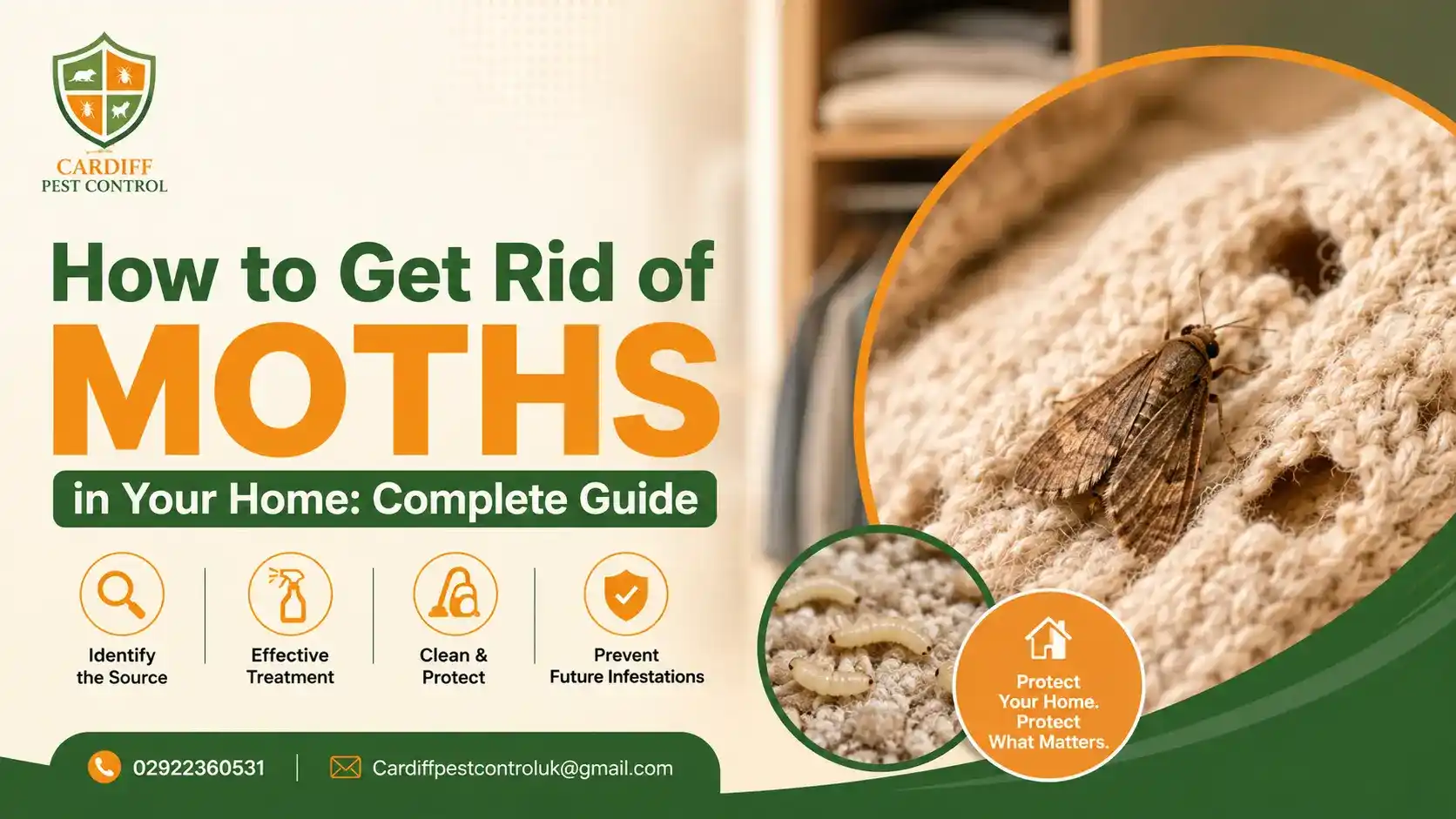
Moth eggs are tiny, pale, and often laid in clusters in fabric folds or carpet fibres. Larvae are small, caterpillar-like, and cream or off-white in colour, these are the stage that actually causes fabric and food damage, not the adult moth.
Moth Damage: What Should You Look For?
Check for irregular holes in wool or silk clothing, thinning or bald patches in carpet, damaged rugs or upholstery, and contaminated dry food with fine webbing or small larvae inside packaging.
What Are the Different Types of Moths Found in Homes?
Clothes Moths
Clothes moths, including the common clothes moth and case-bearing clothes moth, target natural fibres like wool, silk, and cashmere. They’re most commonly found in wardrobes and drawers, where clothing sits undisturbed for long periods.
Carpet Moths
Carpet moths lay eggs in carpets, rugs, and upholstery, and their larvae feed on the fibres, leaving patchy, thinning areas that are often mistaken for wear and tear. If you suspect carpet moths specifically, our dedicated guide on how to get rid of carpet moths covers treatment in more depth.
Pantry and Food Moths
Pantry moths target dry food such as cereals, flour, and grains. They’re usually found in kitchen cupboards, and their presence is often first noticed as small webbing inside food packaging.
How Can You Tell Which Type of Moth You Have?
| Moth Type | Common Location | Main Damage/Problem |
| Clothes moth | Wardrobes/drawers | Clothing and fabric damage |
| Carpet moth | Carpets/rugs | Carpet and textile damage |
| Pantry moth | Kitchen/pantry | Stored food infestation |
How to Get Rid of Moths in Your Home
Getting rid of moths involves finding the source, removing affected items, cleaning thoroughly, treating clothing or food correctly, and monitoring with traps until the infestation is fully cleared.
Step 1: Find the Source of the Moth Infestation
Inspect wardrobes, drawers, carpets, rugs, cupboards, pantry shelves, and any dark, undisturbed storage areas. Don’t just deal with the adult moths you see, the goal is to find where eggs and larvae are actually located.
Step 2: Remove and Isolate Infested Items
Separate affected clothing from unaffected items, isolate contaminated food, and check anything stored nearby. Dispose of heavily damaged or contaminated items where cleaning isn’t realistic.
Step 3: Clean and Vacuum Affected Areas
Vacuum wardrobes, drawers, carpet edges, underneath furniture, cracks, skirting boards, and cupboards. Vacuuming moth larvae and eggs from these areas removes both the pests and the debris they feed on.
Step 4: Wash or Freeze Infested Clothing
Wash affected clothing according to the garment’s care label, using the warmest setting it allows. For delicate items that can’t be washed at high temperatures, freezing can help kill larvae, follow the care instructions and don’t rely on a single treatment to guarantee full elimination.
Step 5: Treat Moths in Carpets and Rugs
Inspect carpet edges and the areas underneath furniture, vacuum thoroughly, and look closely for larvae or thinning patches. For a more detailed breakdown of carpet-specific treatment, see our carpet moth treatment guide.
Step 6: Deal With Pantry and Food Moths
Check dry food including cereals, flour, and grains, even packages that look unopened. Remove anything contaminated, clean cupboards thoroughly, and switch to sealed containers going forward.
Step 7: Use Moth Traps for Monitoring
Pheromone moth traps attract and catch adult male moths, which helps you monitor activity and track whether numbers are dropping. Traps are useful for monitoring, but they don’t address eggs or larvae already present, so they work best alongside cleaning and treatment rather than as a standalone fix.
Step 8: Treat Persistent Moth Infestations
If moths keep returning, damage is spreading across multiple rooms, or larvae keep appearing despite cleaning, it may be time to bring in professional moth control rather than repeating DIY steps that aren’t working.
How to Get Rid of Moth Eggs and Larvae
How to Find Moth Eggs
Check fabric folds, seams, carpet fibres, and the back corners of wardrobes and cupboards, areas that are rarely disturbed are the most likely hiding spots.
How to Remove Moth Larvae
Vacuum thoroughly, clean affected surfaces, isolate contaminated items, and wash or freeze clothing where suitable. For larger infestations, professional treatment is often the more reliable route.
Why Killing Adult Moths Is Not Enough
Moths go through an egg, larva, pupa, adult life cycle. The larval stage is what actually damages fabric and food, so removing adult moths without addressing eggs and larvae just delays the next wave of damage.
How to Get Rid of Moths in Different Areas of Your Home
How to Get Rid of Moths in a Wardrobe
Focus on moth-proof storage, moth-proof bags, and regularly checking clothing for early signs of clothes moths.
How to Get Rid of Moths in Carpets
Vacuum regularly, especially along edges and under furniture, and treat any confirmed carpet moth activity promptly.
How to Get Rid of Moths in Kitchen Cupboards
Clear out cupboards, check for pantry moths in dry food, and switch to airtight containers to prevent moths in kitchen storage from returning.
How to Get Rid of Moths in the Bedroom
Bedrooms combine several risk areas at once, wardrobes, clothing, carpets, and drawers, so a thorough check of all four is worthwhile if you’ve spotted moths nearby.
How to Get Rid of Moths in Stored Clothing
Inspect items before storing them, wash or freeze where appropriate, and use sealed storage with regular inspection to catch any early activity.
Do Home Remedies and Natural Moth Repellents Work?
Does Vinegar Get Rid of Moths?
Vinegar may help with general cleaning, but it isn’t a reliable way to eliminate an established moth infestation, particularly eggs and larvae hidden in fabric or carpet fibres.
Does Lavender Keep Moths Away?
Lavender is often used as a mild deterrent and can help as part of a prevention routine, but it shouldn’t be relied on to treat an active infestation.
Does Cedarwood Repel Moths?
Cedarwood is another natural repellent that may help deter adult moths, though it doesn’t address eggs or larvae already present in a garment or carpet.
Do Mothballs Get Rid of Moths?
Mothballs can help with prevention when used correctly and according to the product label, but they aren’t a substitute for locating and removing an existing infestation.
Are Natural Moth Repellents Enough for an Infestation?
Repellents can help with prevention and deterrence, but an established infestation needs the source, eggs, and larvae found and removed, not just masked with scent-based deterrents.
How to Prevent Moths From Coming Back
- Keep clothes clean before long-term storage
- Vacuum wardrobes, carpets, and hidden areas regularly
- Store clothing in airtight containers or moth-proof bags
- Inspect second-hand and vintage clothing before bringing it home
- Store dry food in sealed containers
- Check cupboards and pantries regularly
- Reduce clutter and undisturbed storage areas
- Monitor for early signs of moths with traps or regular inspection
How Long Does It Take to Get Rid of a Moth Infestation?
There’s no fixed timeline, it depends on the type of moth, the size of the infestation, how many areas are affected, whether eggs and larvae are still present, and how thoroughly the source has been treated. Small, early-stage infestations can often be resolved within a few weeks of consistent cleaning and treatment, while larger or long-running infestations may take longer and benefit from professional input.
Can Moths Come Back After Treatment?
Yes, if the original source wasn’t fully addressed, or if new items bring eggs or larvae back into the home. Ongoing monitoring with traps and regular inspection is the best way to catch reinfestation early.
When Should You Call Professional Pest Control for Moths?
Signs You Need Professional Moth Treatment
- The infestation keeps returning despite cleaning
- Damage is widespread across multiple items or rooms
- Larvae keep appearing after treatment
- The infestation source is difficult to access
- DIY methods haven’t resolved the problem
- You’re unsure which type of moth you’re dealing with
What Does Professional Moth Control Involve?
Professional treatment generally includes a full inspection, identification of the moth species, assessment of the infestation source, a tailored treatment plan, targeted treatment of affected areas, and follow-up monitoring to confirm the problem is fully resolved.
Moth Control in Cardiff and South Wales
If you have a persistent moth infestation in Cardiff or the surrounding South Wales area, Cardiff Pest Control can assess the problem and recommend an appropriate treatment plan. Whether it’s clothes moths in a wardrobe or a carpet moth infestation that keeps spreading, our professional pest control service can identify the source and treat it properly the first time. Get in touch today for a free assessment of your moth problem.
Moth Infestation vs Other Household Pest Problems
Moths vs Carpet Beetles
Both moths and carpet beetles can damage fabric and carpets, but they’re different pests with different treatment approaches. If you’re unsure which you’re dealing with, our guides on how to get rid of carpet beetles and eliminating carpet beetle infestations can help you tell the difference.
Moths vs Silverfish
Silverfish can also damage paper and fabric in similar storage areas, but their appearance and behaviour differ significantly from moths. See our guide on silverfish infestation signs for a full comparison.
Final Thoughts
Dealing with moths comes down to a simple process: identify, locate, clean, treat, monitor, and prevent. Focusing only on the adult moths you see flying around won’t solve the problem, the real work happens at the egg and larvae stage.
If moths keep returning despite your best efforts, it may be time for professional identification and treatment. Cardiff Pest Control can help assess persistent moth problems in Cardiff and the surrounding areas, contact us today for a free consultation.
Frequently Asked Questions
1. How do you get rid of moths in your house?
Identify the moth type, find the infestation source, remove and clean affected items, treat clothing or food appropriately, and monitor with traps until activity stops.
2. What is the fastest way to get rid of moths?
Combining thorough vacuuming, washing or freezing infested items, and targeted cleaning of the source gives the quickest results, though full elimination still takes time.
3. Why do I keep getting moths in my house?
Recurring moths usually mean eggs or larvae weren’t fully removed the first time, or a contaminated item was reintroduced into storage.
4. How do I know if I have a moth infestation?
Look for adult moths, larvae, eggs, holes in clothing, thinning carpet patches, or webbing in food packaging.
5. Where do moths hide in the house?
Wardrobes, drawers, carpets, rugs, cupboards, pantries, and dark, undisturbed storage areas are common places to find moths and their larvae.
6. How do you get rid of moth larvae?
Vacuum thoroughly, wash or freeze affected clothing, and clean carpets and storage areas where larvae are found.
7. What kills moth eggs?
Washing at higher temperatures, freezing suitable items, and thorough vacuuming can all help destroy moth eggs.
8. How do I get rid of clothes moths?
Wash or freeze affected clothing, clean wardrobes and drawers thoroughly, and store clean clothes in sealed containers or moth-proof bags.
9. How do I get rid of moths in my wardrobe?
Remove and inspect all clothing, vacuum the wardrobe thoroughly, wash or freeze affected items, and use moth-proof storage going forward.
10. How do I get rid of moths in carpets?
Vacuum carpet edges and under furniture, inspect for larvae and damage, and treat the affected area. See our carpet moth guide for full details.
11. How do I get rid of pantry moths?
Remove contaminated food, clean cupboards thoroughly, and switch to sealed, airtight containers for dry goods.
12. Do moth traps actually work?
Pheromone traps are effective for monitoring adult moth activity, but they don’t remove eggs or larvae, so they work best alongside cleaning and treatment.
13. Does vinegar get rid of moths?
Vinegar isn’t a reliable treatment for an established moth infestation, particularly against eggs and larvae.
14. Can moths come back after treatment?
Yes, if the source wasn’t fully addressed. Regular monitoring helps catch any reinfestation early.
15. When should I call professional pest control for moths?
If the infestation keeps returning, damage is widespread, or DIY methods haven’t worked, professional treatment is the more reliable option.