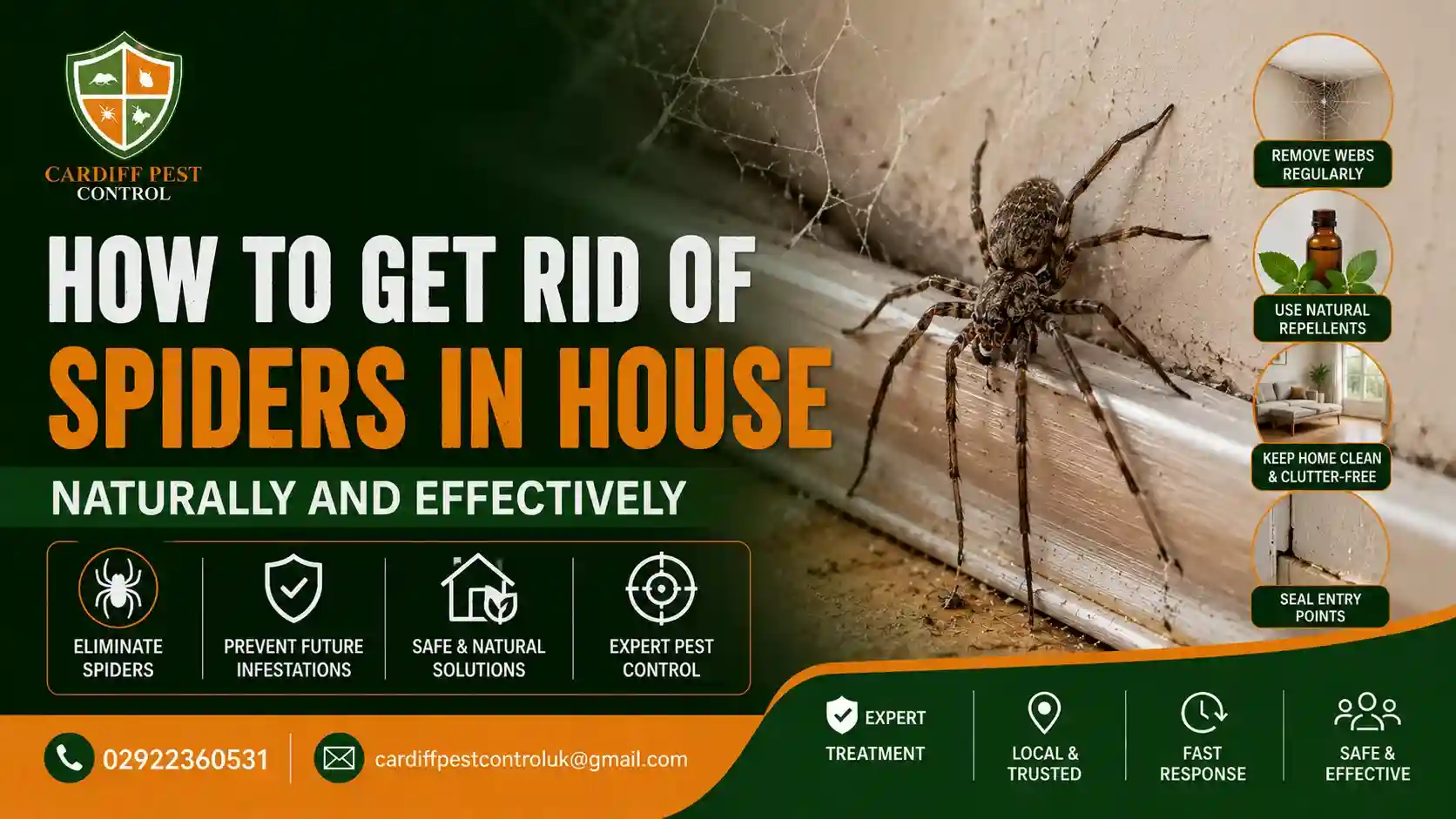
Have you noticed spiders crawling across your walls or hiding in the corners of your rooms? If so, you are not alone. Many homeowners across Cardiff and the UK deal with spiders inside their homes throughout the year.
While most house spiders are harmless, finding them in bedrooms, bathrooms, kitchens, and lofts can be unpleasant. Some people are also afraid of spiders, making even a small spider problem feel much bigger.
The good news is that there are many safe and effective ways to remove spiders and stop them from returning. In this guide, Cardiff Pest Control explains how to get rid of spiders in your house naturally and effectively, what attracts them indoors, and when it is time to call a professional.
Why Do I Have Spiders in My House?
Before you can solve a spider problem, it helps to understand why spiders are entering your home.
Spiders usually come indoors for three main reasons:
- Food
- Shelter
- Warmth
If your property provides these things, spiders may decide to stay.
Spiders Follow Their Food
Most spiders feed on insects such as:
- Flies
- Ants
- Mosquitoes
- Moths
- Silverfish
If your home already has insect activity, spiders will see it as an easy hunting ground.
For example, if you have noticed silverfish in bathrooms or kitchens, you may want to read our guide about Silverfish Infestation Signs:
Likewise, homes dealing with ants often attract spiders because ants become a food source. Learn more in our guide on How to Get Rid of Ants:
Spiders Need Safe Places to Hide
Spiders love quiet places where they will not be disturbed.
Common hiding spots include:
- Loft spaces
- Garages
- Cellars
- Behind furniture
- Storage boxes
- Window frames
- Under beds
The more clutter you have, the more hiding places spiders can find.
Warm Homes Attract Spiders
As temperatures drop outside, spiders often move indoors looking for warmth and protection.
This is why many homeowners notice more spider activity during autumn and winter.
For additional seasonal pest prevention advice, check out our guide on Winter Pest Management Essential Tips:
Common House Spiders Found in the UK
There are thousands of spider species worldwide, but only a few are commonly found in UK homes.
Giant House Spider
The giant house spider is one of the most common spiders in British homes.
Characteristics include:
- Long legs
- Fast movement
- Brown colouring
- Common during autumn
Although they look scary, they are harmless to humans.
Cellar Spider
Also known as the daddy longlegs spider, this species is often found in:
- Basements
- Garages
- Lofts
- Corners of ceilings
They build messy webs and feed on small insects.
Lace-Webbed Spider
These spiders often build webs around:
- Window frames
- Doorways
- Exterior walls
They are commonly seen around homes throughout Wales and the rest of the UK.
Are House Spiders Dangerous?
Most spiders found in Cardiff homes are harmless.
They rarely bite humans and generally avoid contact with people.
However, spiders can still cause problems because:
- Their webs create an untidy appearance.
- Large numbers can indicate other pest activity.
- Many people suffer from arachnophobia.
- Dead insects caught in webs can affect cleanliness.
If your home is attracting insects, you may also be dealing with other household pests. Our article on How to Control Common Household Pests explains how to tackle multiple pest problems:
Signs You Have a Spider Problem
A few spiders in a house is normal.
However, the following signs may indicate a larger spider population.
Large Numbers of Webs
Finding webs in multiple rooms often means spiders have settled inside your property.
Check:
- Ceiling corners
- Lofts
- Garages
- Behind furniture
- Around windows
Frequent Spider Sightings
If you see spiders daily, there may be plenty of food sources available.
Egg Sacs
Spider egg sacs are small silk balls that contain dozens or even hundreds of baby spiders.
Removing them early can help prevent future spider activity.
Insect Problems
Spiders usually appear where insects are already present.
You may need to address:
- Fruit flies
- Drain flies
- Mosquitoes
- Moths
- Ants
Helpful guides:
How to Get Rid of Spiders in House Naturally
Many homeowners prefer natural spider control methods before using stronger treatments.
Remove Spider Webs Regularly
The easiest way to discourage spiders is to remove their webs.
Use:
- A vacuum cleaner
- A long-handled duster
- A broom
Pay attention to:
- Corners
- Ceilings
- Loft spaces
- Window frames
Removing webs forces spiders to relocate.
Use Peppermint Oil
Peppermint oil is one of the most popular natural spider repellents.
How to Make a Peppermint Spray
Mix:
- 10 to 15 drops of peppermint oil
- 1 cup water
- A small amount of washing-up liquid
Spray around:
- Doors
- Windows
- Skirting boards
- Cracks and gaps
Repeat every few days for best results.
Keep Your Home Clean
Clean homes are less attractive to spiders.
Focus on:
- Vacuuming regularly
- Dusting frequently
- Removing food crumbs
- Keeping storage areas tidy
Good housekeeping also helps prevent insects that spiders feed on.
Reduce Outdoor Lighting
Outdoor lights attract insects at night.
More insects often mean more spiders.
Consider:
- Turning off unnecessary lights
- Using blinds at night
- Installing motion-sensor lighting
Seal Entry Points
Inspect your property for gaps around:
- Windows
- Doors
- Pipes
- Air vents
- Utility lines
Use sealant or weather stripping to block access.
How to Get Rid of Spiders in the House Effectively
Natural methods can reduce spider activity, but if spiders keep returning, you may need stronger solutions.
Use Spider Traps
Sticky traps can help monitor spider activity and catch wandering spiders.
Place traps:
- Along skirting boards
- Behind furniture
- Near doors
- Around windows
- In garages and lofts
These traps work best when combined with good cleaning habits and prevention measures.
Remove Other Household Pests
One of the biggest mistakes homeowners make is focusing only on spiders.
Remember, spiders enter your house because they can find food.
If your home has:
- Ants
- Cockroaches
- Silverfish
- Flies
- Moths
then spiders are likely to stay.
For example, if you are seeing cockroaches indoors, read our guide on How to Get Rid of Cockroaches at Home. Reducing insect populations often leads to fewer spiders naturally.
Keep Lofts and Storage Areas Organised
Lofts are one of the most common places for spider activity.
Many homeowners rarely enter these spaces, making them ideal for spiders.
Try to:
- Remove unnecessary boxes
- Avoid storing cardboard for long periods
- Vacuum loft spaces regularly
- Reduce clutter
If your loft contains old nesting materials or pest debris, our professional loft clearance services can help:
What Attracts Spiders to Your Bedroom?
Many people ask why spiders seem to appear in bedrooms.
The truth is that bedrooms often provide everything spiders need.
Dark Corners
Spiders prefer areas that are:
- Quiet
- Dark
- Undisturbed
Bedrooms often contain plenty of suitable hiding places.
Insects Near Windows
Bedroom windows can attract:
- Flies
- Mosquitoes
- Moths
Spiders may follow these insects indoors.
Clutter
Items such as:
- Clothes piles
- Storage boxes
- Furniture
can create excellent hiding spots.
Keeping bedrooms tidy can significantly reduce spider activity.
How to Stop Spiders from Coming Into Your House
If you want long-term results, prevention is the key.
1. Seal Cracks and Gaps
Inspect your property for openings around:
- Window frames
- Door frames
- Pipe entry points
- Roof spaces
- Air vents
Even small gaps can allow spiders to enter.
2. Install Door Sweeps
Many spiders enter underneath doors.
A simple door sweep can help block this access point.
3. Keep Vegetation Away from the House
Bushes, climbing plants, and overgrown shrubs provide shelter for insects and spiders.
Keep plants trimmed away from:
- Doors
- Windows
- Exterior walls
4. Clean Outdoor Webs
Remove webs around:
- Garden furniture
- Garages
- Sheds
- Window frames
- Exterior lights
This reduces the number of spiders living near your property.
5. Schedule Regular Pest Inspections
Routine inspections can identify pest problems before they become serious.
Common Spider Control Myths
Many homeowners waste time following spider control advice that simply does not work.
Myth 1: One Spider Means Hundreds More
While spiders may live in the same area, seeing one spider does not automatically mean you have an infestation.
Myth 2: All Spiders Are Dangerous
Most UK house spiders are harmless and rarely bite people.
Myth 3: Spiders Only Live in Dirty Homes
Even clean homes can attract spiders.
The main factors are:
- Available food
- Shelter
- Access points
Myth 4: Killing One Spider Solves the Problem
Removing one spider does not address the conditions that attracted it in the first place.
Long-term prevention is always more effective.
When Should You Call Cardiff Pest Control?
While occasional spiders are normal, professional help may be needed if:
- You see spiders every day.
- Spider webs keep returning.
- Natural remedies do not work.
- You discover large numbers of egg sacs.
- Spider activity is spreading throughout multiple rooms.
Professional pest control specialists can identify the source of the problem and recommend the most effective treatment.
At Cardiff Pest Control, we help homeowners deal with a wide range of pest issues, including spiders, ants, rodents, insects, birds, and other nuisance pests.
If you are dealing with recurring pest problems, our team provides reliable and effective solutions tailored to your property.
Need Professional Help?
If spiders keep coming back despite your best efforts, Cardiff Pest Control is here to help.
Our experienced team can:
- Inspect your property
- Identify entry points
- Locate hidden pest activity
- Recommend effective treatments
- Help prevent future infestations
Contact Cardiff Pest Control today for professional pest management services and enjoy a cleaner, more comfortable home.
Quick Spider Prevention Checklist
Use this simple checklist to keep spiders away from your home:
- Remove webs regularly
- Vacuum corners and skirting boards
- Keep rooms clutter-free
- Seal cracks and gaps
- Fix damaged window screens
- Reduce outdoor lighting
- Eliminate insect food sources
- Keep lofts and storage areas organised
- Trim vegetation around your property
- Schedule regular pest inspections
Conclusion
Knowing how to get rid of spiders in house starts with understanding why they are there in the first place. Most spiders enter homes looking for food, shelter, and warmth. By removing webs, reducing clutter, sealing entry points, and controlling insect populations, you can make your home far less attractive to them.
Natural remedies such as peppermint oil can help, but long-term prevention is the most effective solution. Regular cleaning, routine inspections, and addressing other pest problems can significantly reduce spider activity throughout the year.
If spiders continue to appear despite your efforts, Cardiff Pest Control can provide professional support and effective treatments to help keep your home pest-free. Our experienced team is ready to identify the cause of the problem and provide a solution that works.
Frequently Asked Questions
1. What is the fastest way to get rid of spiders in your house?
The fastest method is removing webs, vacuuming spiders, sealing entry points, and reducing insect activity. Combining these steps provides the best results.
2. Why do spiders keep coming back to my house?
Spiders usually return because your property provides food, shelter, or easy access. Eliminating these factors can help prevent future activity.
3. Does peppermint oil really repel spiders?
Peppermint oil may help deter spiders temporarily because they dislike its strong scent. However, it works best alongside proper cleaning and prevention methods.
4. Are house spiders harmful?
Most spiders found in UK homes are harmless and rarely bite humans. They generally avoid contact with people.
5. When should I call a pest control professional for spiders?
You should contact a professional if spider activity becomes frequent, spreads throughout your property, or continues despite repeated DIY treatments.