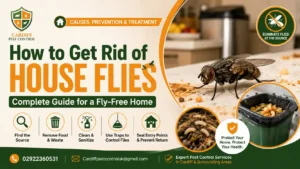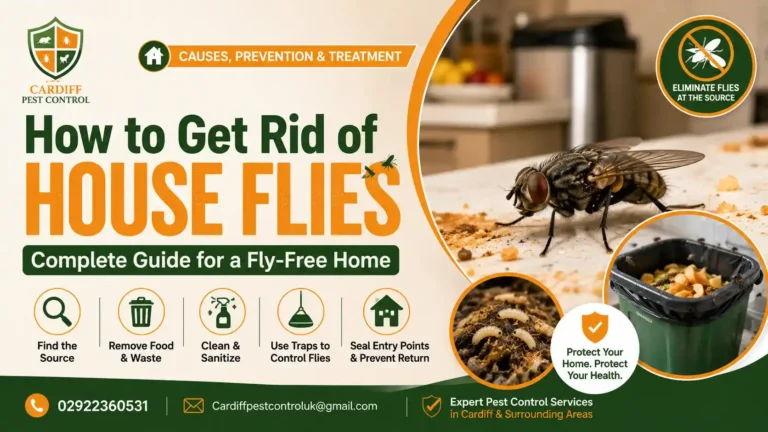
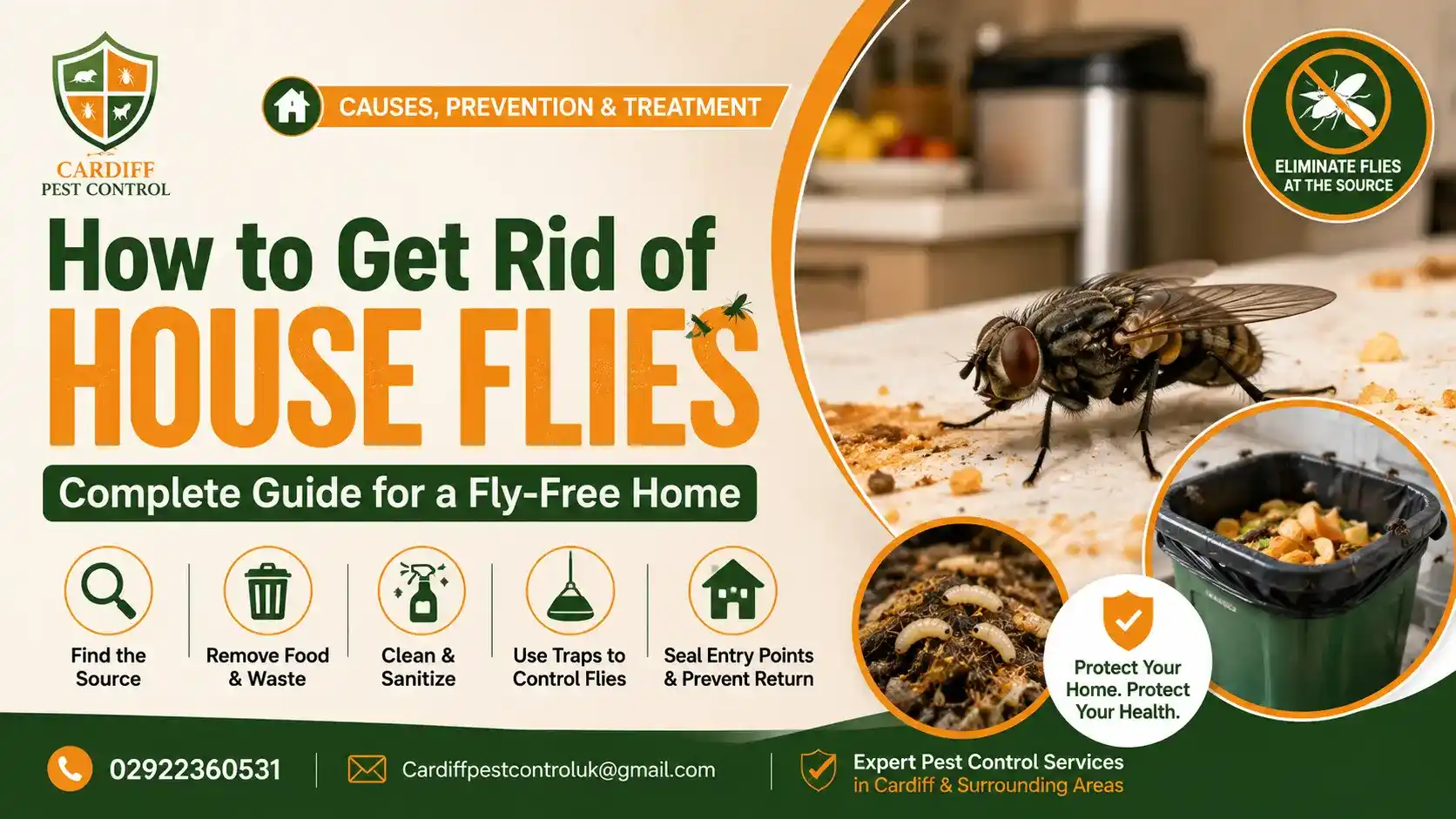
To get rid of house flies, identify where they’re coming from, remove the food or waste attracting them, clean potential breeding areas, control adult flies with suitable traps, and seal entry points to stop them returning. If flies keep coming back despite this, the source is likely still active and professional treatment may be needed.
House flies are one of the most common pest complaints in UK homes, and while a single fly getting in through an open door is nothing to worry about, several flies appearing repeatedly usually points to something more. This guide walks through why flies show up, where they’re breeding, how to remove them, and how to stop them coming back for good.
Why Are There So Many Flies in My House?
Seeing several flies at once doesn’t necessarily mean they simply wandered in through an open window. In most cases, something in or near your home is actively attracting them.
Food Waste and Spoiled Food
Food scraps, spilled food, dirty dishes left out, and spoiled or rotting food are among the biggest draws for house flies. Even small amounts of exposed food or crumbs left on worktops can be enough to attract them.
Rubbish Bins and Wheelie Bins
Uncovered bins, overflowing rubbish, and food residue built up inside bin liners create an ideal environment for flies to gather and lay eggs.
Pet Food and Animal Waste
Pet bowls left out, dog waste in the garden, and cat litter that isn’t cleaned regularly can all attract flies, particularly during warmer months.
Compost and Garden Waste
Compost heaps and garden waste piles are natural fly breeding grounds. If your compost bin is close to the house, it can easily become a source of indoor fly activity.
Hidden Decaying Organic Matter
If you’ve cleaned the obvious areas and flies keep appearing, there may be a hidden source, forgotten food behind an appliance, waste in an inaccessible spot, or decaying matter you haven’t come across yet. This is often the reason flies seem to return no matter how much you clean.
Where Do House Flies Come From?
House flies either enter from outside or breed somewhere in or close to the property.
How House Flies Enter Your Home
Common entry points include open windows and doors, gaps around frames, cracks in walls, vents, and damaged window or door screens.
How House Flies Breed
House flies go through an egg, larva, pupa, adult life cycle. Eggs are laid in decaying organic material and hatch into larvae, commonly known as maggots, within a day or two. This is why a fly problem can escalate quickly if a breeding source isn’t dealt with early.
What Attracts House Flies to Your Home?
Food and Kitchen Waste
Exposed food, crumbs, and spills are one of the most common attractants.
Rubbish and Dirty Bins
Residue and food waste inside bins draw flies even when lids are closed.
Pet Food and Pet Waste
Uneaten pet food and animal waste left outdoors are a frequent, overlooked cause.
Compost and Organic Waste
Decomposing garden material provides both food and a breeding site.
Moisture and Damp Areas
Damp conditions near drains, bins, or garden areas can support fly activity.
Strong Odours and Decaying Material
Flies are drawn to odours from decaying food or waste long before it’s visible to you.
Key takeaway: removing the attraction matters more for long-term control than killing the flies you can see.
How to Identify a House Fly Infestation
Signs checklist:
- Several flies appearing daily
- Flies repeatedly gathering in one location
- Maggots around waste or bins
- Fly activity around bins
- Flies around food
- Flies appearing despite closed windows
- Flies returning shortly after cleaning
If you’re ticking several of these boxes, it’s worth treating this as an active infestation rather than a one-off nuisance.
How to Get Rid of House Flies
The most effective way to get rid of house flies is to find and remove their food or breeding source, clean affected areas, control adult flies with suitable traps, and seal potential entry points.
1. Find the Source of the Flies
Check the kitchen, bins, food cupboards, drains, utility areas, pet feeding areas, garden waste, compost, and around windows and doors. Flies rarely appear without a reason, so this step matters more than any other.
2. Remove Food and Organic Waste
Clear away spoiled food, food scraps, rubbish, pet waste, and compost material that could be sustaining the problem.
3. Clean Areas Where Flies Gather
Wipe down surfaces, floors, bins, and food preparation areas. Don’t overlook areas behind appliances or under furniture where waste can go unnoticed.
4. Empty and Clean Your Bins
Use sealed bin bags, remove waste regularly, wash bin interiors periodically, and keep lids closed at all times.
5. Use Fly Traps to Control Adult Flies
Sticky fly paper, glue traps, UV fly traps, and electric fly killers can all help reduce the number of adult flies. Traps control what’s already flying around, but they don’t address eggs or larvae already present, so they work best alongside source removal, not instead of it.
6. Use Insect Spray Carefully
Insect spray can help with immediate adult fly numbers but shouldn’t be relied on as your only method, it won’t resolve an underlying breeding source.
7. Block Entry Points
Fit or repair window and door screens, and seal any gaps, cracks, or vents flies could be using to get inside.
8. Monitor the Property After Treatment
Keep an eye on previously affected areas for a week or two to confirm the problem has actually been resolved, not just temporarily reduced.
How to Get Rid of House Flies in Different Areas of Your Home
How to Get Rid of Flies in the Kitchen
Focus on food storage, bins, dishes left out, spills, and cupboards, the kitchen is the most common source of house fly activity.
How to Get Rid of Flies in the Bedroom
Check nearby windows, doors, and any forgotten food or drink, flies in bedrooms often trace back to a source elsewhere in the home.
How to Get Rid of Flies Around Windows
Inspect screens, frames, and gaps, flies often cluster near windows when trying to find a way back outside.
How to Get Rid of Flies Around Bins
Keep bin areas clean, use sealed bags, close lids fully, and arrange regular waste collection.
What to Do If Flies Are Appearing in One Room
Concentrated activity in a single room is a strong clue, it usually means the source is nearby, not spread across the house.
How to Get Rid of House Fly Eggs and Larvae
Where House Flies Lay Their Eggs
Eggs are typically laid in decaying organic material, bins, compost, or other waste sources, rather than on clean surfaces.
How to Identify Fly Larvae
Fly larvae, or maggots, are small, pale, and legless, usually found in or around waste and decaying matter. If you’re dealing with visible maggots specifically, our guide on how to get rid of maggots covers this in more detail.
How to Remove Fly Eggs and Larvae
Removing the breeding material itself, through cleaning, waste removal, and sanitation, is far more effective than treating the surface alone.
Why Killing Adult Flies Isn’t Always Enough
Adult flies are the visible symptom, but eggs and larvae are what keep the infestation going. Treating only what you can see is why flies often seem to “come back” days after you thought the problem was solved.
Do Home Remedies and Fly Traps Really Work?
Do Fly Traps Actually Work?
Yes, for reducing adult fly numbers and monitoring activity, but they won’t resolve an active breeding source on their own.
Does Sticky Fly Paper Work?
It can help catch adult flies in a specific area, useful for kitchens or near bins, but it’s a supporting measure rather than a full solution.
Do UV Fly Traps Work?
UV traps can be effective for ongoing fly control, particularly in kitchens or commercial settings, when used alongside good sanitation.
Does Vinegar Get Rid of House Flies?
Vinegar traps may catch some adult flies, but vinegar isn’t a reliable way to eliminate an established fly infestation, especially where eggs or larvae are involved.
Can You Get Rid of House Flies Naturally?
Sanitation, sealed food, covered bins, and screens go a long way toward natural control, but an established infestation still needs its source found and removed.
How to Prevent House Flies From Coming Back
- Keep food covered and stored in airtight containers
- Keep bins clean, sealed, and emptied regularly
- Remove pet waste promptly
- Clean kitchen and food preparation areas daily
- Maintain fly screens on windows and doors
- Manage compost and garden waste responsibly
- Check regularly for new entry points
- Keep monitoring for early signs of activity
How to Stop House Flies Coming Through Windows and Doors
Install or Repair Fly Screens
Damaged or missing screens are one of the most common entry routes for flies.
Keep Doors Closed When Possible
Especially during warmer months when fly activity increases outdoors.
Seal Gaps and Cracks
Check window frames, door frames, and external walls for small gaps flies could use.
Check Vents and Other Entry Points
Vents are often overlooked but can provide easy access if unscreened.
Investigate Why Flies Keep Gathering Near Windows
Persistent clustering near one window may indicate a nearby external source rather than a random occurrence.
House Flies vs Other Common Flies
Not every fly found indoors is a house fly, and different species need different approaches.
| Fly | Common Location | Related Guide |
| House fly | Food/waste areas | This article |
| Fruit fly | Fruit/food | How to get rid of fruit flies |
| Drain fly | Drains | How to get rid of drain flies |
| Cluster fly | Windows/lofts | How to get rid of cluster flies |
House Flies vs Fruit Flies
Fruit flies are smaller and tend to gather around ripening or rotting fruit rather than general waste, see our fruit fly guide if that matches what you’re seeing.
House Flies vs Drain Flies
Drain flies are fuzzy, moth-like, and breed in drain build-up rather than food waste, our drain fly article covers identification and treatment.
House Flies vs Cluster Flies
Cluster flies typically appear in large numbers near windows in autumn and winter, seeking warmth, rather than being drawn to food. Our cluster fly guide explains the difference in more depth.
House Fly Larvae vs Maggots
House fly larvae are commonly referred to as maggots. If maggots are your main concern, our dedicated maggot removal guide goes into more detail.
When Should You Call Professional Pest Control for House Flies?
Signs You Need Professional Help
- Flies keep returning despite cleaning and treatment
- There are large numbers of flies rather than the occasional one or two
- You can’t locate the breeding source
- Activity is spreading across multiple rooms
- DIY traps and sprays haven’t worked
- The infestation is affecting a business or food-related property
If any of these apply, it’s usually more effective to bring in a professional than to keep repeating DIY steps that aren’t resolving the problem. Take a look at our professional pest control service for more on how a full inspection and treatment plan works.
Professional House Fly Control in Cardiff
How Cardiff Pest Control Can Help
Dealing with persistent house flies in Cardiff or the surrounding South Wales area? Cardiff Pest Control can identify the breeding source, assess the extent of the infestation, and carry out targeted treatment for both residential and commercial properties. Contact Cardiff Pest Control today for a professional inspection and treatment plan.
If flies are a recurring issue at your property, our regular pest control plans can help catch problems early before they escalate, and if you’d prefer a lower-chemical approach, our organic pest control options are worth exploring too.
House Fly Prevention Checklist
Daily
- Remove exposed food
- Clean up food spills immediately
- Keep bins covered
- Remove pet waste
- Store food properly
Weekly
- Clean bins thoroughly
- Clean food preparation areas
- Check cupboards for spoiled food
- Check fly screens are intact
- Inspect potential breeding areas
Regularly
- Check compost and garden waste
- Inspect entry points around the property
- Monitor for recurring fly activity
- Investigate any sudden increase in flies
Key Takeaways
Getting rid of house flies comes down to finding the source, removing food and waste attractants, cleaning and sanitising affected areas, controlling adult flies with traps, removing breeding material, and sealing entry points. Ongoing monitoring is essential, since flies often return if the original source wasn’t fully addressed. If the problem persists despite doing all of this, professional pest control is the more reliable next step.
If your fly problem isn’t clearing up on its own, don’t keep guessing at the source. Contact Cardiff Pest Control today for a proper inspection and a treatment plan built around your property.
Frequently Asked Questions
How do you get rid of house flies quickly?
Remove the food or waste attracting them, clean the affected area thoroughly, and use fly traps to reduce adult numbers while you address the source.
Why are there so many flies in my house?
Large numbers usually point to an active food, waste, or breeding source nearby, rather than flies simply entering from outside.
Why do I suddenly have lots of flies in my house?
A sudden increase often means eggs have recently hatched somewhere in or near the property, commonly in bins, compost, or hidden waste.
Where do house flies come from?
They either enter through open windows, doors, or gaps, or breed inside decaying organic material close to the home.
Where do house flies lay their eggs?
Typically in decaying organic matter such as food waste, bins, or compost.
What attracts house flies into a home?
Food waste, spoiled food, dirty bins, pet waste, and compost are the most common attractants.
How do I find where flies are coming from?
Check kitchens, bins, pet areas, compost, drains, and entry points systematically. Concentrated fly activity usually points to the nearest source.
How do I get rid of flies in my kitchen?
Clean surfaces and bins, store food properly, wash dishes promptly, and use traps to catch remaining adult flies.
How do I stop flies coming into my house?
Fit and maintain window and door screens, seal gaps and cracks, and keep doors closed when possible.
Do fly traps actually work?
Yes, for reducing adult fly numbers, but they should be paired with source removal for lasting results.
What is the best trap for house flies?
This depends on the setting. Sticky traps and UV traps are both commonly used, with UV traps often preferred for ongoing kitchen or commercial use.
Does vinegar get rid of house flies?
Vinegar traps can catch some adult flies but aren’t a reliable solution for an established infestation.
How do I get rid of house flies naturally?
Focus on sanitation, sealed food storage, covered bins, and screens. These reduce attraction and access without relying on chemicals.
Why are flies attracted to my bin?
Food residue and waste inside bins provide both a food source and a breeding site, especially if lids aren’t kept closed.
When should I call pest control for flies?
If flies keep returning, numbers are high, or you can’t locate the source despite cleaning, it’s time to bring in professional help.