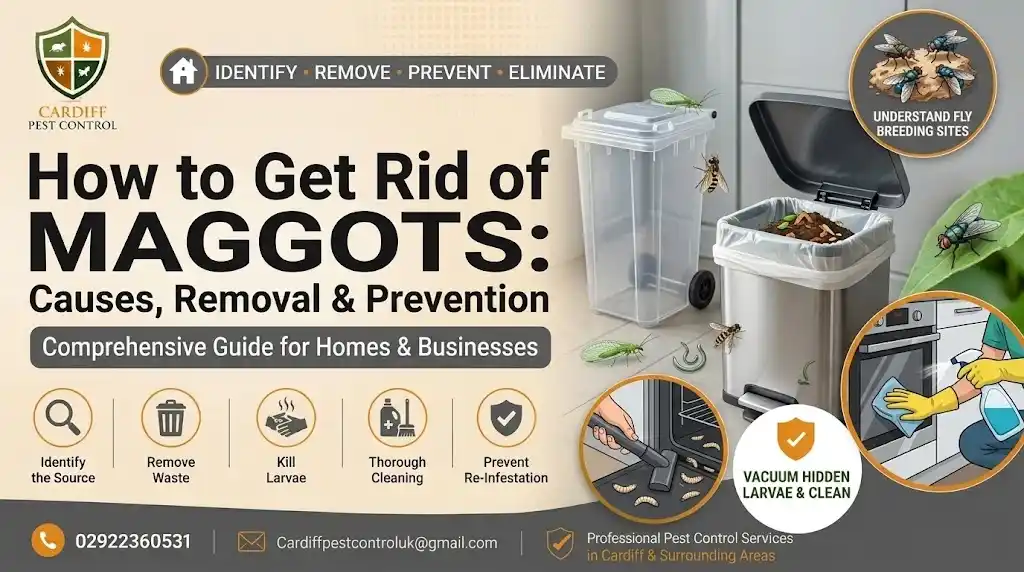
Finding maggots in your bin, kitchen, carpet, or another part of your home can be unpleasant and worrying. The good news is that maggots are usually a sign of an underlying food or waste source rather than a problem that appears without reason.
Maggots are fly larvae. When flies find suitable food, waste, animal remains, or other organic material, they can lay eggs there. The eggs may hatch quickly in warm conditions, which is why a small fly problem can turn into a visible maggot infestation surprisingly fast.
If you have found maggots, killing the visible larvae is only part of the solution. You also need to find and remove the source, clean the affected area, and prevent flies from returning.
In this guide, we explain how to get rid of maggots, where they come from, what attracts flies, how to deal with maggots in bins and inside the house, and how to stop them coming back.
What Are Maggots?
Maggots are the larval stage of flies. Common species associated with household waste include houseflies and blowflies, also known as bluebottles.
Adult flies look for suitable places to lay their eggs, particularly areas containing moist organic material, food waste, animal waste, or decomposing matter. Once the eggs hatch, the larvae feed on the available material before eventually developing into pupae and then adult flies.
So, do maggots turn into flies? Yes. Maggots are an early stage in the fly life cycle.
The exact speed of this process depends on the fly species, temperature, moisture, and available food. Warm conditions can speed up development considerably, which is why maggots are more noticeable during warmer weather.
Why Do Maggots Suddenly Appear?
Maggots can seem to appear out of nowhere because fly eggs are very small and may go unnoticed. You may not see anything unusual one day and then discover several maggots the next.
Flies are commonly attracted to:
- Food scraps and leftover meals.
- Meat and fish waste.
- Overripe fruit and vegetables.
- Pet food and animal waste.
- Dirty bins and food containers.
- Compost and other organic material.
- Dead animals or rodents hidden in inaccessible areas.
When flies find a suitable breeding site, they can lay eggs directly on or near the material. If conditions are warm and moist, those eggs can hatch quickly.
This is why finding maggots should prompt you to look for the source rather than simply removing the larvae you can see.
Where Do Maggots Come From?
If you are asking where maggots come from, the short answer is that they come from fly eggs.
The more important question is where the flies are finding suitable conditions to lay those eggs. Common sources include:
1. Rubbish Bins
Food waste left in a warm, damp bin is one of the most common reasons for maggots appearing around the home.
2. Food Waste
Meat, fish, dairy products, fruit and other organic waste can attract flies if they are left exposed or stored incorrectly.
3. Pet Food and Animal Waste
Wet pet food, faeces and other animal waste can provide an attractive food source for flies.
4. Hidden Food
A small amount of spilled food beneath a fridge, cooker, cupboard or other appliance can sometimes attract flies without being immediately noticed.
5. Dead Animals
If a mouse, rat, bird or another small animal dies inside a wall, loft, roof space or another inaccessible area, flies may be attracted to the remains and lay eggs nearby.
If you also notice droppings, scratching noises or other signs of rodents, see our guide to signs of rodent infestation.
6. Compost and Organic Material
Compost, garden waste and other decomposing organic material can also provide suitable conditions for certain flies.
How to Find Where Maggots Are Coming From
Removing maggots without finding their source can result in the problem returning.
If you discover maggots, inspect the surrounding area carefully. Check:
- The inside and underside of rubbish bins.
- Food waste containers and bin liners.
- Areas beneath kitchen appliances.
- Cupboards and food storage areas.
- Pet food bowls and feeding areas.
- Compost bins and garden waste.
- Loft spaces and roof voids.
- Areas where rodents or birds may have entered.
- Any unusual smell that could indicate decomposing material.
Pay particular attention to warm, damp or concealed areas.
If maggots continue appearing after you have cleaned the obvious source, there may be another breeding site nearby that you have not yet found.
How to Get Rid of Maggots in a Bin
If you have maggots in your bin, the first priority is to remove the waste safely and clean the container thoroughly.
Step 1: Remove the Waste
If possible, make sure the bin is emptied during the next collection. Keep the lid closed until the waste can be removed to prevent flies from accessing it.
If there is loose waste outside the bag, avoid handling it with bare hands. Wear suitable gloves and use appropriate cleaning precautions.
Step 2: Kill and Remove Visible Maggots
After the waste has been removed, visible maggots can be killed and removed using an appropriate method such as hot water.
Boiling water can kill maggots on contact, but take care when handling it. Do not pour boiling water where it could splash onto skin, children, pets, or plants, and be careful with plastic bins that may be damaged by extreme heat.
Step 3: Clean the Bin
Thoroughly clean the inside of the bin to remove food residue and organic material.
Use a suitable household disinfectant according to the product’s instructions. Never mix bleach with vinegar, ammonia, or other cleaning products because dangerous fumes can be produced.
Pay particular attention to:
- The bottom of the bin.
- The sides and corners.
- The lid.
- The area around the lid seal.
- Any cracks or places where food residue may collect.
Step 4: Let the Bin Dry
Allow the bin to dry completely before putting a new liner inside.
Keeping the container clean and dry makes it less attractive to flies and helps reduce the conditions that allow maggots to develop.
How to Get Rid of Maggots in the House
Maggots are not limited to rubbish bins. If you find them inside your home, finding the source becomes even more important.
Maggots in the Kitchen
Check food waste, bins, cupboards, and areas underneath kitchen appliances.
Remove any contaminated food or organic waste and clean the affected surface thoroughly. Also check whether flies are entering through open windows, doors or other gaps.
Maggots in Carpet
Maggots found on a carpet may have moved away from their original food source. The source could be nearby rather than directly underneath the carpet.
Vacuum visible larvae and dispose of the vacuum contents safely outside. Then inspect the surrounding area for food waste, animal remains,s or another source.
If the infestation continues, professional inspection may be necessary to identify the breeding source.
Maggots in a Loft or Garage
Maggots in a loft, garage or roof space can sometimes indicate a dead animal or another hidden organic source.
Look for signs of rodents, birds, or other animals, including droppings, nesting material, unusual smells, and damaged entry points.
If you suspect a dead rodent or another animal is responsible, avoid disturbing it unnecessarily and consider professional pest control.
What Kills Maggots?
If you are searching for what kills maggots, several methods can work, but killing the visible larvae does not necessarily solve the underlying problem.
Hot water can kill exposed maggots on contact when used safely. Appropriate cleaning products can also help clean contaminated hard surfaces after the larvae and waste have been removed.
Insecticides may be appropriate in some situations, but they should only be used according to the product label and for the intended application. Using a stronger concentration or mixing different chemicals does not make treatment safer or more effective.
The most important step is to remove the material that is allowing the maggots to develop. Otherwise, additional eggs may hatch, and the problem can continue.
How to Stop Maggots Coming Back
Once you have removed the existing maggots, prevention is the next step.
Keep Food Waste Secure
Place food scraps in securely closed bags or containers where appropriate. Meat and fish waste should not be left exposed, particularly during warm weather.
Keep Your Bin Clean
Regularly clean the inside of your bin and remove food residue from the bottom and sides.
Keep the Bin Lid Closed
A tightly closed lid helps prevent flies from accessing food waste and laying eggs.
Keep Bins Out of Direct Sunlight
Where possible, keep bins in a shaded, well-ventilated location. High temperatures can speed up decomposition and make waste more attractive to flies.
Clean Up Food Spills
Do not overlook small food spills beneath appliances, cupboards or furniture. Even a small amount of organic material can attract flies.
Look After Pet Feeding Areas
Remove uneaten wet pet food promptly and keep food bowls clean. Also clean up animal waste regularly.
Check for Hidden Pest Problems
Recurring maggots can sometimes indicate a hidden source, such as a dead rodent or another animal inside a wall, loft, or roof space.
If you also have a problem with flying insects, our guide on how to get rid of house flies explains how to identify and reduce common fly problems.
Are Maggots Dangerous?
Maggots are unpleasant, but the presence of maggots does not automatically mean that they will make you ill. The bigger concern is usually the decaying food, waste, or other material that attracted the flies in the first place.
Basic hygiene is important after finding maggots. Remove contaminated waste, clean affected surfaces,s and wash your hands thoroughly after handling the area.
Pets require additional care. Flies can lay eggs in open wounds or heavily soiled fur, and this can lead to a condition known as myiasis. If you find maggots on a pet or inside a wound, contact a veterinary professional promptly rather than attempting to treat the animal yourself.
Why Do Maggots Keep Coming Back?
If maggots keep returning after cleaning, there is probably still a source that has not been dealt with.
Possible causes include:
- Hidden food waste.
- A contaminated bin or food container.
- A dead rodent or bird.
- Animal waste.
- An inaccessible breeding site.
- Flies entering through gaps, doors, or windows.
- Another nearby source of decomposing organic material.
Recurring maggots should therefore be treated as a clue rather than simply a cleaning problem.
Finding and removing the source is the key to breaking the cycle.
When Do You Need Professional Pest Control?
You may be able to deal with a small number of maggots caused by ordinary household waste yourself. However, professional help can be useful when the source is difficult to identify, or the problem keeps returning.
Consider professional pest control if:
- Maggots continue appearing after cleaning.
- You cannot identify where they are coming from.
- There is a strong or unusual smell inside your home.
- You suspect a dead rodent or animal is hidden inside a wall, loft,t or roof.
- You are seeing large numbers of flies as well as maggots.
- Maggots are appearing in several areas of the property.
- The infestation is affecting a business, food area or rental property.
A professional pest controller can inspect the property, identify the likely source, and recommend treatment based on the type and location of the infestation.
For wider insect and fly problems, you can learn more about our Other Insect Control service.
Professional Pest Control for Maggots in Cardiff
If you have recurring maggots in your Cardiff property and cannot identify the source, professional inspection can help determine what is causing the problem.
At Cardiff Pest Control, the focus should not simply be on removing the maggots you can see. The important step is to identify the source, address the conditions attracting flies,s and reduce the chance of the problem returning.
This can be particularly important when maggots are appearing inside kitchens, lofts, roof spaces, garages or other areas where the source is not immediately visible.
For help with recurring fly or insect problems, contact Cardiff Pest Control to discuss the issue and arrange appropriate pest control advice.
Final Thoughts
Knowing how to get rid of maggots is only the first part of solving the problem. The most important step is finding out why they appeared in the first place.
For a small bin-related problem, removing the waste, cleaning the container, and improving food-waste hygiene may be enough. But if maggots keep appearing inside your home, there may be a hidden source that needs further investigation.
If you are dealing with a recurring maggot or fly problem in Cardiff, professional pest control can help identify the source and recommend the right treatment.
FAQs
1. How do I get rid of maggots quickly?
Remove the waste or organic material attracting the flies, safely kill and remove visible maggots, and thoroughly clean the affected area. If maggots continue appearing, look for a hidden breeding source rather than repeatedly treating the visible larvae.
2. What kills maggots instantly?
Hot water can kill exposed maggots on contact when used safely. Some insecticides can also kill maggots when correctly labelled for that use. However, killing the larvae alone will not solve the problem if the breeding source remains.
3. How do I get rid of maggots in my bin?
Remove the waste, deal with visible maggots safely, and thoroughly clean the inside of the bin. Allow it to dry before using it again and keep the lid closed to prevent flies from accessing food waste.
4. Why do I suddenly have maggots in my house?
Maggots usually appear after flies have laid eggs on a suitable food or organic material. The source may be a bin, food waste, pet waste, compost, or a hidden dead animal.
5. Why do maggots keep coming back?
Recurring maggots usually mean that a breeding source has not been completely removed. Check bins, food waste, pet areas, hidden spills and inaccessible spaces where an animal may have died.
6. How long does it take for maggots to turn into flies?
The development time varies according to the fly species and environmental conditions. Warm temperatures can speed up the process, so it is important to deal with a maggot problem promptly rather than waiting for the larvae to disappear on their own.
7. Can maggots live in a house?
Yes. Maggots can be found indoors wherever flies have access to suitable organic material. They may occur in bins, kitchens, food waste, carpets or concealed areas containing decomposing material.
8. Can maggots come from a dead animal?
Yes. A dead rodent, bird or other animal can attract flies, which may lay eggs around the remains. If maggots are appearing alongside an unpleasant smell or signs of rodents, the source may be hidden inside a wall, loft, roof space or another inaccessible location.
9. How do I get rid of maggots in carpet?
Vacuum visible maggots and dispose of the vacuum contents safely outside. Then investigate the surrounding area for the source. If the larvae continue appearing, professional inspection may be needed because the breeding source may be elsewhere.
10. Are maggots dangerous?
Maggots themselves are generally more unpleasant than dangerous, but the material they are feeding on can create hygiene concerns. Maggots found on a pet or inside an open wound require prompt veterinary attention.
11. How can I prevent maggots in my bin?
Keep food waste securely contained, keep the bin lid closed, clean the bin regularly, remove food residue, and avoid leaving bins in direct sunlight where possible. These steps reduce the conditions that attract flies and allow their larvae to develop.
12. When should I call pest control for maggots?
Contact a professional if maggots keep returning, you cannot find the source, there are large numbers of flies, or you suspect a hidden dead animal or another inaccessible breeding site.