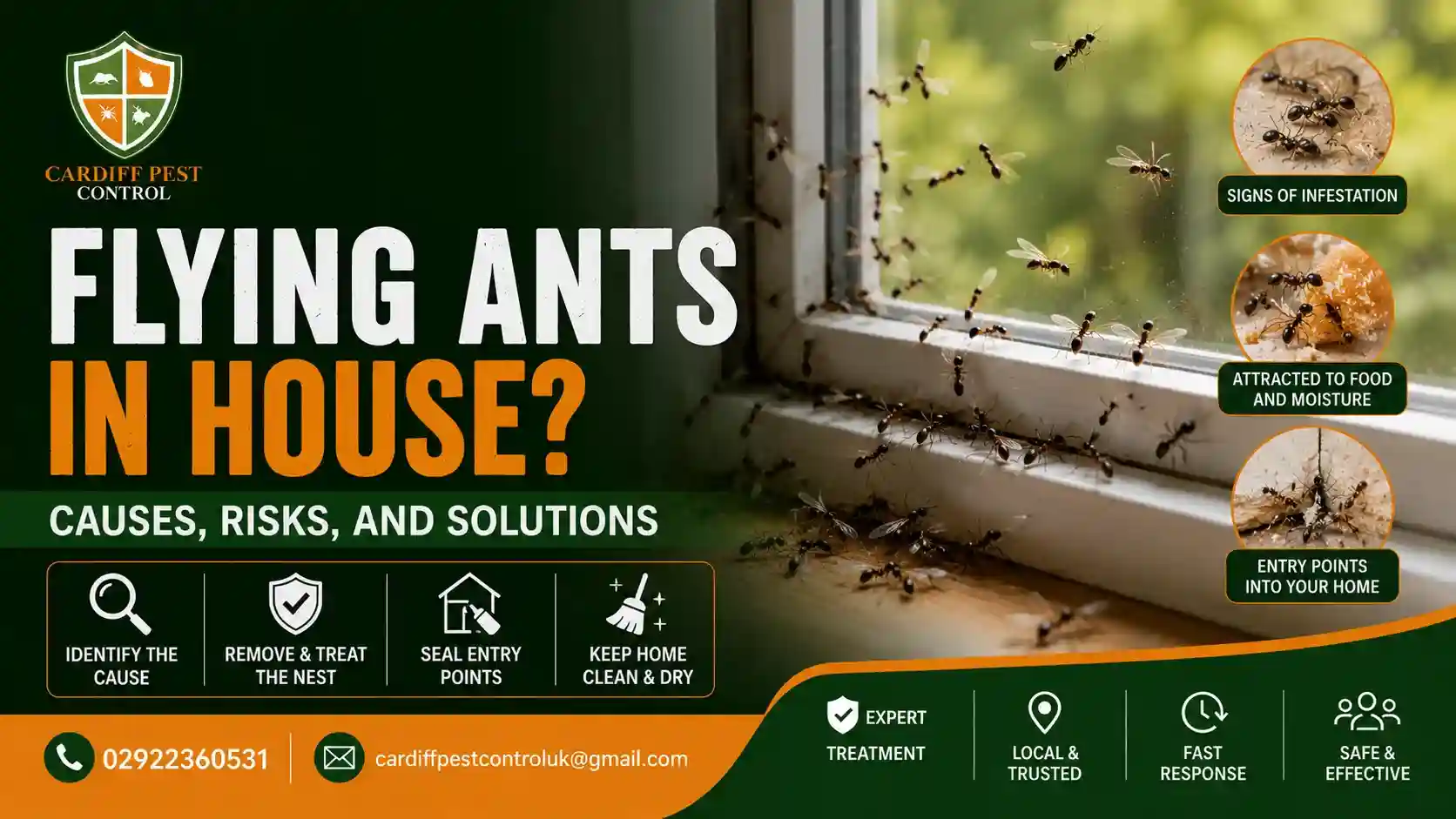
It is a warm summer day, and you are relaxing in your living room. Suddenly, you look up and see a swarm of insects with wings bouncing against your window. You look closer and realize they are not flies. You have flying ants in your house.
Seeing a sudden cloud of winged insects inside your home can be scary. You might wonder where they came from, if they will bite you, and how to make them leave. This guide from Cardiff Pest Control will answer all your questions. We will look at why these pests appear, the risks they bring, and how to protect your property.
What Are Flying Ants and Why Do They Have Wings?
Many people do not know that flying ants are not a unique, separate species of insect. They are actually regular ants that have reached sexual maturity.
In the UK, the most common type you will see is the black garden ant (Lasius niger). During most of the year, an ant colony only consists of the queen and thousands of wingless worker ants. However, when the colony grows large and successful, the queen begins to produce new, special ants. These are the virgin queens (large females) and males, both of which are born with wings.
The sole purpose of these winged ants is reproduction. They leave their home nests to find mates from other colonies and start new families.
What is Flying Ant Day?
If you live in South Wales, you might have noticed that during July or August, millions of these insects seem to emerge all at once on a single afternoon. People often call this event “Flying Ant Day.”
It is not actually a single day, but rather a short period of a few weeks in the summer when weather conditions are exactly right. The ants wait for days when the temperature is warm (usually above 25°C), the air is humid, and there is almost no wind. When these conditions align, it triggers a massive synchronized takeoff across the region.
By leaving their nests at the exact same time, the ants protect themselves from predators like birds through sheer numbers. It also makes it much easier for them to find a mate from a different colony.
Why Are Flying Ants in My House? (The Main Causes)
If you see a few winged insects flying near an open window or back door, there is usually no need to panic. They likely drifted inside by accident while searching for a mate.
However, if you find hundreds of them crawling out from under your baseboards, kitchen cabinets, or carpets, you have a different situation. Here are the primary reasons why they are
inside your home:
1. You Have an Existing Indoor Nest
The most common reason for a large indoor swarm is that a colony has already been living quietly under your floors, inside your wall cavities, or beneath your kitchen fittings for months. When the weather gets warm, the winged ants hatch and emerge directly into your living spaces rather than outside.
2. Open Access Points and Attractants
Ants are drawn to homes by two simple things: food and shelter. If you leave sweet foods, sugary spills, or pet food out on the counter, worker ants will find them. They enter through tiny cracks around window frames, gaps under doors, or holes in brickwork. Once a food source is found, they leave a scent trail for other ants to follow.
3. High Humidity and Damp Wood
Like many of the 6 common insects in UK homes, ants love moisture. If you have leaky pipes under your kitchen sink or damp structural timbers in your walls, it creates the perfect environment for a colony to build a nest.
How to Identify Flying Ants vs. Termites
It is very important to make sure the pests you see are ants, not termites. Termites are rare in the UK, but they can cause massive structural damage to wood. You can tell them apart by looking closely at three key body features:
| Feature | Flying Ants | Termites |
| Waist Shape | Narrow, pinched, and thin waist | Thick, straight, and wide waist |
| Antennae | Bent or “elbowed” antennae | Straight and beaded antennae |
| Wing Size | Front wings are larger than the back wings | All four wings are equal in size and shape |
Are Flying Ants Dangerous? Risks to Health and Property
The good news is that flying ants do not actively look for humans to hurt them. They are completely focused on finding a mate. However, they can still cause a few distinct problems if they take over your property.
Health and Hygiene Risks
Ants travel across dirty surfaces, soil, and garbage outside before crawling onto your kitchen counters, cutting boards, and food packages. They can spread bacteria onto your food surfaces, which creates top health and hygiene risks for your family. If you are accidentally bitten by an irritated ant, it can cause mild itching or skin irritation. You can learn more about dealing with these skin reactions in our guide on the bites of ants causes symptoms.
Damage to the Property
While standard black garden ants do not eat wood, they can dig out tunnels through soft, decaying, or damp timber to build their nests. This can weaken the wooden structures inside your walls over time. If you ignore a large indoor infestation, the colony will keep growing every year, making it much harder to remove later.
How to Get Rid of Flying Ants in Your House Immediately
If you are dealing with an active swarm inside your home right now, you can use these quick, actionable steps to manage the situation:
Use a Vacuum Cleaner
The fastest way to clear hundreds of flying insects from a room is to use a vacuum cleaner with a hose attachment. Vacuum them up directly from windowsills, floors, and walls. Once you are finished, empty the vacuum bag or canister into an outdoor bin immediately so they cannot crawl back out.
Set Up Sticky Fly Traps
Place sticky fly papers or UV light traps near the windows where the ants are gathering. They are naturally drawn to the light and will get stuck on the adhesive surfaces.
Use a Soapy Water Spray
Mix two tablespoons of liquid dish soap with water in a clean spray bottle. Spray the mixture directly onto the flying insects. The soap coats their bodies, breaks down their outer layer, and stops them from breathing, killing them quickly without the use of harsh chemicals.
Long-Term Solutions to Keep Flying Ants Out
Clearing away the visible flying insects is only a temporary fix. To solve the problem permanently, you must eliminate the hidden nest and block all future entry routes.
1. Destroy the Hidden Nest with Ant Baits
Never just spray visible worker ants with a standard bug spray. If you kill them on the spot, the queen will simply lay more eggs to replace them. Instead, use specialized ant baits.
Worker ants find the sweet bait, carry the slow-acting insecticide back to the hidden nest, and feed it to the queen. This destroys the entire colony at its source. For the best results, read our detailed article on choosing the best ant baits for household use.
2. Seal Up Entry Points
Inspect the exterior walls of your property carefully. Look for small cracks in the mortar, gaps around utility pipes, and spaces around doors and window frames. Use an exterior sealant, caulk, or fine steel wool to fill these gaps so insects cannot squeeze through.
3. Maintain Excellent Kitchen Hygiene
- Store all sweet food items, cereals, and baking ingredients in airtight plastic or glass containers.
- Wipe down countertops, tables, and floors daily to remove sticky liquid spills and food crumbs.
- Clean out your pet food bowls immediately after they finish eating.
- Empty your kitchen rubbish bins daily and keep outdoor bins sealed tight.
If you want to read more about keeping your cooking spaces clear of foraging pests, check out our easy tips on how to get rid of ants in the kitchen.
When to Call Cardiff Pest Control
A few stray ants during the peak of summer are a normal part of British wildlife. You can usually manage them on your own by closing your windows and using basic DIY cleaning methods.
However, you should seek professional assistance if you experience any of the following signs:
- Winged ants are emerging from underneath your floors or behind your walls when the windows are completely closed.
- You see large numbers of worker ants inside your kitchen consistently every day.
- DIY baits and traps fail to stop the infestation after a couple of weeks.
Trying to tackle a deep structural nest on your own can be incredibly frustrating. Professional pest control technicians have specialized equipment, deep knowledge of local insect behaviors, and access to professional-grade treatments that are safe for use around children and household pets.
Need Help Today? If you are tired of dealing with persistent insect swarms on your property, contact the expert team at Cardiff Pest Control. We provide fast, reliable, and highly effective professional pest control service to keep your home comfortable and pest-free year-round.