Carpet beetles are small, but the damage they cause can be very costly. These tiny insects are one of the most common household pests in the UK, yet many people do not even know they have them until the damage is already done. If you have noticed holes in your carpets, clothing, or soft furnishings, carpet beetles could be to blame.
This guide from Cardiff Pest Control covers everything you need to know about carpet beetles, where they hide, how to get rid of them, and how to stop them from coming back.
What Are Carpet Beetles and Why Are They a Problem?
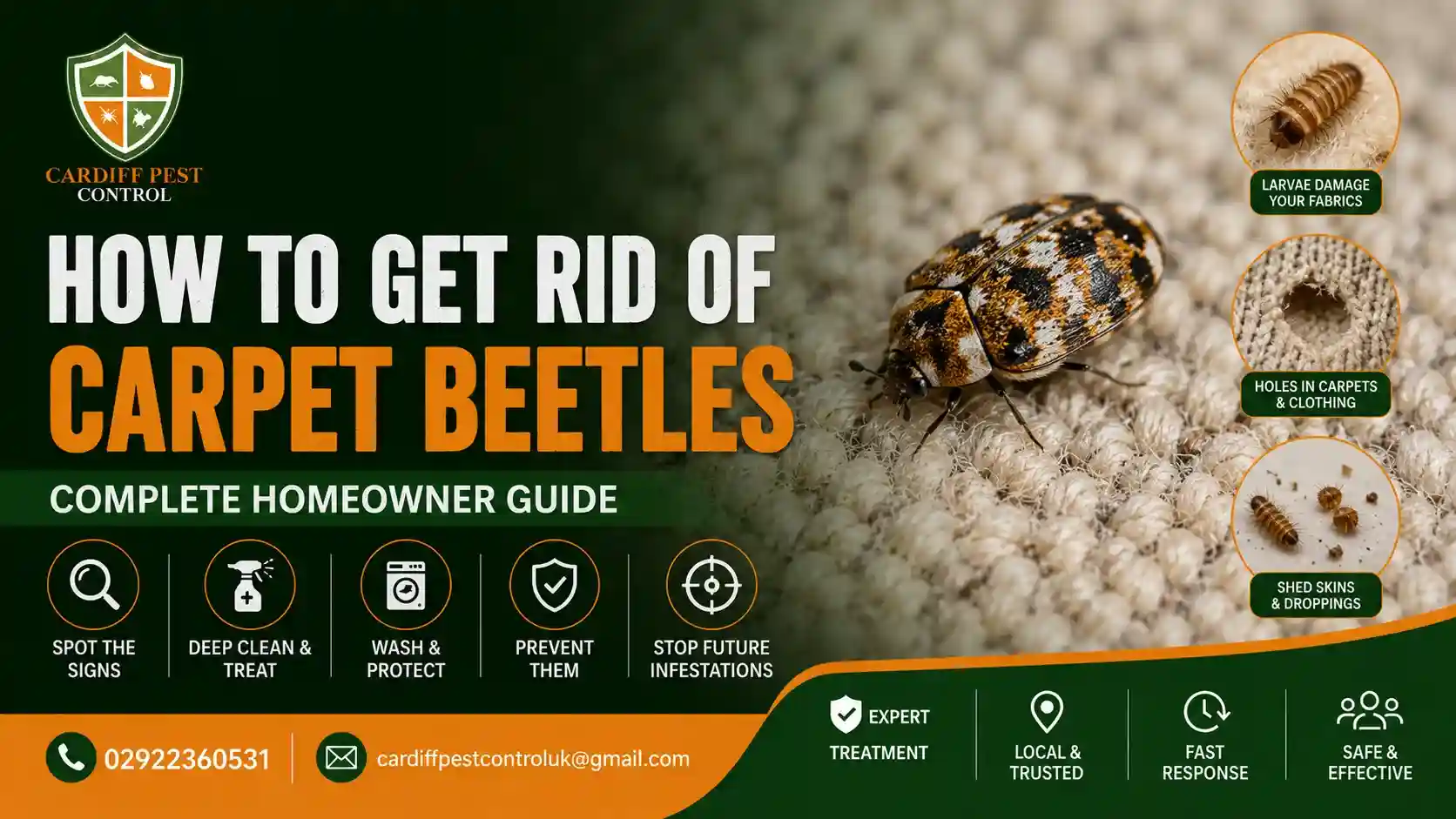
Carpet beetles are small insects that feed on natural fibres. There are a few common species found in UK homes, including the varied carpet beetle, the furniture carpet beetle, and the black carpet beetle. Adult beetles are oval-shaped and only about 2 to 4mm long, with a mottled pattern of black, white, and orange or brown scales.
The adult beetles themselves do not cause much damage. The real problem is their larvae. Carpet beetle larvae often called woolly bears because of their hairy appearance are the ones that feed on your belongings. They eat wool, silk, leather, fur, feathers, and even some synthetic blends. Left unchecked, a carpet beetle infestation can destroy rugs, carpets, jumpers, curtains, and upholstered furniture.
Signs You Have a Carpet Beetle Infestation
Catching a carpet beetle problem early makes it much easier to deal with. Here are the key signs to look out for:
Irregular holes in fabric and carpets unlike moths, which tend to eat larger patches, carpet beetle larvae leave behind a trail of small, irregular holes. You may notice this on woollen jumpers, silk scarves, or the edges of rugs.
Shed larval skins as larvae grow, they shed their skins. Finding brown, bristly casings around your carpets, wardrobes, or under furniture is a strong sign of carpet beetle activity.
Live or dead adult beetles adult carpet beetles are often found near windows, as they are attracted to light. Finding small oval beetles on windowsills or flying around light fittings in spring and summer is a common early sign.
Larval damage along carpet edges larvae prefer dark, undisturbed areas. Check under furniture, along the edges of carpets near skirting boards, and inside wardrobes.
Faecal pellets tiny dark droppings, similar in size to a grain of sand, can sometimes be spotted near areas of damage.
If you are unsure whether you are dealing with carpet beetles or carpet moths, our guide on how to get rid of carpet moths explains the key differences between the two pests.
Where Do Carpet Beetles Come From?
Many homeowners are surprised to find carpet beetles in a clean home. The truth is, these insects can get in very easily. Adult carpet beetles fly and are commonly found on flowering plants outside. They enter your home through open windows and doors, on cut flowers brought indoors, or on second-hand furniture and clothing.
Once inside, females look for a warm, undisturbed spot to lay their eggs. They are drawn to natural fibres, dried pet food, dead insects, and even bird or wasp nests in the loft or roof space. This is why a wasp nest in your roof could be contributing to a carpet beetle problem — the nest material provides food and shelter for larvae.
Common entry points and sources include:
- Open windows and doors during spring and summer
- Second-hand rugs, clothing, and furniture
- Cut flowers and potted plants brought indoors
- Bird nests and old wasp nests in loft spaces
- Gaps around windows, doors, and eaves
How to Get Rid of Carpet Beetles: Step-by-Step
Step 1: Deep Clean the Affected Areas
The first step is a thorough deep clean. Vacuum every area carefully, paying close attention to the edges of carpets, underneath furniture, inside wardrobes, and along skirting boards. Use a vacuum with a HEPA filter if possible, as this traps even the finest particles, including larvae and eggs.
After vacuuming, dispose of the bag or empty the canister outside immediately. Larvae can escape from a full vacuum and spread to other areas of your home.
Steam cleaning your carpets and soft furnishings is also very effective. The heat kills larvae and eggs at all life stages. If you have a steam cleaner, use it on carpets, rugs, curtains, and upholstered furniture after vacuuming.
Step 2: Wash All Affected Fabrics
Any clothing, bedding, or soft furnishings that show signs of damage should be washed immediately. Use the hottest wash setting the fabric can safely handle. For delicate items, placing them in a sealed bag and putting them in the freezer for at least 72 hours will also kill larvae and eggs.
Check the labels on your garments first some natural fabrics like wool need to be dry cleaned rather than machine washed.
Step 3: Apply an Insecticide Treatment
For an active infestation, vacuuming alone is rarely enough. You will need to use an insecticide spray or powder designed for carpet beetles. Look for products containing permethrin or deltamethrin, which are commonly available in DIY stores.
Apply the treatment along carpet edges, inside wardrobes, under furniture, and in any other areas where you have found evidence of larvae. Always follow the manufacturer’s instructions carefully and keep children and pets out of treated areas until the product has dried completely.
For persistent or widespread infestations, a professional-grade treatment is far more effective. Our carpet moth extermination service covers carpet beetles too contact us to find out more.
Step 4: Use Pheromone Traps to Monitor Activity
Sticky pheromone traps attract adult carpet beetles and help you monitor how bad the infestation is and whether it is reducing over time. Place them inside wardrobes, near affected carpets, and along skirting boards. These traps do not eliminate an infestation on their own, but they are a useful tool for tracking progress.
Step 5: Check and Treat the Loft
If you keep finding carpet beetles despite treating your living areas, the source could be in your loft. Old bird nests, dead insects, and stored natural fibre items in the loft can all harbour carpet beetles. Check loft spaces carefully and remove any old nests or debris.
If you find a large amount of debris, pest damage, or contaminated insulation, a professional loft clearance can help you clear and treat the space safely.
Natural Remedies for Carpet Beetles
If you prefer to avoid chemical sprays, there are some natural approaches that can help with a minor infestation:
Diatomaceous earth, this fine powder is made from fossilised algae. When sprinkled along carpet edges and inside wardrobes, it damages the exoskeleton of larvae and kills them over time. It is safe for humans and pets once settled, but wear a mask when applying it.
Cedar, cedar wood, and cedar oil naturally repel carpet beetles. Placing cedar blocks or cedar-lined hangers in your wardrobe can deter beetles from laying eggs in stored clothing.
White vinegar cleaning hard surfaces, shelving, and the insides of wardrobes with a white vinegar solution can deter adult beetles from laying eggs in those areas.
Essential oils, such as clove oil, neem oil, and eucalyptus oil, have all been shown to repel carpet beetles. Dilute a few drops in water and spray onto affected surfaces.
These natural methods work best as a preventative measure or for very minor cases. For a proper infestation, they are unlikely to be enough on their own. You can find more eco-friendly pest management ideas in our guide to organic pest control.
Rooms Most Likely to Be Affected by Carpet Beetles
Carpet beetles can turn up anywhere in your home, but they are particularly common in certain areas:
Bedrooms with wardrobes full of natural fibre clothing, woollen blankets, and carpeted floors make bedrooms a prime target. Check under the bed and along the edges of the carpet regularly.
Living rooms, wool rugs, upholstered sofas, and curtains are all at risk. Carpet beetle larvae love undisturbed areas beneath heavy furniture.
Lofts and attics, old clothing stored in boxes, feather insulation, and bird nests make loft spaces a very common breeding ground.
Under stairs and cupboards, dark, rarely disturbed spaces are ideal for larvae. Check any storage cupboards, especially those where natural fibre items are kept.
Museums and antique collections carpet beetles are a well-known problem for anyone who collects antiques, taxidermy, or vintage clothing.
How to Prevent Carpet Beetles from Returning
Once you have dealt with an infestation, the goal is to make your home as unattractive to carpet beetles as possible. Good prevention habits include:
- Vacuum carpets, rugs, and upholstered furniture regularly, paying close attention to edges and underneath furniture
- Store seasonal clothing in airtight bags or sealed plastic boxes rather than open wardrobes
- Brush and air out woollen garments before storing them for long periods
- Fit insect mesh over windows and vents to stop adult beetles flying in during spring and summer
- Inspect second-hand furniture, rugs, and clothing carefully before bringing them into your home
- Keep your loft space clear of old bird nests and debris
- Book a regular pest inspection to catch any new activity before it becomes a full infestation
Good general housekeeping goes a long way. The most common household pests all thrive in undisturbed, cluttered spaces keeping your home clean and well-ventilated makes it far less inviting.
When to Call a Professional Pest Controller
There are times when a DIY approach simply will not cut it. You should call a professional pest control company if:
- The infestation has spread to multiple rooms
- You have treated the affected areas, but keep finding new damage
- You cannot locate the source of the infestation
- Valuable carpets, antiques, or clothing have been damaged, and you need to prevent further loss
- You suspect the source is in the loft, roof space, or wall cavities
Cardiff Pest Control provides fast and effective treatment for carpet beetle infestations across Cardiff and the surrounding areas. We identify the source, treat all affected areas, and give you practical advice to stop it from happening again. Contact us today for a free assessment.
Final Thoughts
Carpet beetles are a frustrating pest, but they are very manageable if you catch them early and take the right steps. Deep cleaning, targeted treatment, and good storage habits will deal with most infestations. For anything more serious, professional help is the quickest and most reliable solution.
Cardiff Pest Control is here to help homeowners across Cardiff identify and eliminate carpet beetle problems before they cause serious damage. For expert advice or to book a treatment, get in touch with our team today. You can also browse our pest control services to see the full range of treatments we offer.
Frequently Asked Questions
1. Can carpet beetles live in a clean home?
Yes. Carpet beetles are attracted to natural fibres and food sources like pet hair and dead insects, not general dirt. Even a very clean home can have a carpet beetle problem if there are natural fibre items, cut flowers, or gaps that allow adult beetles to enter.
2. How long does a carpet beetle infestation last?
Without treatment, an infestation can last for years. Carpet beetles have a life cycle of one to two years, depending on conditions. The larval stage is the longest, which is why damage can accumulate slowly without being noticed.
3. Do carpet beetles bite humans?
Carpet beetles do not bite. However, their larval hairs can cause an allergic skin reaction in some people, resulting in a rash or itchy red bumps. If you or a family member has unexplained skin irritation and you suspect carpet beetles, seek advice from your GP.
4. Are carpet beetles the same as carpet moths?
No. They are different insects, although they cause similar damage. Carpet moths leave silky webbing behind and tend to eat larger, more defined patches. Carpet beetles leave shed skins and cause more scattered, irregular damage. Read our guide on how to get rid of carpet moths to compare the two.
5. What time of year are carpet beetles most active?
Adult carpet beetles are most active in spring and summer when they emerge to feed and mate. Larvae are active year-round indoors, which is why infestations can go unnoticed during winter and only become apparent when adults appear in spring.