Table of Contents
ToggleOne minute your kitchen is spotless, and the next, you’re swatting at tiny, buzzing dots every time you reach for a banana. We know exactly how frustrating this is. At Cardiff Pest Control, we deal with these pests daily, and we can tell you one thing for certain: a fruit fly infestation isn’t a reflection of your cleaning habits—it’s a biological race against time.
If you are currently wondering how to get rid of fruit flies, you aren’t alone. These pests are among the most common household nuisances in the UK. In this guide, we will break down everything from where do fruit flies come from to the specific steps we take to kill fruit flies and keep them from returning.
Where Do Fruit Flies Come From?
Before you can fix the problem, you have to understand the source. Many people assume they just appear out of thin air, but that isn’t the case. Usually, they hitch a ride into your home on the very produce you buy at the shop.
Fruit fly eggs are often already laid on the skin of overripe or fermenting fruits. Once you bring that bag of apples or bunch of bananas home, the warm environment of your kitchen acts as an incubator. Within a very short window, those eggs hatch into larvae, and suddenly, you have a cloud of flies.
They are also attracted to:
- Damp kitchen sponges and dishcloths.
- The sludge at the bottom of your recycling bin.
- Drains where organic matter has built up (similar to how drain flies behave).
- Spilled beer, wine, or juice.
How Long Do Fruit Flies Live?
To understand the urgency of the situation, we need to look at their lifecycle. How long do fruit flies live? On average, an adult fruit fly lives for about 40 to 50 days. While that doesn’t sound like much, their ability to reproduce is staggering.
A single female can lay up to 500 eggs in her brief lifetime. Because they can go from egg to adult in about a week, a couple of stray flies can turn into thousands in less than 14 days. This rapid cycle is why you feel like you are losing the battle even when you kill a dozen a day.
How to Get Rid of Fruit Flies: The First Steps
We always tell our clients that you can’t just spray your way out of this. You have to be tactical. If you want to know how do you get rid of fruit flies effectively, follow this three-step checklist:
1. Remove the Food Source
The first thing we do during an inspection is look for the “breeding ground.” Check your fruit bowl and throw away anything that is soft, bruised, or leaking. Even an old onion at the back of a cupboard can sustain a massive population.
2. Deep Clean the “Hidden” Spots
Fruit flies love the thin film of bacteria found in sink overflows and garbage disposals. We recommend scrubbing your bins with hot soapy water and ensuring no liquid is pooled at the bottom of your bag liners.
3. Seal Your Goods
Move your fresh produce to the fridge until the flies are gone. Use airtight containers for any dry goods that might have been exposed.
How to Trap Fruit Flies: DIY and Professional Methods
If you want to know how to trap fruit flies right now, you can use items already in your pantry. We’ve found that the most effective DIY trap involves Apple Cider Vinegar (ACV).
The ACV Trap Method:
- Fill a small jar with apple cider vinegar.
- Add two drops of liquid dish soap (this breaks the surface tension so the flies sink).
- Cover the jar with cling film and poke small holes in the top.
The flies are drawn to the fermented scent, crawl in, and cannot get back out. However, while traps help reduce the adult population, they do nothing to stop the fruit fly eggs that are waiting to hatch.
How to Kill Fruit Flies Permanently
If the traps aren’t enough and the numbers keep growing, you are likely dealing with a deep-seated fruit fly infestation. This is where professional intervention becomes necessary.
We use specialized treatments that go beyond what you can buy at a supermarket. Our team targets the breeding sites—often within the drainage systems or wall voids—using safe, regulated foams and residuals that break the lifecycle. Unlike cluster flies, which seek shelter in lofts, fruit flies stay where the moisture and sugar are. If you’ve tried the vinegar tricks and you’re still seeing them, it’s time to call in the experts.
Preventing a Fruit Fly Infestation
Prevention is always better than a cure. We suggest these habits to keep your home fly-free:
- Wash your produce: As soon as you get home from the shops, wash your fruit to remove any potential eggs.
- Dry your surfaces: Don’t leave damp cloths bunched up on the counter.
- Check your drains: Regularly flush your kitchen sink with boiling water to dislodge organic buildup.
- Empty bins daily: Especially if they contain food scraps or fruit peels.
If you find that your home seems to attract pests regardless of how much you clean, it might be part of a wider trend of common household pests in the Cardiff area.
Summary of the Battle Plan
To recap our professional stance on how to kill fruit flies:
- Identify the source (usually fermenting fruit or dirty drains).
- Sanitise the area to remove the eggs and larvae.
- Trap the remaining adults using vinegar or pheromone traps.
- Monitor for new activity over the next 7 days.
Dealing with these insects is a test of patience, but by following these steps, you can win. If the problem persists, we are here to help you clear it up for good.
FAQs
Why do I have fruit flies if my house is clean?
Fruit flies don’t care about dust; they care about fermentation. You could have a spotless home but one overripe tomato at the bottom of a bag, and that is enough to start an infestation.
Can fruit flies bite humans?
No, fruit flies do not have the mouthparts to bite humans. They feed exclusively on liquids and decaying organic matter. If you are getting bitten, you may be dealing with gnats or another type of fly.
Do fruit flies carry diseases?
Yes. Because they frequent bins and decaying matter, they can pick up bacteria like Salmonella and E. coli, which they then transfer to your fresh food or clean surfaces.
Will bleach kill fruit flies in the drain?
While bleach might kill some larvae, it often passes through the pipes too quickly to be fully effective. We recommend using a thick enzymatic cleaner or boiling water to properly clear the organic film they live in.
How do I tell the difference between a fruit fly and a gnat?
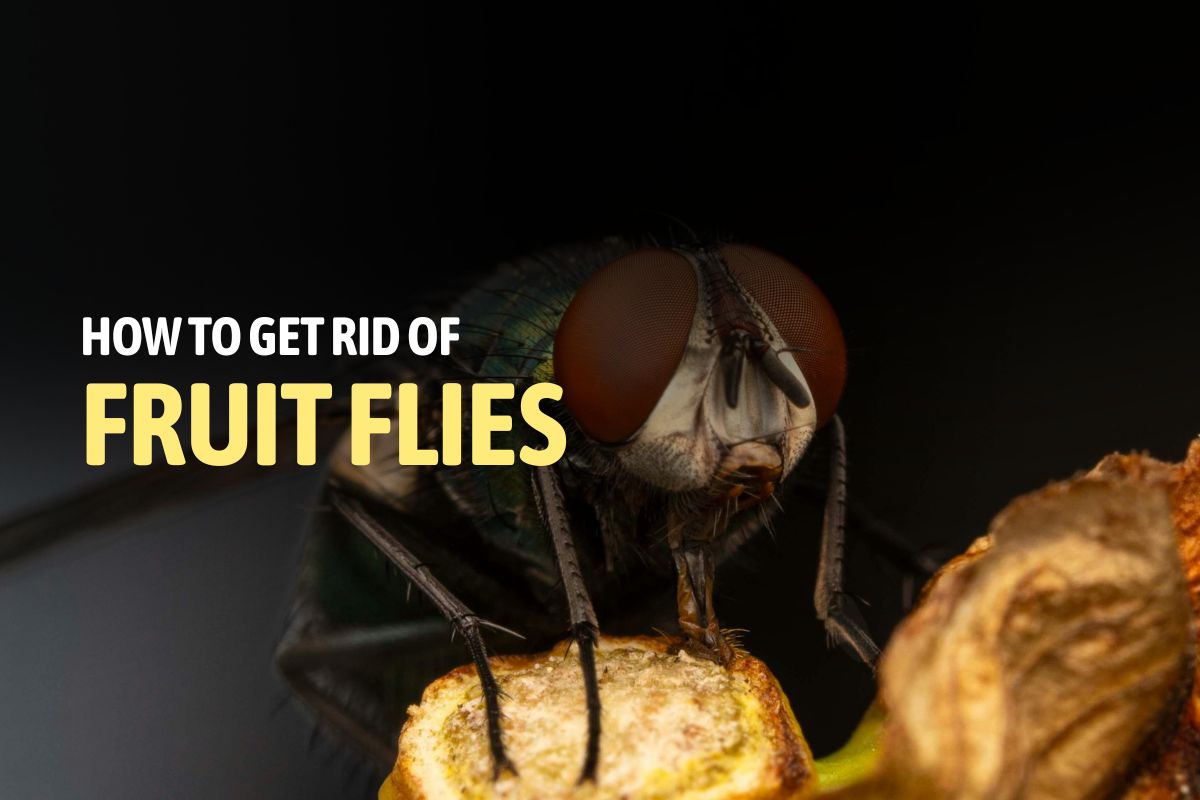
Fruit flies are usually tan or brownish with bright red eyes and hang around fruit. Fungus gnats are black, look more like tiny mosquitoes, and are usually found around the soil of overwatered houseplants.
Can I just wait for them to die off?
Unfortunately, no. Because they reproduce so quickly, the next generation is usually born before the previous one dies. Without removing the food source or treating the area, the cycle will continue indefinitely.