Table of Contents
ToggleWhen you spot a buzzing insect near your eaves or garden, the immediate reaction is often one of concern. We frequently hear from homeowners who aren’t quite sure what they are looking at: is it a common wasp, or is it something more aggressive like a hornet? Understanding the difference between hornets vs wasps is the first step in managing the situation safely.
While both belong to the same family (Vespidae), they have distinct behaviours, nesting habits, and physical traits. In this guide, we will break down everything you need to know about these stinging insects and how we handle wasp nest removal and hornet control professionally.
What Kind of Bug is a Hornet?
To put it simply, all hornets are wasps, but not all wasps are hornets.A hornet is actually a specific type of large social wasp. In the UK, the most common species we encounter is the European Hornet (Vespa crabro).
What Does a Hornet Look Like?
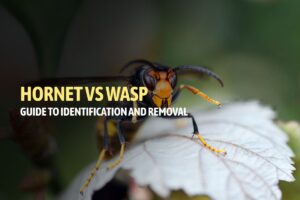
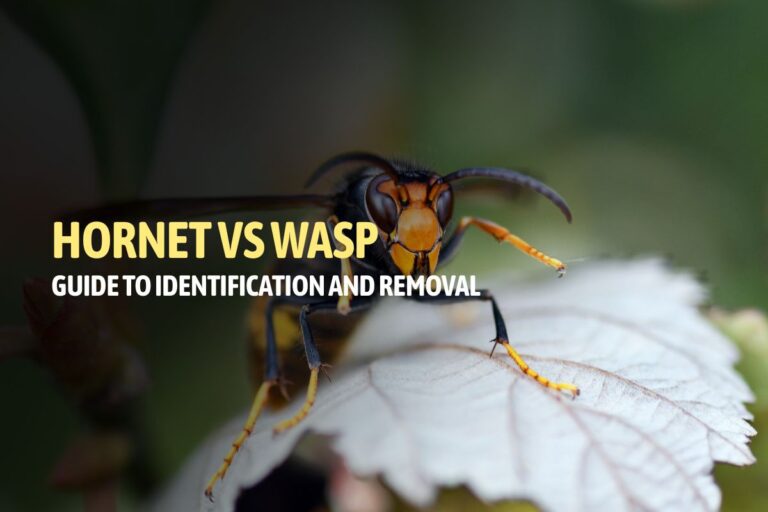
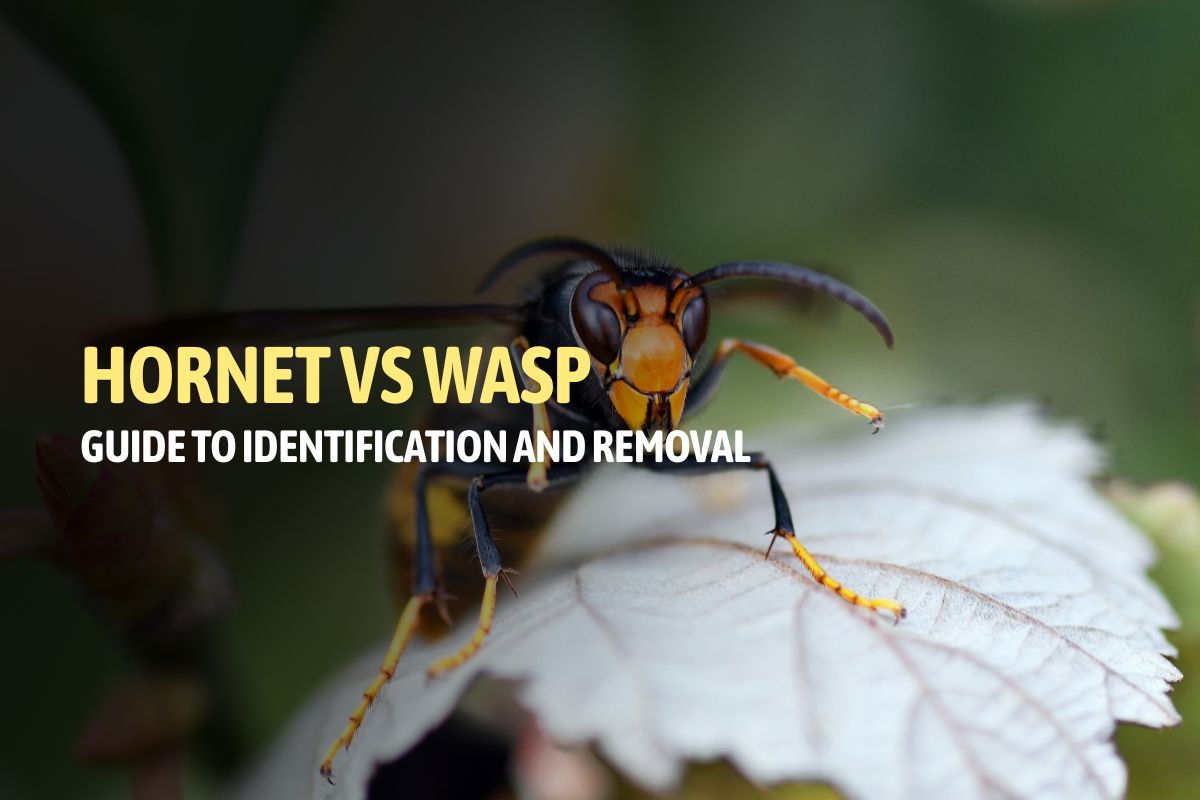
If you are trying to figure out what does a hornet look like, size is your biggest clue.
- Size: Hornets are significantly larger than standard wasps, often reaching up to 3.5cm in length.
- Colour: While common wasps are bright yellow and black, hornets usually have a more “rusty” or orange-brown hue mixed with yellow.
- Body Shape: They have a thicker, more rounded abdomen compared to the slender, “wasp-waisted” appearance of their smaller cousins.
Comparing Hornets vs Wasps
When we compare hornet vs wasp, we look at more than just their looks. Their temperaments differ as well.
| Feature | Common Wasp | Hornet |
| Size | 1cm – 1.5cm | 2.5cm – 3.5cm |
| Colour | High-contrast Yellow/Black | Orange-Brown/Yellow |
| Aggression | High (especially near food) | Lower (but very defensive of nests) |
| Diet | Sugars, fallen fruit, insects | Large insects (flies, bees), tree sap |
What Do Wasps Eat?
Early in the season, wasps are actually beneficial because what wasps eat includes garden pests like caterpillars and flies. However, by late summer, their diet shifts. They begin seeking out fermented fruit and sugary drinks, which is why they become such a nuisance at outdoor gatherings.
What Do Hornets Eat?
What hornets eat is slightly different. They are apex predators in the insect world. We often see them hunting other large insects, including dragonflies and even other wasps. They also have a fondness for tree sap, which they “strip” from branches.
Nest Identification: Hornet Nest vs Wasp Nest
Spotting the hive early can prevent a major infestation. There are subtle differences when comparing a hornet nest vs wasp nest.
- Wasp Nests: Usually found in loft spaces, wall cavities, or hanging from sturdy branches. They are made of chewed wood pulp (paper) and often have a greyish, swirl-like appearance. If you suspect you have one in your attic, you might find our guide on how to stop birds nesting in your roof helpful for identifying entry points.
- Hornet Nests: These are typically found in darker, more secluded areas like hollow trees or deep within chimneys. A hornet nest is usually larger and has a more brownish-orange tint because they use different types of decayed wood to build it.
How to Get Rid of Wasps and Hornets
We strongly advise against DIY removal for these pests. Unlike bees, wasps and hornets can sting multiple times, and they release pheromones that signal the rest of the colony to attack.
How to Get Rid of a Hornets Nest
If you are wondering how to get rid of a hornets nest, the answer is: carefully and with professional equipment. Because hornets are active at night and are attracted to light, DIY attempts with a torch often end in multiple stings.We use professional-grade insecticidal dusts that neutralise the colony quickly and safely.
How to Get Rid of Wasp Nest
The process for how to get rid of wasp nest installations follows a similar path. We locate the primary entrance and apply a treatment that the wasps carry into the heart of the nest. For more detailed steps on this process, check out our professional advice on how to get rid of a wasp nest instantly.
Wasp Sting Treatment and Safety
If you are unlucky enough to be stung, knowing how to treat a wasp sting is vital.
- Wash the area: Use soap and water to remove any venom left on the skin.
- Ice it: Apply a cold pack to reduce swelling.
- Antihistamines: These can help manage the itching and redness.
- Monitor for Allergies: If you experience difficulty breathing or significant swelling away from the sting site, seek medical attention immediately.
For a deeper dive into the medical side of these encounters, read our article on the bites of ants and other insects.
FAQs
Are hornets more dangerous than wasps?
While hornet venom is not necessarily more toxic than wasp venom, they are much larger and can deliver a larger volume of venom per sting. Their size also makes the sting significantly more painful.
Can I use a shop-bought spray for wasp nest removal?
We generally discourage this. High-street sprays often require you to get very close to the nest, which increases the risk of a swarm attack. Professional treatments work from a distance and ensure the entire colony is gone.
Do hornets return to the same nest every year?
No. Neither hornets nor wasps reuse an old nest. However, if your property has a “perfect” nesting spot, a new queen may choose to build a new nest very close to the old one the following year.
What is the best way for how to get rid of hornets in the garden?
The best way is to remove their food sources. Keep fallen fruit cleared away and ensure your bins are tightly sealed. If they are nesting on your property, professional removal is the only permanent solution.
How can I tell the difference between different types of wasps?
Most people encounter the Common Wasp or the German Wasp. They look very similar, but the German Wasp has three tiny black dots on its face. For more help identifying UK species, see our guide on 6 common insects in UK homes.
When is the best time of day to treat a nest?
We find that late evening or very early morning is most effective, as the majority of the colony is inside the nest and the insects are less active.