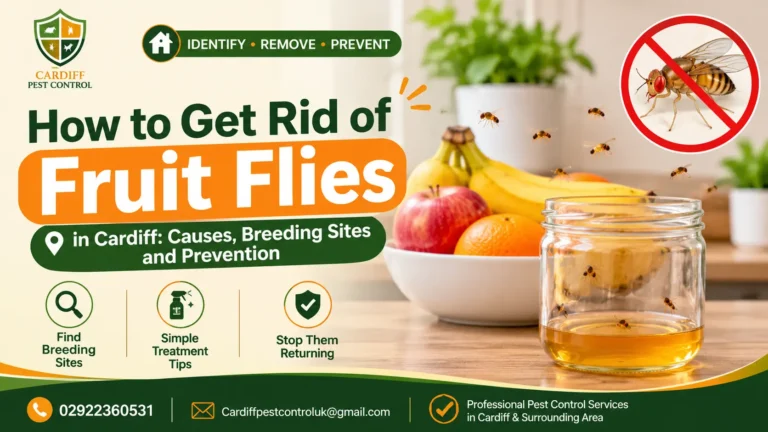
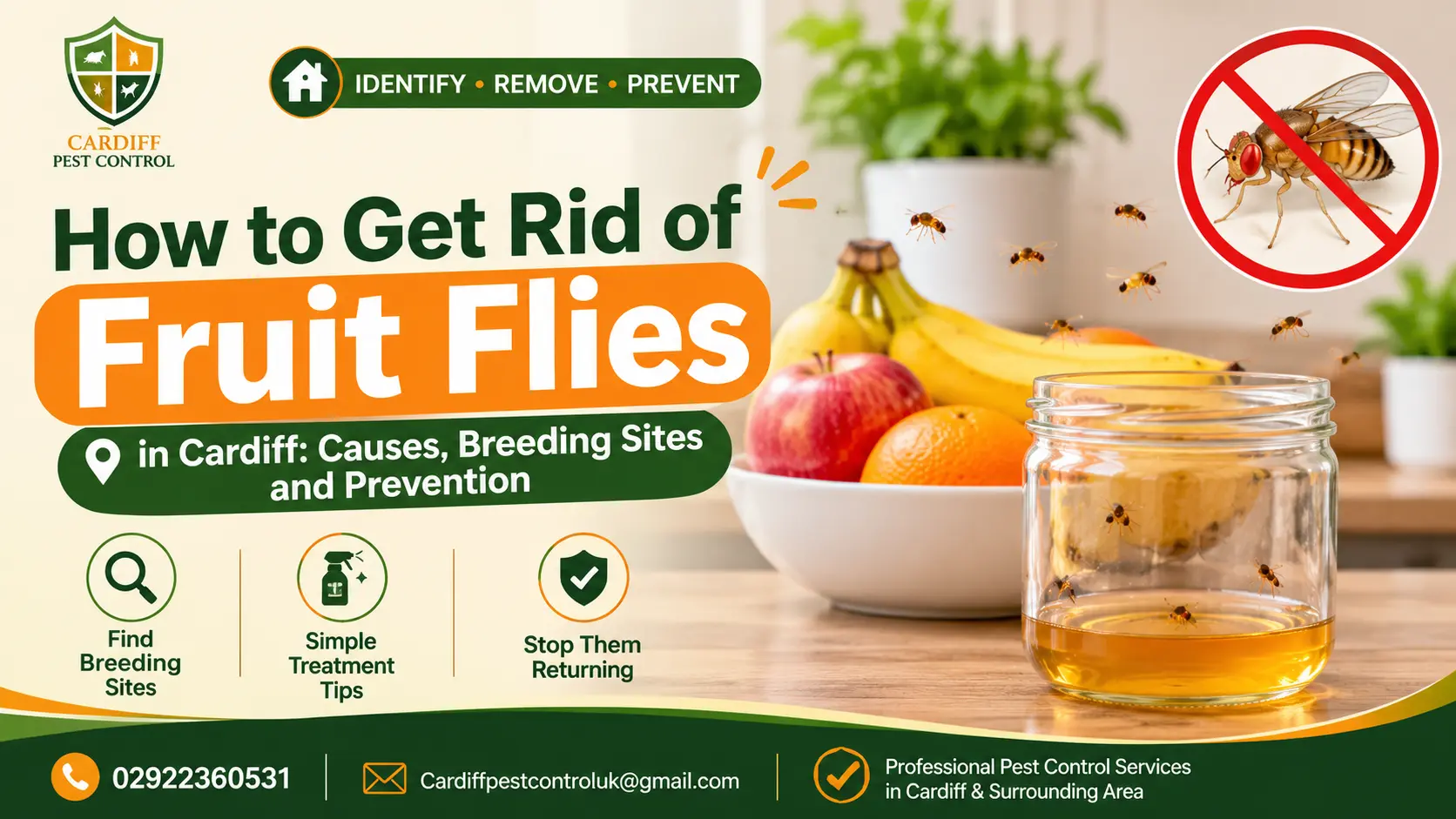
You walk into your kitchen and see tiny flies around the fruit bowl. You wipe the counter, and they disappear. By the next morning, they are back.
Fruit flies are one of the most common kitchen pests in Cardiff homes, student houses, cafés, and takeaways. They spread fast, but they are easy to stop once you know where they breed.
To get rid of fruit flies, remove rotten fruit, wash your kitchen bin, wipe sticky spills, and clean hidden food waste. Then set an apple cider vinegar trap to catch the adult flies. Cleaning the breeding spot is the most important step. If the flies keep coming back, ask a pest expert to inspect the property.
What Are Fruit Flies?
Fruit flies are tiny insects from the Drosophilidae family. People also call them vinegar flies because they love fermenting fruit, vinegar, and sweet drinks.
Adult fruit flies:
- Are about 3 mm long.
- Have tan or yellow-brown bodies.
- Often have red eyes.
- Have clear wings.
You will usually see them near:
- Ripe bananas and other fruit.
- Kitchen bins and recycling boxes.
- Drink bottles, cans, and spilled juice.
- Sinks and food preparation areas.
Fruit flies feed on soft, overripe, or rotting food, and they lay their eggs there too.
How Fast Do Fruit Flies Multiply?
Very fast. A female fruit fly can lay hundreds of eggs in her life. In warm rooms, an egg can become an adult fly in about 8–10 days.
This is why one forgotten banana can turn into a swarm. It is also why killing the flies you can see will not fix the problem. The eggs and larvae stay hidden in food waste.
What Causes Fruit Flies in Your Home?
Fruit flies need three things: food, moisture, and a place to breed. They get inside through open windows and doors, or they arrive on fruit and vegetables from the shop.
1. Overripe Fruit and Vegetables
Soft fruit is the number one cause. Bananas, apples, pears, peaches, and tomatoes all attract fruit flies as they start to rot.
What to do:
- Check your fruit bowl every day.
- Throw away soft or damaged fruit.
- Keep ripe fruit in the fridge.
- Wash the bowl and the surface under it.
2. Dirty Kitchen Bins
Old food sticks to the sides and bottom of a bin. Even after you empty it, the smell can attract flies.
What to do:
- Empty the bin often.
- Wash the inside, lid, and handle with warm soapy water.
- Let it dry before adding a new bag.
- Keep food waste caddies covered.
If you also see small white worms in your bin, read our guide on how to get rid of maggots.
3. Spilled Drinks and Sugary Liquids
Juice, fizzy drinks, wine, and beer all feed fruit flies. Sticky residue in recycling boxes is a common hidden source.
What to do:
- Wipe spills straight away.
- Rinse bottles and cans before recycling.
- Clean sticky shelves and under appliances.
4. Dirty Drains and Food Waste
Food scraps can build up in sink strainers and plugholes. This can attract fruit flies. It can also attract other small flies that look similar.
What to do:
- Remove food scraps from the strainer.
- Clean the sink and plug area.
- Keep the area as dry as you can.
5. Forgotten Food and Hidden Spills
Fruit flies do not only breed in fruit you can see. Check:
- Behind and under the fridge and cooker.
- Potatoes and onions in cupboards.
- Under the kitchen bin.
- Inside food cupboards where something may have leaked.
How to Get Rid of Fruit Flies: 8 Simple Steps
You need to do three things: remove the food, clean the breeding spots, and catch the adult flies.
Step 1: Remove Overripe and Rotten Fruit
Check fruit bowls, cupboards, and the pantry. Throw away rotten or damaged food. Put it in a sealed bag and take it outside. Do not leave it in an open kitchen bin.
Step 2: Clean Kitchen Surfaces
Wipe worktops, tables, shelves, and cupboards. Pay extra attention to the areas around the fruit bowl, the bin, and small appliances.
Step 3: Wash Your Kitchen Bin
Empty it, scrub it with warm water and washing-up liquid, and dry it fully before putting in a new bag.
Step 4: Store Food the Right Way
- Keep ripe fruit in the fridge.
- Use sealed containers for open food.
- Remove damaged pieces from bags of fruit.
- Do not mix rotten fruit with fresh fruit.
Step 5: Make an Apple Cider Vinegar Trap
This simple trap catches adult fruit flies. It is a popular natural way to deal with them.
How to make it:
- Pour a little apple cider vinegar into a small glass or bowl.
- Add one or two drops of washing-up liquid.
- Place it where the flies gather.
- Check it daily and replace the liquid when needed.
The vinegar smell attracts the flies. The washing-up liquid stops them from escaping.
Important: This trap only catches adult flies. You still need to clean the breeding source.
Step 6: Clean Around the Sink
Remove food from the plughole and wipe the sink area. Never mix bleach with vinegar or acidic cleaners, because this can release harmful fumes. Follow the instructions on every product.
If the flies stay near the drain, you may be dealing with a different insect. See the section below on how to tell them apart.
Step 7: Stop Flies Getting Inside
- Fit window screens and repair damaged ones.
- Keep outside doors closed when you can.
- Keep outdoor bins clean and covered.
- Clear rotting fruit from the garden near doors.
Step 8: Find Hidden Breeding Spots
If the flies keep coming back, look under kitchen units, behind the fridge, around recycling boxes, and inside food cupboards. Clean any spot with old food or sticky liquid.
For more eco-friendly options, see our guide to organic pest control.
Where Do Fruit Flies Lay Their Eggs?
Fruit flies lay eggs on damp, fermenting food. The eggs are tiny, so you will not see them during normal cleaning.
| Breeding spot | Why fruit flies use it |
| Overripe fruit | Gives young flies food |
| Rotten vegetables | Soft, decaying material |
| Food waste bins | Damp food scraps |
| Sticky drink containers | Sugary, fermenting liquid |
| Forgotten food | A hidden food supply |
| Organic build-up near drains | Can support some small fly types |
The eggs hatch into larvae. The larvae feed, turn into pupae, and then become adult flies. This is why you must clean the material, not just swat the flies.
Is It a Fruit Fly, Drain Fly, or Fungus Gnat?
Many people mix these up. The right treatment depends on the right insect.
| Insect | What it looks like | Where you find it | What to read |
| Fruit fly | About 3 mm, tan body, red eyes | Fruit bowls, bins, sticky spills | You are in the right place |
| Drain fly | Fuzzy body, broad wings, looks like a tiny moth | Walls near sinks, baths, and drains | How to get rid of drain flies |
| Fungus gnat | Slim, long legs, looks like a tiny mosquito | Around houseplants and damp soil | How to get rid of fungus gnats |
| House fly | Larger, grey, loud buzz | Windows, food, bins | How to get rid of house flies |
If you are not sure, do not spray random products. Identify the insect first.
Are Fruit Flies Harmful?
Fruit flies do not bite or sting. They are mostly a nuisance. But they can be a hygiene risk because they move between waste and food. They may carry bacteria on their bodies.
This matters most in kitchens, cafés, restaurants, and food shops. To lower the risk:
- Keep food covered.
- Clean worktops every day.
- Take food waste out quickly.
- Wash fruit and vegetables before eating.
Learn more about health and hygiene risks from pests.
How to Stop Fruit Flies Coming Back
- Clean daily. Wipe crumbs, juice, and sticky marks.
- Store food well. Store ripe fruit in the fridge or in sealed boxes.
- Empty bins often. Wash food bins every week.
- Check your shopping. Do not bring home bruised or rotting fruit.
- Rinse recycling. Wash bottles, cans, and packaging.
- Keep sinks clean. Clear food scraps and fix leaks.
- Keep it dry. Damp areas help other small flies breed.
Fruit flies can appear even in cold months because Cardiff homes are warm inside. Our winter pest management tips explain how to keep pests out all year.
Why Do Fruit Flies Keep Coming Back?
The usual reason is that the breeding source is still there. Common causes:
- Hidden rotten food behind appliances or in cupboards.
- Dirty bins with food left inside.
- Sticky recycling that keeps attracting flies.
- A missed breeding spot you have not found yet.
- The wrong insect. It may be a drain fly or fungus gnat.
When Should You Call a Pest Controller in Cardiff?
A few flies around a fruit bowl can be handled with cleaning. A bigger problem may need expert help.
Call a professional if:
- The flies return after you clean.
- You cannot find where they are breeding.
- Large numbers appear every day.
- The flies spread to other rooms.
- You run a kitchen or food business.
- Traps are not working.
A pest inspection can identify the insect, find the breeding area, and suggest the right treatment. Take a look at our pest control services in Cardiff, or see our other insect control service for flies and similar pests.
Regular checks also help catch small problems early. Here is why regular pest inspections are important.
Fruit Fly Problems in Cardiff Homes and Businesses
In homes, fruit flies usually come from fruit bowls, kitchen bins, and recycling. They are common in flats, student houses, and family homes with busy kitchens.
In cafés, restaurants, takeaways, and shops, food waste and sugary spills can bring in flies quickly. Business owners should watch:
- Food preparation areas.
- Waste storage and bin areas.
- Bottle and drink storage.
- Floors under equipment.
- Drains and hard-to-reach corners.
Conclusion
Fruit flies are small, but they can cause big problems when they find food and a place to breed. To remove them:
- Throw away rotten fruit.
- Clean your bins and sticky surfaces.
- Check hidden spots.
- Use a vinegar trap for adult flies.
- Keep your kitchen clean to stop them returning.
If the problem keeps coming back, Cardiff Pest Control can inspect your property, find the cause, and advise on the next step. Contact us today to book an inspection for your home or business in Cardiff.