Finding a strange, shimmering insect darting across your bathroom floor at 2:00 AM is never a pleasant experience. If you’ve seen one, you are likely asking yourself: is this just a lone wanderer, or do I have a full-blown silverfish infestation?
At Bath Pest Controllers, we deal with these primitive pests daily. While they don’t bite humans or spread diseases like rodents do, they are incredibly destructive to your property. They feed on starches and sugars, meaning your books, wallpaper, clothing, and even your food stores are at risk.
In this guide, we will break down the data behind these pests, help you recognize the signs of silverfish infestation, and explain exactly when you need to call in the professionals.
How Many Silverfish Is an Infestation?
One of the most common questions we get is: how many silverfish is an infestation?
Statistically, seeing a single silverfish doesn’t always mean your house is overrun. However, because these insects are nocturnal and experts at hiding in dark, damp crevices, seeing one during the day is often a red flag.
In the pest control industry, we consider it an infestation when you see multiple adults or nymphs (young silverfish) consistently over several days. Because a single female can lay up to 60 eggs at a time, a small sighting can turn into a massive population within weeks if the humidity levels in your home are high enough.
Primary Signs of Silverfish Infestation
You don’t always have to see the insect itself to know there is a problem. We look for specific physical evidence when inspecting UK homes. If you notice any of the following, you likely have an active issue.
1. Live Sightings
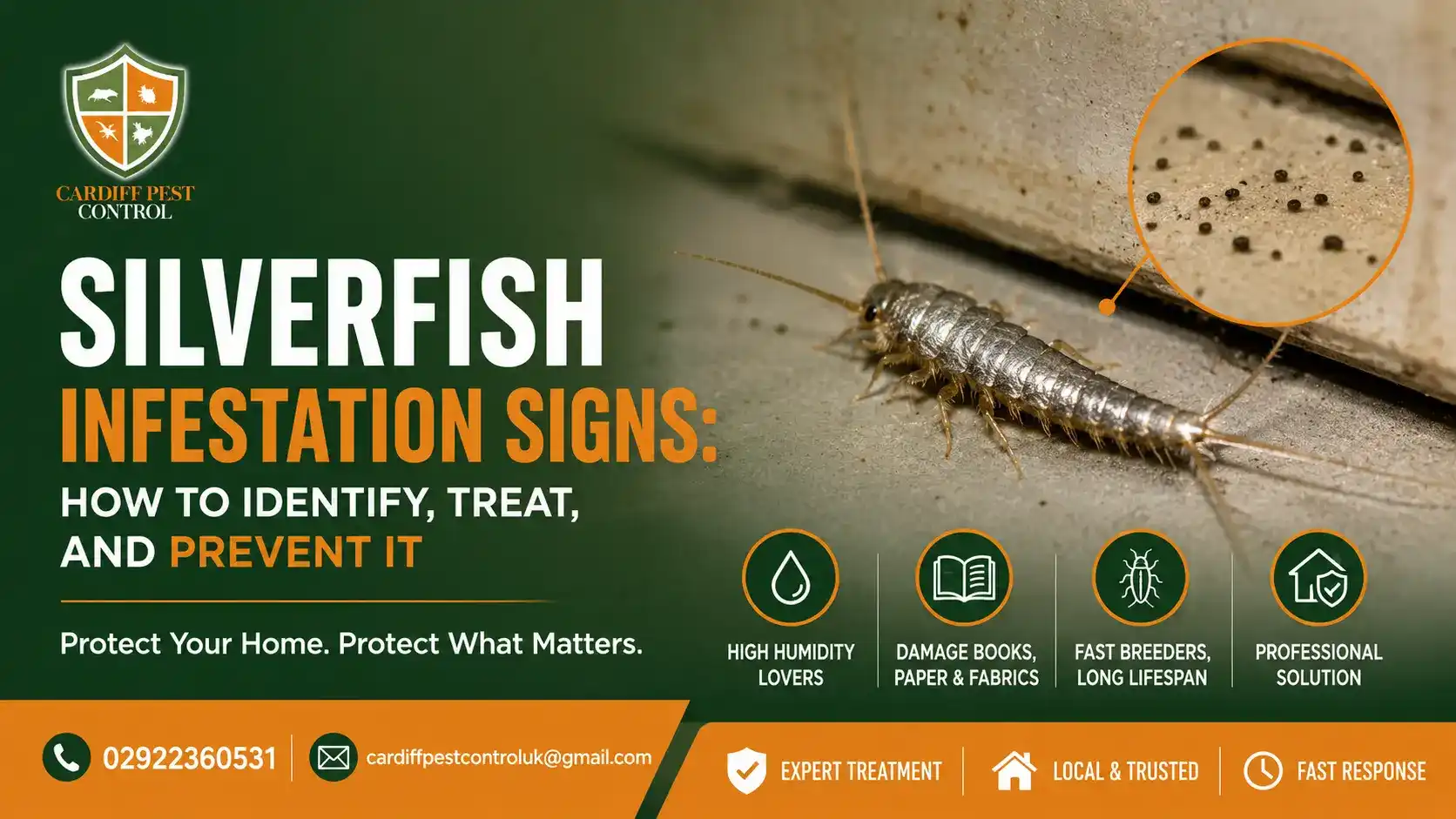
Silverfish are teardrop-shaped, wingless, and covered in silvery scales. They move with a fish-like motion, which is where they get their name. They are fast—often disappearing into a floorboard crack before you can grab a tissue.
2. Feeding Marks and Damage
This is the most “expensive” sign. Silverfish have chewing mouthparts that scrape at surfaces. Look for:
- Irregular holes in book pages or magazines.
- Etched markings on cardboard boxes.
- Damage to silk or cotton clothing.
- Peeling wallpaper where they have eaten the paste behind it.
3. Yellow Staining
As silverfish move and feed, they often leave behind a faint yellow residue. This is particularly noticeable on white paper, light-colored fabrics, or synthetic fibers.
4. Droppings (Frass)
Silverfish droppings are tiny, black, and spherical. They look like small peppercorns but are much smaller, often mistaken for dust or soot. You’ll usually find these in “high-traffic” areas like the back of kitchen cupboards or inside bookshelves.
If you are dealing with other creepy crawlies, you might want to read our guide on how to control common household pests to stay ahead of the curve.
How Do I Know if I Have a Silverfish Infestation?
If you are wondering how do I know if I have a silverfish infestation, you need to perform a “moisture audit” of your home.
Silverfish require a humidity level between 75% and 95% to thrive. We find that most infestations in the UK are concentrated in:
- Bathrooms: Around leaky pipes and under sinks.
- Kitchens: Behind appliances and in pantries.
- Attics and Basements: Where ventilation is poor and dampness lingers.
Check your storage boxes. If you open a box of old photos or documents and see small, thin insects scurrying away, that is a confirmed infestation.
The Statistics of Damage
Silverfish are not just a nuisance; they are a threat to your belongings. Data shows that silverfish can live for up to eight years. Unlike many other insects that die off quickly, silverfish persist.
In a domestic setting, we have seen silverfish destroy entire collections of vintage books and ruin high-end linen wardrobes. They are particularly attracted to the glue used in bookbinding and the starch used in laundering clothes.
Why Do You Have an Infestation?
Understanding how do you know if you have a silverfish infestation also requires knowing why they chose your home. They are attracted to:
- Moisture: Leaky pipes or rising damp.
- Food Sources: Unsealed dry goods (flour, sugar) and paper products.
- Entry Points: Gaps in windows, doors, or vents.
Once they find a reliable food source and a humid environment, they will not leave on their own.
Professional Treatment vs. DIY
While there are many “natural” ways to deter these pests, such as cedar oil or cinnamon, these rarely solve an infestation. They might move the insects to a different room, but they won’t eliminate the nest.
Our team uses professional-grade residuals and baits that target the life cycle of the silverfish. We don’t just kill the ones you see; we eliminate the eggs and nymphs hidden deep within your walls.
If you’ve noticed that your DIY efforts aren’t working, it might be time to look into a professional pest control service to ensure the job is done right the first time.
Preventing a Re-Infestation
After we clear your home, we recommend taking these steps to keep them away:
- Dehumidify: Keep your home’s humidity below 50% using a dehumidifier.
- Seal Food: Store flour, pasta, and cereal in airtight glass or plastic containers.
- Clear Clutter: Don’t leave piles of old newspapers or cardboard boxes in damp areas.
- Seal Cracks: Use caulk to fill gaps around baseboards and plumbing fixtures.
For more information on keeping your home pest-free year-round, check out our tips on regular pest control.