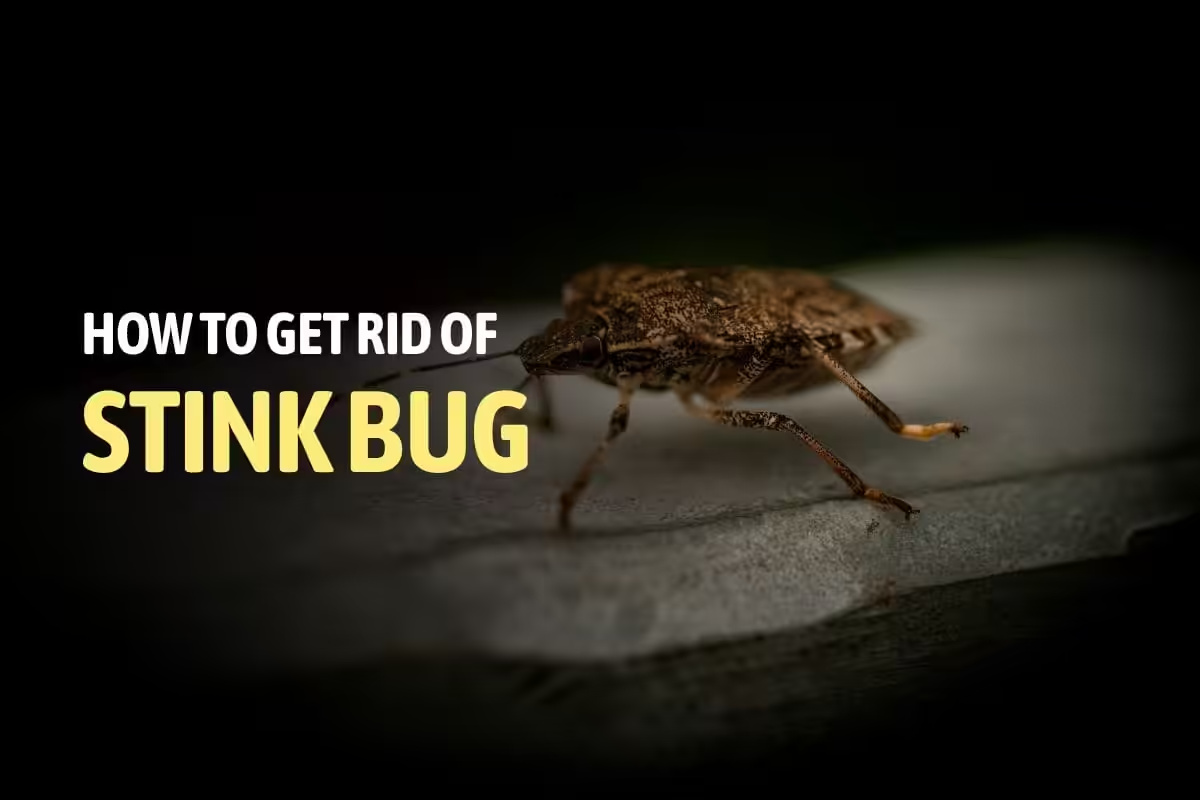
We understand the frustration. You’re sitting at home in Cardiff, relaxing after a long day, and you hear that heavy, clumsy buzzing sound. A shield-shaped insect hits your lampshade, falls onto your lap, and if you move too quickly, a pungent, bitter smell fills the room.
Stink bugs have become a growing concern for us and our customers over the last few years. While they were once a rarity in the UK, changing climates and international trade mean we are now seeing them much more frequently. Because they are relatively new to many people, there is a lot of confusion about how to handle them. Do they bite? Are they eating your furniture? How did they even get in?
In this guide, we are going to break down every single thing you need to know about these pests. We will look at why they have chosen your home, the science behind their “stink,” and, most importantly, how to get rid of stink bugs effectively so you can have your home back to yourself.
Where do stink bugs come from?
If you are seeing these bugs for the first time, you are likely asking: where do stink bugs come from? To understand the problem, we have to look at their history. The most common species we deal with is the Brown Marmorated Stink Bug (BMSB). They are native to East Asia, but they are world-class hitchhikers.
They usually travel across borders in shipping containers, machinery, and even luggage. Once they arrive in a new area like South Wales, they find our gardens and parks very hospitable. During the spring and summer, they stay outside where there is plenty of food. However, when the Welsh autumn starts to bite and the temperature drops, they have a biological drive to find a warm, dry place to sleep through the winter.
This is when you start seeing stink bugs in house settings. They don’t want to be in your house to cause trouble; they are simply looking for a “winter hotel.” They follow the heat leaking from your windows and doors. Because they are very flat, they can squeeze through gaps that you might not even notice—cracks in the mortar, gaps around cable entries, or loose weather stripping.
Are stink bugs dangerous to your family?
When we get a call about an infestation, the first thing people ask us is: are stink bugs dangerous? It is an understandable worry, especially if you have young children or pets running around.
We can tell you with certainty that stink bugs are not a direct threat to your health. Unlike ticks or fleas, they are not looking for a “host.” They don’t carry the types of diseases that mosquitoes or rats do. They don’t want to eat your food, and they won’t damage the structure of your home like termites or woodworm might.
The real “danger” is more of a nuisance factor. Their primary defense mechanism is their smell. When they are handled roughly, stepped on, or even just startled, they release a chemical compound from glands on their abdomen. To some people, it smells like strong herbs or coriander; to others, it’s more like rotting garbage. If you have a large number of them in your home, this smell can become quite heavy and unpleasant.
The big question: Do stink bugs bite?
There is a lot of misinformation online regarding this. You might see people claiming to have a bite from stink bug incidents, but we need to clear this up.
Do stink bugs bite? No. Anatomically, they physically cannot bite you. They do not have teeth or jaws designed for chewing or biting skin. Instead, they have a long, needle-like mouthpart called a proboscis. They use this like a straw to pierce the skin of fruits and plants to suck out the juice. They have zero interest in human blood or skin.
If you are waking up with itchy marks or painful spots, the culprit is almost certainly something else. We often find that people who think they have stink bug bites actually have issues with other household pests. You might find it helpful to look at our guide on bites from ants and other insects to see if your symptoms match those instead.
So, while we can confirm that can stink bugs bite is a “no,” they can still be annoying if they crawl on you, as their legs are quite “hooked” to help them climb, which can feel like a little prickle on the skin.
What do stink bugs eat?
To keep these pests away from your property, you need to know what do stink bugs eat. These insects are strictly herbivores, and they aren’t very picky about which plants they target.
In the wild, they love:
- Fruit: Apples, pears, peaches, and berries are their favourites.
- Vegetables: They often attack peppers, tomatoes, and sweetcorn.
- Ornamental Plants: Many of the shrubs and flowers we grow in Cardiff gardens are perfect snacks for them.
When they pierce a fruit with their mouthparts, they inject a little bit of saliva that breaks down the plant tissue. This leaves “cat-facing” scars or dimples on the fruit, making it rot faster. This is why they are such a massive problem for farmers. Inside your home, they usually don’t eat anything. They enter a state of dormancy where their metabolism slows down, and they live off the fat they stored during the summer.
Understanding the life cycle: Stink bug eggs
If you want to be proactive, you have to look for stink bug eggs during the warmer months. You won’t usually find these inside your house. Instead, look at the undersides of leaves in your garden.
The eggs are quite easy to spot if you know what you are looking for. They are usually light green or yellow and shaped like tiny barrels. They are always laid in very neat, geometric clusters. If you find these, the best thing to do is remove the leaf and destroy it. This stops the next generation from ever reaching your windows. Once they hatch, the nymphs go through several stages before becoming the flying adults that eventually try to move into your lounge.
Can stink bugs fly?
One of the reasons they spread so fast is their mobility. People often ask, can stink bugs fly? They certainly can. While they look heavy and slow when they are crawling on a wall, they have a pair of well-developed wings tucked under that shield-like back.
They aren’t the most elegant flyers you’ll ever see. They tend to bump into things and make a very loud, low-pitched buzzing sound. This flight is exactly how they reach the higher parts of your home, like the soffits, gutters, and attic vents. If you have a multi-story house, don’t think you are safe just because you are off the ground floor.
DIY Methods: Stink bug repellent and sprays
We often see people trying to take matters into their own hands before calling us. There are a few things you can try if you only have one or two bugs.
Stink bug repellent
Some people find success with natural scents. It is often said that they dislike the smell of mint, garlic, or clove. You can try mixing these essential oils with water and spraying them around your window frames. It won’t kill them, but it might make them choose your neighbour’s house instead of yours.
Stink bug spray
You can buy a stink bug spray at most hardware stores. These are usually contact killers. However, we should be honest with you: these sprays are rarely a long-term fix. Stink bugs tend to hide in the voids of your walls. When you spray the ones you see, there are often dozens more hiding where the spray can’t reach. Also, using heavy chemicals inside your living spaces isn’t always the best idea if you don’t have the proper protective gear.
The Soapy Water Trick
If you see a bug and don’t want to squash it (and trigger the smell), we recommend the soapy water method. Get a jar of water with a bit of washing-up liquid. Hold it under the bug and gently flick it in. The soap prevents them from flying away or staying on the surface, and they drown quickly without releasing their scent.
When to call for professional stink bug extermination
If you are seeing ten, twenty, or fifty bugs in a week, you have a larger issue that DIY methods won’t solve. This is where we come in. Stink bug extermination is a specialized process. We don’t just walk around with a spray bottle; we look at the biology of the insect and the weak points of your building.
We have seen cases where thousands of these bugs congregate in one attic. When they die in those numbers, they can actually attract other pests, like carpet beetles or flies, who come to eat the remains. This creates a secondary infestation that is even harder to manage. To see what other pests might be lurking in your home, check out our list of 6 common insects in UK homes.
How do you exterminate stink bugs professionally?
You might be wondering, how do you exterminate stink bugs if they are hidden in the walls? Our process is thorough. We start with a full inspection. We need to find the “primary entry points.”
We use professional-grade treatments that stay active for a long time. We apply these to the exterior “entry zones”—places like window headers, door frames, and where the siding meets the foundation. When the bugs try to crawl through these gaps, they pick up the treatment and die before they can get settled in your home.
Inside the home, we focus on safe removal. We use high-powered HEPA vacuums to physically remove the bugs we can see, and we treat the cracks and crevices where they like to hide. This is much more effective than just spraying the air. You can find more about our specialized methods on our insect control service page.
Why we focus on prevention
We always tell our clients that the best way to handle these pests is to stop them from getting in. Once they are inside your walls, they are very hard to reach. Here are our top tips for proofing your home:
- Check your screens: If you have fly screens, make sure there are no tiny tears.
- Seal the gaps: Use a high-quality caulk to seal around window frames and door frames.
- Check the attic: Make sure your attic vents have fine mesh over them.
- Light Management: Stink bugs are attracted to light. At night, try to keep your curtains closed so the light from your TV or lamps doesn’t “call” them to your windows.
Wrapping it up
We know that dealing with an infestation is stressful. It makes your home feel less like your own. But remember, while they are annoying and smelly, they aren’t going to hurt you. By staying calm and taking the right steps, you can get rid of them.
If you are tired of the buzzing and the smell, we are here to help. We have the experience and the tools to clear your home and make sure these shield-shaped visitors don’t come back next year.
FAQs
Why do stink bugs smell so bad?
The smell is a defense mechanism. They release “trans-2-decenal” and “trans-2-octenal” from glands on their bodies. To the bug, it’s a way to tell predators like birds that they taste bad. To us, it’s just a foul odour that can linger on furniture or skin if the bug is crushed.
Can my cat or dog get sick from eating a stink bug?
Most pets will be fine, but the smell and taste can cause them to drool or even vomit if they eat one. The chemicals aren’t toxic in the traditional sense, but they are very irritating to the mouth and stomach lining of pets.
Do stink bugs stay active all winter?
No. They go into something called “diapause.” This is like a deep sleep where they don’t eat or move much. However, if your house gets very warm on a sunny winter day, they might “wake up” and start crawling around, thinking it’s spring.
Will a stink bug infestation go away on its own?
In the spring, the ones inside will try to go back outside to find food and mate. However, if you don’t seal the entry points, they (and their offspring) will simply come back in even larger numbers the following autumn.
Can I use a regular vacuum to pick them up?
You can, but we don’t recommend it unless it’s a bagged vacuum. If you use a bagless one, the smell will permeate the filters and the plastic. Every time you turn the vacuum on for the next month, your house will smell like stink bugs.
Are they the same as carpet beetles?
No, though they are both shield-shaped. Stink bugs are much larger (about the size of a 10p piece) and don’t eat fabric. Carpet beetles are tiny, usually only a few millimetres long, and their larvae are the ones that cause damage to your rugs and clothes.